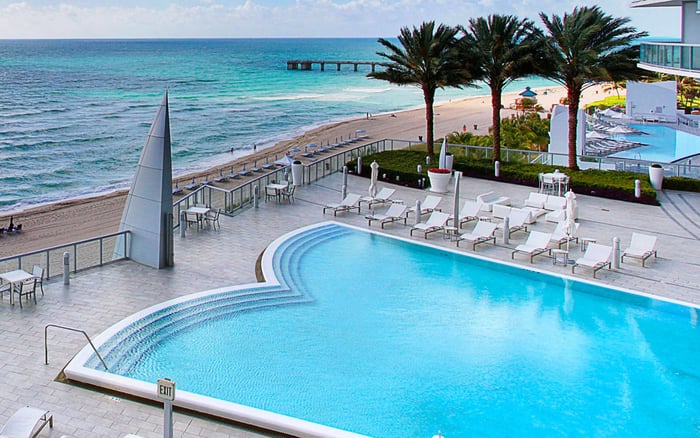
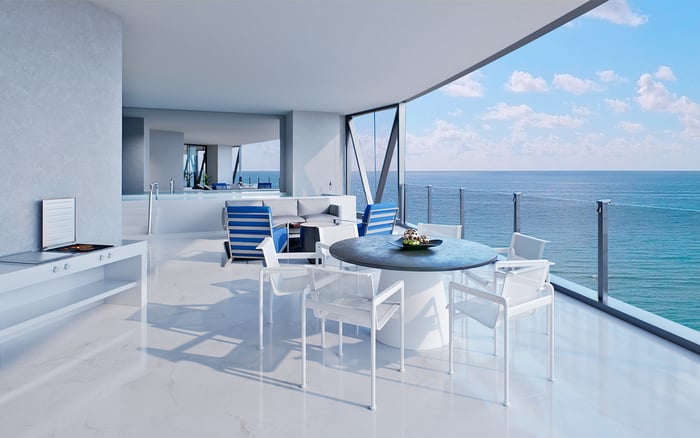
A buyer-focused comparison of two branded oceanfront developments in Sunny Isles Beach, viewed through private layouts, shared amenities, service infrastructure, and the practical demands of hosting.
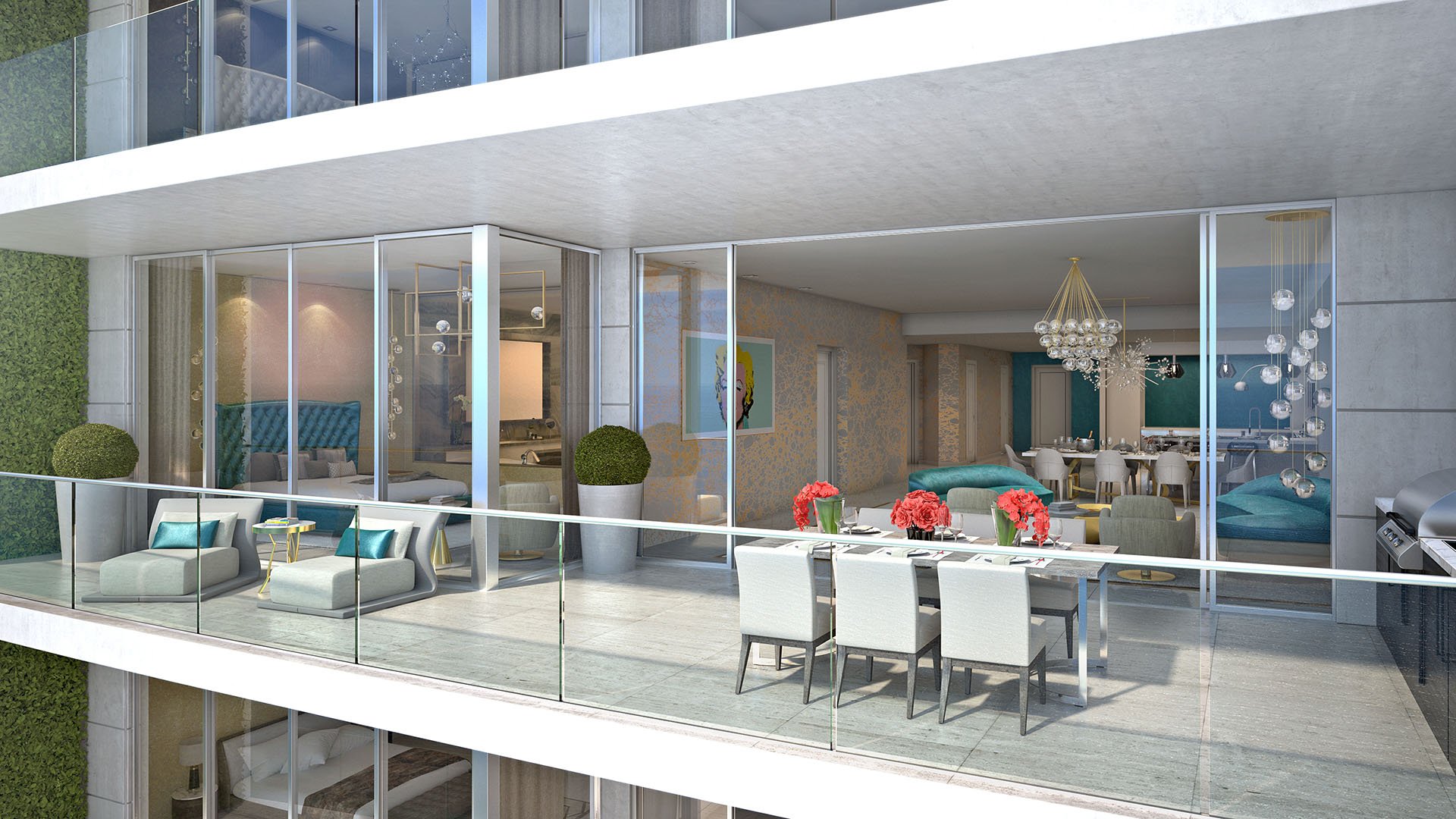
For buyers who host often, a luxury condominium is more than a private retreat. It is a setting for family weekends, intimate dinners, client conversations, holiday gatherings, and extended visits. The most meaningful comparison therefore extends beyond raw square footage to consider how gracefully a home shifts between everyday privacy and a fuller social calendar.
Within the oceanfront market of Sunny Isles Beach, Armani Casa Sunny Isles Beach and The Estates at Acqualina Sunny Isles occupy the same ultra-luxury coastal submarket while expressing distinct design identities and lifestyle positions. Both pair private residences with communal amenity programs, yet their relevance to a particular host rests on four considerations: residence design, shared spaces, service infrastructure, and neighborhood context.
This is the lens sophisticated buyer's guides should apply to branded residences. Capacity is not simply a measure of how many people fit inside. It is how comfortably guests arrive, circulate, dine, converse, stay, and depart without compromising the owner's sense of home.
A buyer should first map how a specific floor plan supports the intended style of entertaining. An owner who favors formal dinners may prioritize a coherent relationship among the kitchen, dining, and living areas. Someone who hosts several generations may care more about separation between social rooms, bedrooms, and quiet retreats. Client entertaining introduces another requirement: guests should be able to move through reception areas without entering the residence's most private zones.
Armani/Casa is positioned around a branded design identity supported by a broad shared-amenity program. The Estates at Acqualina pairs large private residences with communal amenities and hospitality-oriented infrastructure. Those distinctions are useful, but they cannot replace a unit-level review. Buyers should study circulation, room proportions, guest accommodations, storage, service access, and, where applicable, the transition between interior and exterior living areas.
Furnishing plans deserve equal attention. A visually impressive room can underperform when seating fragments conversation or creates narrow circulation paths. Before committing, test the plan against real scenarios: a dinner for close friends, a family visit, a reception with mixed seating, and a gathering that requires discreet service.
Communal spaces can materially expand a residence's hosting range. They may provide an alternative when a gathering exceeds the home's comfortable limits, calls for a different atmosphere, or would otherwise disrupt private family routines. For buyers comparing these two developments, the key is not the length of the amenity list but the practical relationship between shared facilities and how they intend to entertain.
Ask how spaces are reserved, whether guests must be registered, which occupancy conditions apply, and whether event restrictions affect catering, music, hours, or setup. Availability can matter as much as design. A polished shared room has limited value if access is difficult during the periods when an owner is most likely to host.
The broader Sunny Isles Beach field can help sharpen preferences. Touring Bentley Residences Sunny Isles or The Ritz-Carlton Residences® Sunny Isles alongside the two principal choices can clarify whether a buyer responds most strongly to design expression, hospitality cues, or the balance of private and communal life. These visits should provide context, not replace direct comparisons of plans and policies.
Entertaining becomes effortless only when operational support matches the ambition of the space. Service infrastructure can shape arrivals, deliveries, guest coordination, catering logistics, cleanup, and the owner's ability to remain present rather than manage details. This is particularly relevant when comparing a design-led residential environment with one that emphasizes hospitality-oriented infrastructure.
Buyers should ask who coordinates guest access, how vendors enter, where deliveries are received, and what assistance is available before and after an event. Staffing scope, fees, advance-notice requirements, and permitted vendors should be confirmed directly. The answers can reveal whether a large residence truly functions well for frequent hosting or merely appears capable on a floor plan.
Privacy is part of service quality. The ideal arrangement supports guests and staff without allowing operational movement to dominate the occasion. Owners who employ private household staff should also establish how building procedures interact with their team.
Neighborhood positioning shapes the social rhythm of a residence. Both properties sit within the broader South Florida luxury-residential context, giving buyers an oceanfront base in a market defined by high-end condominium living. For hosts, the setting establishes the tone of an invitation before guests enter the building.
The decision is therefore partly emotional. One buyer may prefer Armani/Casa's distinct architectural and design identity as the backdrop for smaller, visually composed occasions. Another may be drawn to The Estates at Acqualina's combination of expansive private living and hospitality-oriented support. Neither preference establishes universal superiority. Instead, it identifies the environment most consistent with the owner's habits.
A useful final exercise is to create a twelve-month hosting calendar. Include routine dinners, seasonal celebrations, overnight guests, business entertaining, and occasions likely to require communal space. Then assess each candidate residence and its building policies against that calendar. The better choice is the one that reduces friction across the events that will actually occur.
Before reaching a conclusion, review the exact floor plan rather than a generalized residence category. Confirm guest-room arrangements, practical occupancy, furniture clearances, service paths, and any outdoor areas associated with the unit. Request current building rules governing reservations, guest registration, catering, vendors, noise, event hours, and shared-space capacity.
Buyers should also observe the property at the times they expect to entertain. Arrival flow, elevator access, staffing patterns, and amenity demand may feel different on an active evening than during a quiet daytime tour. Finally, compare recurring costs and event-related charges with the frequency of anticipated use.
The central distinction is not which address offers more luxury in the abstract. It is which residence, amenity ecosystem, and service model best support the buyer's particular expression of hospitality while preserving privacy when the gathering ends.
Which development is better for entertaining? Neither can be declared universally better without reviewing a specific residence, current building policies, and the buyer's hosting style.
Is a larger residence automatically more suitable for parties? No. Circulation, room relationships, privacy, furnishing plans, and service access can matter as much as overall scale.
Why are shared amenities important to frequent hosts? They can extend entertaining beyond the residence and provide a different setting for gatherings, subject to access and reservation rules.
What should buyers examine on a floor plan? Review guest circulation, bedroom privacy, kitchen and dining relationships, storage, service routes, and, where applicable, indoor-outdoor transitions.
How does service infrastructure affect hosting? It can shape guest arrivals, vendor access, deliveries, catering coordination, cleanup, and the owner's ability to focus on guests.
Should buyers rely on published amenity descriptions? No. Confirm current availability, booking procedures, occupancy conditions, fees, and event restrictions directly with each property.
Do architectural identities influence entertaining? Yes. Design character can shape the mood of a gathering and determine whether a residence aligns with an owner's social style.
What event rules should be verified? Ask about guest registration, catering, vendors, music, hours, setup, cleanup, occupancy, and advance reservation requirements.
Why tour other Sunny Isles Beach projects? Additional tours can clarify preferences around design, hospitality, privacy, and the balance between private residences and shared spaces.
What is the most useful final comparison test? Match each property and specific unit against a realistic annual calendar of dinners, visitors, business occasions, and larger gatherings.
If you'd like a private walkthrough and a curated shortlist, connect with MILLION.
If branded residences are on your mind — as a home or as an allocation — we would be glad to share what we are seeing, privately.
Begin a quiet conversation