For Villa Miami buyers, deposit protection depends on more than the presence of an escrow account. Understanding the first-10% threshold, construction-use authorization and contractual release conditions is essential before committing funds.
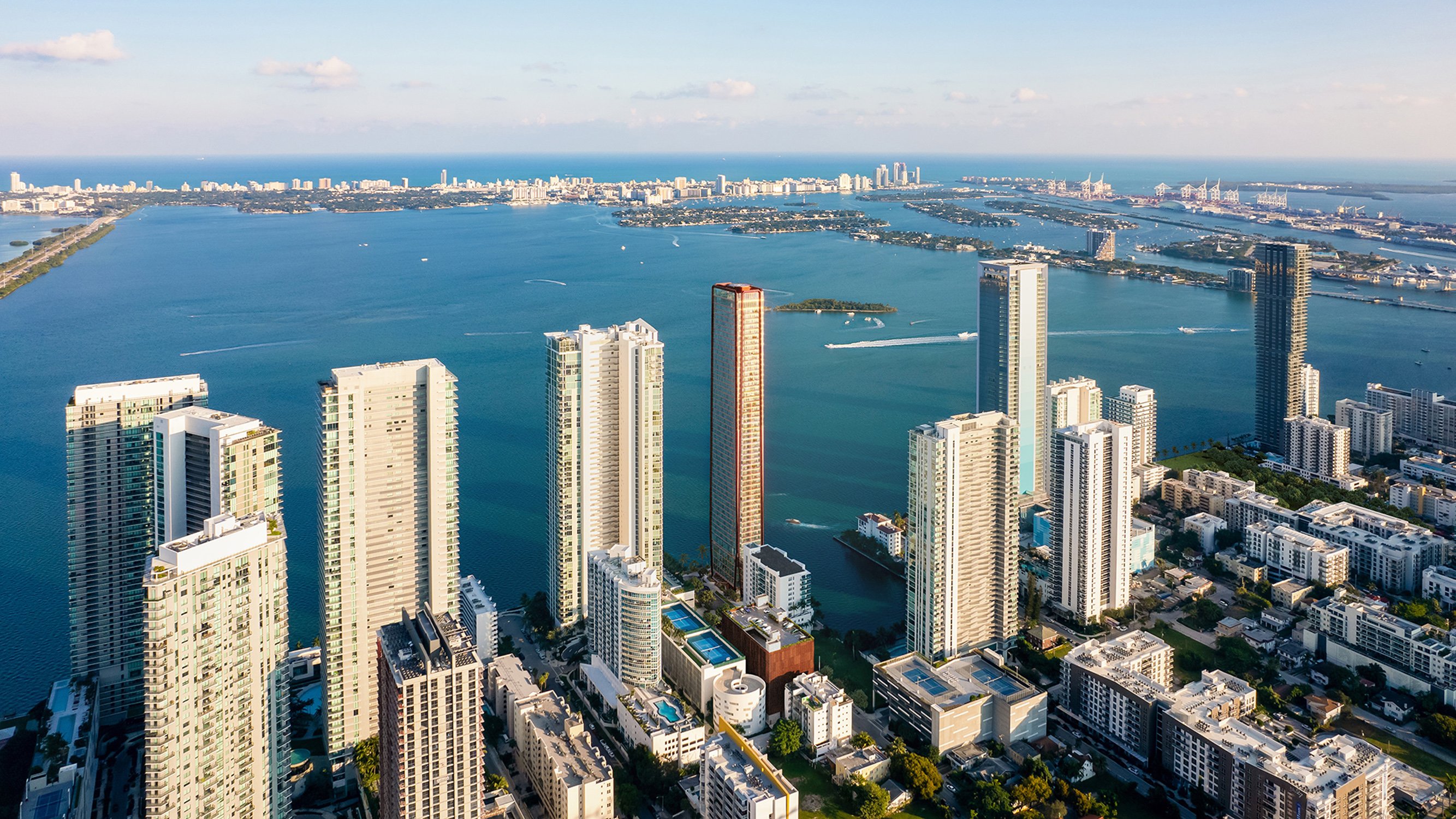
For buyers considering Villa Miami, the deposit review deserves the same precision as the residence selection. A payment schedule explains when capital must be committed. An escrow-release clause answers a different question: when that capital may leave the escrow account during construction.
That distinction is central to evaluating deposit protection. Money paid into escrow is not necessarily required to remain there until closing. Florida condominium law establishes the framework, but the purchase contract and escrow agreement determine how the applicable release conditions operate in a particular transaction.
The question is not simply whether an escrow agent holds the deposits. It is which portion must remain in escrow, which portion may be used for construction, and what must happen before an authorized withdrawal. For a substantial purchase, those distinctions belong in the initial financial review-not at the end of contract negotiations.
Florida condominium law generally requires condominium deposits up to 10% of the purchase price to remain in escrow before closing, subject to statutory exceptions. That protection is neither an unconditional guarantee against loss nor insurance against developer default.
Payments above the first 10%, received before construction is completed, must also initially be held in a special escrow account. Their initial placement, however, does not mean they must remain untouched throughout construction.
The developer may withdraw excess deposits for construction only if the purchase contract expressly authorizes that use and construction has begun. Signing the contract alone does not satisfy the construction-start condition. Any additional applicable contractual conditions must also be satisfied before a withdrawal can be treated as permissible.
For the buyer, this creates two distinct categories to review: the first-10% amount governed by the general retention rule and its exceptions, and the excess amount potentially available for authorized construction use. Combining them under a single label such as “escrowed deposits” obscures a financially important difference.
Villa Miami’s published payment schedule lists 10% at contract, 10% at 90 days, 10% at six months, 10% at 12 months, and 60% at closing. Treat those figures as a planning reference to reconcile with the purchase documents-not as confirmation of the terms governing a particular buyer.
Under that schedule, preclosing payments total 40% of the purchase price. Thirty percentage points therefore fall above the first-10% statutory escrow threshold. That arithmetic identifies the amount requiring close review of construction-use provisions; it does not establish that the amount will actually be released.
If the executed contract authorizes construction withdrawals, excess deposits could become available to the developer before closing once the applicable statutory and contractual conditions are satisfied. The published payment schedule alone establishes no withdrawal entitlement.
A useful capital plan distinguishes amounts scheduled for payment from amounts contractually required to remain in escrow. That distinction is especially important when assessing how much committed capital could be outside the account during construction.
A calendar-based installment and a construction milestone serve different purposes. The former identifies a payment obligation. The latter may identify a condition for releasing money already deposited.
References to third-party escrow and releases tied to defined construction milestones are no substitute for the specific milestone language in Villa Miami’s transaction documents. Nor should the 90-day, six-month or 12-month payment dates be assumed to double as release dates.
Ask counsel to identify the precise event that permits each release, the documents needed to establish that the condition has been satisfied, and who evaluates that documentation under the agreement. These are review questions, not assumptions that a particular certification or approval procedure applies.
For an Edgewater comparison that includes Aria Reserve Miami, apply the same distinction separately to each purchase under consideration. Similar installment schedules do not, by themselves, establish equivalent escrow protection. The comparison should follow the documents, not the presentation of the payment plan.
A contract permitting construction use of excess deposits must include the statute’s required conspicuous, boldfaced disclosure. Review that disclosure alongside the operative release clause; prominent formatting does not explain every contractual condition.
Authorized withdrawals are restricted to statutory construction and development purposes. They do not permit unrestricted developer spending. A restriction on permitted use, however, is different from a requirement that funds remain in escrow.
Read the purchase contract and escrow agreement together. Identify the authorization, the applicable conditions and the stated release mechanism. Ask counsel to explain how those provisions fit the statutory framework, including any exception affecting the first-10% amount.
The same review is useful when evaluating EDITION Edgewater as another potential purchase. Villa Miami’s deposit descriptions support no conclusion about EDITION Edgewater’s deposit provisions. What carries across is the review method: establish what each agreement permits before comparing protections.
Before committing funds, request a clear explanation of the purchase contract’s release clause, the required disclosure and the escrow agreement. The objective is to distinguish custody from retention: receiving money into escrow and keeping it there are separate obligations.
Have counsel map each installment to its applicable escrow treatment. That review should identify the portion within the first-10% threshold, the portion above it, and the conditions governing any potential construction withdrawal. A payment timetable without this accompanying review is an incomplete assessment of deposit protection.
Then ask what the documents provide if the transaction does not proceed as expected. Escrow is not shorthand for guaranteed recovery, and the existence of an account does not resolve every question about default or available remedies.
Where the language is unclear, seek clarification before wiring. Do not rely on a general assurance that deposits are protected.
The decisive question for a Villa Miami buyer is not whether the published schedule calls for 40% before closing. It is how the executed documents govern that money after payment-particularly the 30 percentage points above the first-10% threshold under that schedule.
A well-informed commitment separates three matters: the timing of the buyer’s payments, the legal authority for construction use, and the contractual conditions for release. None should be inferred from another. This is a framework for review with Florida condominium counsel, not a transaction-specific legal conclusion.
For a discreet perspective on your South Florida residential search, connect with MILLION.
If branded residences are on your mind — as a home or as an allocation — we would be glad to share what we are seeing, privately.
Begin a quiet conversationNo. Excess deposits may be available for authorized construction use once statutory and contractual conditions are satisfied.
Florida condominium law generally requires that amount to remain in escrow before closing, subject to statutory exceptions. It is not an unconditional guarantee against loss.
Payments above the first 10% received before construction is completed must initially be held in a special escrow account.
The purchase contract must expressly authorize construction use, construction must have begun, and applicable contractual release conditions must be satisfied.
No. Contract signing alone does not satisfy the statutory construction-start condition for withdrawing excess deposits.
The published schedule lists 10% at contract, 10% at 90 days, 10% at six months, 10% at 12 months, and 60% at closing. Buyers should reconcile it with their purchase documents rather than treat it as confirmed contractual terms.
The published schedule totals 40% before closing, placing 30 percentage points above the threshold. That calculation does not establish that those funds will be released.
Not necessarily. Payment dates establish when money is due, while release conditions determine when deposited funds may leave escrow.
No. Authorized withdrawals are restricted to statutory construction and development purposes.
Review the purchase contract’s release clause, required conspicuous disclosure and escrow agreement with Florida condominium counsel. Distinguish money paid into escrow from money required to remain there.