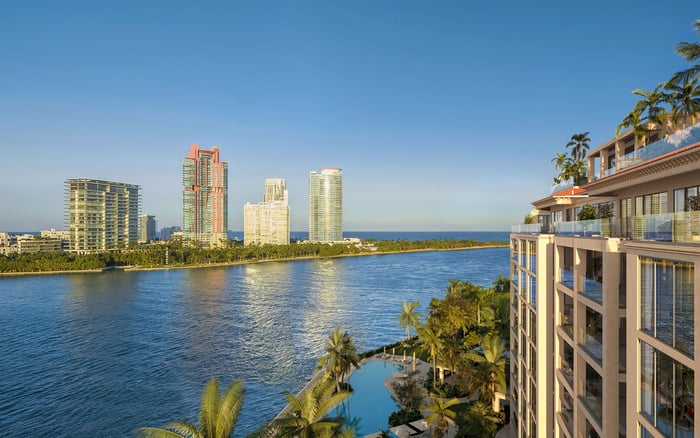
At The Links Estates at Fisher Island, insurance diligence begins with confirming the ownership structure, not assuming condominium coverage applies. Buyers should read association policies, the appropriate owner policy and loss-assessment endorsements together to understand their potential exposure.

For buyers considering The Links Estates at Fisher Island, insurance deserves the same deliberate attention as the residence itself. The first distinction matters: Links Estates is a homeowners association, not a condominium association. Buyers should therefore confirm the transaction’s ownership structure and the appropriate owner-policy form before assuming an HO-6 condominium policy is suitable.
That distinction does not diminish the central principle. Association insurance and personal insurance must be read together, with loss-assessment coverage examined as a separate layer of protection. A substantial master-policy limit does not, by itself, establish what an individual homeowner would owe after a loss.
Fisher Island encompasses 21 condominium associations and two homeowners associations, alongside the island’s club. An island address does not imply a single insurance arrangement. The relevant questions are which entity insures each asset, which obligations remain with the owner and how an uninsured balance could be allocated.
For condominium ownership, a master policy generally covers the building structure and common areas, including roofs, exterior walls, elevators and shared amenities. That is useful background, not a description of the Links Estates insurance contract. An HOA’s responsibilities must be established through its own governing documents and actual coverage.
Begin with the complete master policy and endorsements. Identify the named insureds, insured assets, coverage limits, exclusions and deductibles. Compare those provisions with the declaration and other governing documents defining maintenance, repair and insurance responsibilities.
A buyer also considering Palazzo del Sol Fisher Island should request a separate document review rather than carry assumptions from one property to another. The purpose is not merely to confirm that insurance exists. It is to establish the boundary between association and personal obligations, including any shared facilities insured by a different entity.
Where condominium ownership and the applicable policy form are confirmed, HO-6 coverage typically addresses personal belongings, owner-responsible interior finishes and improvements, personal liability, temporary housing after a covered loss and loss assessments. Each protection remains subject to the policy’s terms, limits and exclusions.
For Links Estates, the appropriate owner-policy form must be confirmed, not selected by analogy to nearby condominiums. Ask the insurance adviser to reconcile the proposed policy with the property’s legal structure and the association’s insurance responsibilities. The review should identify what is insured personally, what is insured collectively and what remains outside both contracts.
Second-home ownership warrants particular attention to temporary-housing provisions. Rather than assume every interruption is covered, ask which covered events activate the benefit and what limits apply. Apply the same discipline to interior improvements: the relevant issues are responsibility and coverage, not simply the quality of the finishes.
Loss-assessment coverage can help pay an owner’s allocated share of a covered association loss that the master policy does not fully absorb. It is not a promise to reimburse every charge labeled a special assessment. The event behind the charge must qualify under the owner policy, and payment remains subject to applicable limits and exclusions.
One distinction deserves close attention: some HO-6 forms impose a separate sublimit on assessments attributable to the association’s master-policy deductible. Increasing the overall loss-assessment limit may leave this particular protection unchanged.
Ask the adviser to identify both the general loss-assessment limit and any deductible-specific sublimit in writing. Then ask how the applicable form would respond to an assessment arising from an association deductible. For Links Estates, this review must address the owner-policy form actually selected, without presuming that condominium provisions apply.
A larger number on the declarations page is meaningful only when the relevant policy language supports it.
Florida Statute §627.714 provides context for qualifying condominium policies, not an automatic rule for Links Estates homeowners. Residential condominium unit-owner policies issued or renewed from July 1, 2010, must include at least $2,000 in property loss-assessment coverage for assessments arising from the same direct loss, regardless of the number of assessments.
The statute also caps the deductible for that loss-assessment coverage at $250. This does not cap the association’s master-policy deductible, nor does it make $2,000 a tailored coverage recommendation for an individual buyer.
Florida’s condominium framework treats association property-insurance deductibles and damages exceeding association property coverage as common expenses. That helps explain why an insured building can still leave owners exposed. Whether and how an obligation reaches a Links Estates homeowner requires review of the applicable ownership structure, governing documents and policy terms-not an assumption based on condominium law.
A useful document request extends beyond an insurance certificate. Obtain the declaration and bylaws, budgets and financial statements, recent meeting minutes and the current reserve study, together with the actual insurance policies and endorsements. Include claims history and the windstorm or hurricane deductible provisions in the review.
These materials answer different questions. Policy language addresses insured events and payment terms. Governing documents address responsibility and allocation. Financial materials help buyers examine obligations that insurance does not necessarily fund.
Ordinary maintenance, reserve contributions and operating-budget shortfalls do not become insured merely because they are collected through a special assessment. Keep those exposures separate from assessments tied to a covered property loss.
The same distinction applies when evaluating The Residences at Six Fisher Island: request its own documents and examine insurance and financial obligations independently, without assuming another Fisher Island property provides a reliable template.
The final review should turn broad assurances into specific answers. Ask the association and insurance adviser to explain how the wind or hurricane deductible is calculated, which insured values it uses and how any resulting owner obligation would be allocated under the governing documents.
Compare that potential obligation with the proposed owner policy’s applicable coverage, exclusions and deductible-assessment sublimit, if any. Ask counsel to clarify allocation provisions and the insurance adviser to explain coverage terms. Keep the remaining uninsured exposure distinct from the premium itself.
For a Links Estates buyer, the objective is not to force an HOA purchase into a condominium insurance framework. It is to establish how the association contract, the appropriate owner policy and any loss-assessment protection work together. That clarity is part of a carefully considered acquisition.
For a considered approach to Fisher Island ownership, explore MILLION.
If branded residences are on your mind — as a home or as an allocation — we would be glad to share what we are seeing, privately.
Begin a quiet conversationLinks Estates is identified as a homeowners association, not a condominium association. Buyers should confirm the transaction’s legal structure and insurance responsibilities.
No. The appropriate owner-policy form should be confirmed against the ownership structure and association obligations before assuming HO-6 applies.
It generally covers the building structure and common areas, such as roofs, exterior walls, elevators and shared amenities. This does not establish the coverage provided by the Links Estates policy.
It typically addresses belongings, owner-responsible interiors and improvements, liability, temporary housing after a covered loss and loss assessments, subject to policy terms.
No. The event producing the assessment must qualify under the owner policy, and limits and exclusions still apply.
Ordinary maintenance, reserve funding and operating-budget shortfalls are not covered merely because the association collects them through a special assessment.
Some HO-6 forms separately limit payments for assessments attributable to a master-policy deductible. A higher overall loss-assessment limit may not increase that narrower protection.
No. The cap concerns the deductible for qualifying condominium unit-owner loss-assessment coverage, not the association’s master-policy deductible.
It should not be assumed to apply. The statutory minimum concerns residential condominium unit-owner policies, while Links Estates is identified as an HOA.
Request complete insurance policies and endorsements, governing documents, financial statements, budgets, recent minutes, the current reserve study and claims history. Confirm wind or hurricane deductible calculations and assessment-allocation provisions.