Residences by Armani/Casa is presented as a private residential tower, not a conventional mixed-use property. Buyers should still examine how dining, valet, service, and amenity operations affect a specific residence at different times of day.
For a buyer evaluating Armani Casa Sunny Isles Beach, the most consequential question is not simply whether the property has a restaurant. It is who may use it, how visitors enter, where employees circulate, and which routes accommodate deliveries and waste removal. Those operational details can shape privacy and daily calm as much as a residence's floor plan or view.
Residences by Armani/Casa is an oceanfront condominium at 18975 Collins Avenue in Sunny Isles Beach. Completed in 2019 by Related Group and Dezer Development, the tower contains 308 condominium residences. Its stated height varies between 54 and 56 stories, making the official condominium documents the sensible reference for legal and technical particulars.
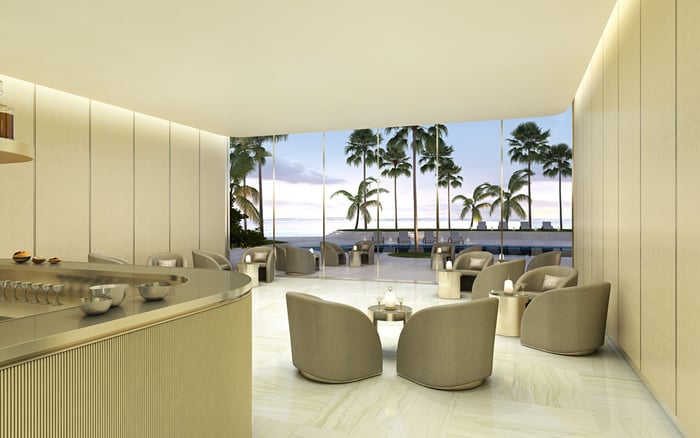
The property is positioned as a luxury residential tower with beachfront cabanas and private amenities, rather than a conventional mixed-use retail development. No independent ground-floor commercial tenants or street-facing public retail are identified. The on-site dining venue is a private oceanfront restaurant and bar with outdoor seating and in-residence delivery, supporting a residential club model rather than a walk-in restaurant format.
The decisive issue is not whether dining exists, but how its people and services move through the property.
That distinction is reassuring, but it is not conclusive evidence of current guest policies, restaurant hours, event rules, or future operating decisions. Buyers should confirm present conditions through management and the governing documents before treating assumptions about privacy as fact.
Private dining should generate less casual public foot traffic than a restaurant open to anyone arriving from Collins Avenue. It does not, however, eliminate operational activity. A full-service restaurant requires employees, food and beverage deliveries, kitchen operations, waste removal, maintenance, and controlled access for residents' guests.
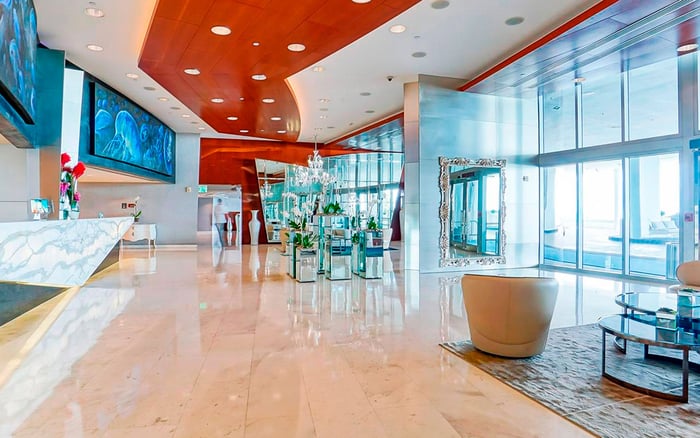
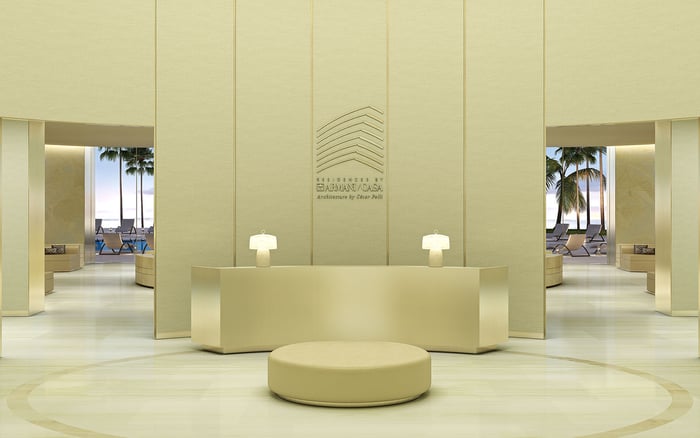
The building concentrates more than 35,000 square feet of amenities across two floors. Lobby-level spaces include an Armani Privé lounge and an ocean-view bar area. Other private amenities include a cigar room, climate-controlled wine cellar, game room, spa, fitness facilities, children's playroom, and theater. This is an unusually broad social program within a residential setting, so the position of a particular unit relative to the amenity floors deserves careful attention.
The oceanfront terrace introduces another layer. Its infinity-edge pool, hot tub, and poolside food-and-beverage service can generate voices, music, staff movement, and clearing activity. The property's 28 beachfront cabanas also add circulation through the pool and beach areas. None of this establishes that a given residence will be noisy. It does establish that exposure depends heavily on elevation, orientation, balcony position, and proximity to service or mechanical areas.
A serene midmorning sales visit cannot replicate dinner service or a weekend evening. Buyers should return when the restaurant, lounge, pool terrace, valet area, and beach services are more likely to be active. Inside the residence, listen with the doors closed. Then step onto every balcony and pause long enough to distinguish recurring building sounds from intermittent street activity.
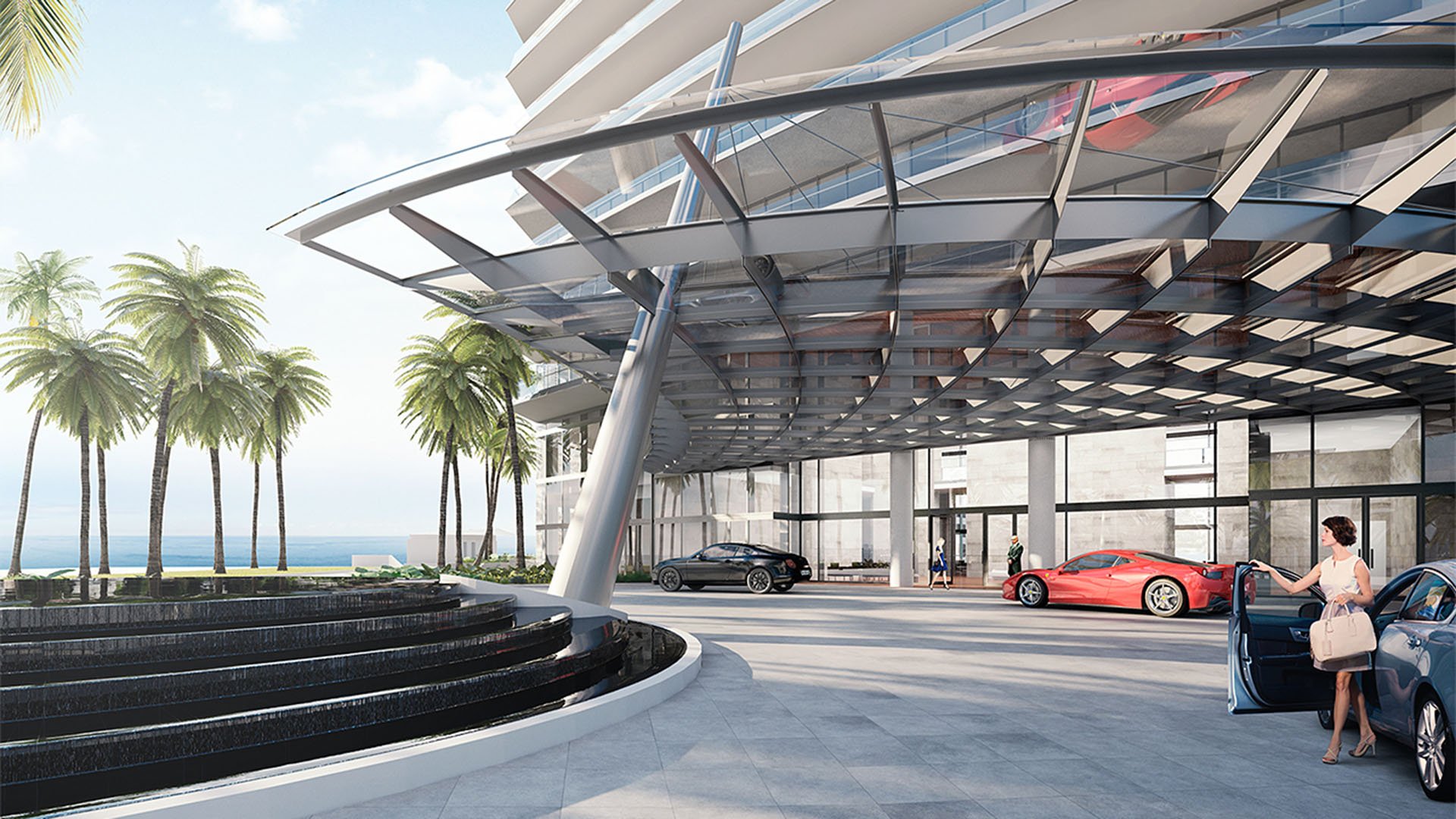
Lower-floor and front-drive-facing residences warrant particular attention to valet queues, arriving guests, delivery vehicles, and staff circulation. Ocean- and amenity-facing homes should be assessed for sound from outdoor dining, the pool deck, and cabana routes. Odor is equally unit-specific, while kitchen exhaust routing and soundproofing specifications require direct verification. Ask about kitchen exhaust, loading, refuse staging, and the location of relevant mechanical equipment.
Collins Avenue introduces its own acoustic baseline. Publix and neighborhood restaurants, including Miami Juice and Timo, are within walking distance. A buyer should therefore distinguish activity generated by the condominium from traffic and nearby destinations. Multiple visits to the same balcony can reveal more than a single generalized assurance about the building.
This unit-level method also applies when comparing nearby towers such as Jade Signature Sunny Isles Beach, The Ritz-Carlton Residences® Sunny Isles, and Turnberry Ocean Club Sunny Isles. The useful comparison is not brand versus brand. It is the relationship among a specific residence, amenity placement, guest circulation, service access, and the surrounding streetscape.
The building offers 24-hour security, valet, and concierge service. For a discerning buyer, those labels begin the inquiry rather than conclude it. The practical questions concern visitor registration, guest authorization, elevator control, vendor credentials, after-hours access, and the separation of resident and service circulation.
Ask management to explain how a dinner guest proceeds from the arrival drive to the restaurant or residence. Determine whether restaurant guests use the primary lobby, whether employees have separate access, and how vendors reach kitchens and amenity areas. Observe whether delivery activity intersects with residents at elevators, corridors, or the garage. A private venue can preserve an intimate atmosphere when these systems are disciplined, but its effectiveness depends on current procedures.
Security also affects convenience. Highly controlled entry may protect privacy while adding steps for frequent entertaining, household staff, or in-residence dining delivery. The correct balance is personal. Buyers should test it against their actual lifestyle rather than rely on the abstract appeal of a staffed building.
This buyer's guide should be supplemented by the declaration, current rules, recent board minutes, and operating budget. Look for provisions governing amenity dining, private events, guest access, vendors, hours, music, and changes in use. Minutes may help identify recurring operational discussions, while the budget can show how dining and service functions fit within the condominium's broader cost structure.
Request written clarification of restaurant eligibility and guest rules. Confirm whether private events are permitted, where they occur, and how management handles access. Ask whether any independent tenant, concessionaire, or outside operator currently occupies space, even though no public retail tenants are identified. The answer should address actual operations today, not simply the original design intent.
Armani Casa Sunny Isles Beach offers an oceanfront residential setting with extensive private amenities. Its dining model appears materially different from a publicly accessible restaurant or retail podium, which may reduce casual outside foot traffic. Yet private hospitality still has a physical footprint, expressed through people, timing, loading, elevators, kitchens, valet operations, and outdoor social areas.
The prudent decision is therefore residence-specific. Visit during dinner and on a weekend evening, inspect front-drive and beach circulation, map service routes, test balconies, and compare observations with written rules. In Sunny Isles Beach, privacy is not only an architectural promise. It is the result of design, management, and daily execution working together.
For confidential assistance evaluating a residence and its operating environment, connect with MILLION.
If branded residences are on your mind — as a home or as an allocation — we would be glad to share what we are seeing, privately.
Begin a quiet conversationAvailable property materials describe it as a private oceanfront restaurant and residential amenity. Buyers should confirm current eligibility and guest policies with management.
Available materials do not identify independent ground-floor commercial tenants or street-facing public retail. Current uses should still be verified through management and condominium documents.
Private dining still involves guests, employees, kitchen activity, deliveries, waste removal, and outdoor seating. Exposure varies by unit location and operating hours.
Lower and front-drive-facing homes may encounter valet or delivery movement, while ocean- and amenity-facing homes may hear pool or outdoor-dining activity.
Visit during dinner hours and on a weekend evening, when the restaurant, lounge, pool terrace, valet, and beach services may be more active.
Confirm visitor registration, guest authorization, elevator control, vendor access, employee entry, and after-hours procedures directly with management.
Review the declaration, current rules, recent board minutes, and operating budget for provisions involving dining, events, vendors, guests, and changes in use.
More than 35,000 square feet of amenities span two floors, concentrating substantial social and service activity within the tower.
Yes. Buyers should distinguish building-generated sounds from traffic and activity associated with nearby shops and restaurants.
Exact hours, event rules, exhaust routing, loading configuration, and soundproofing specifications are not detailed in the provided property information.