A practical framework for weighing Fisher Island’s controlled, ferry-accessed privacy against a Key Biscayne purchase, with emphasis on daily mobility, airport planning and second-home ease.
The choice between Fisher Island and Key Biscayne is less about which island is more prestigious than how an owner intends to move through Miami. For a primary resident, the decisive question may be the rhythm of weekday appointments. For a second-home buyer, it may be whether arrivals, departures and guest access can be managed with minimal attention.
“Walkability” also requires a precise definition. It can mean reaching recreation without a car, stepping outside for routine errands or connecting easily to the wider city. Fisher Island performs strongly by the first measure. Residents commonly move among residences and amenities on foot, by bicycle or by golf cart. Yet the island has no bridge or public-road connection to the mainland, so it cannot offer walk-off access to Miami Beach, Brickell or mainland retail.
The right island is the one whose access ritual feels like a privilege rather than an interruption.
Key Biscayne should be evaluated against the same trip list, not a broad lifestyle impression. During due diligence, map the exact residence to the places that matter, then test those routes at the times they would ordinarily be used.
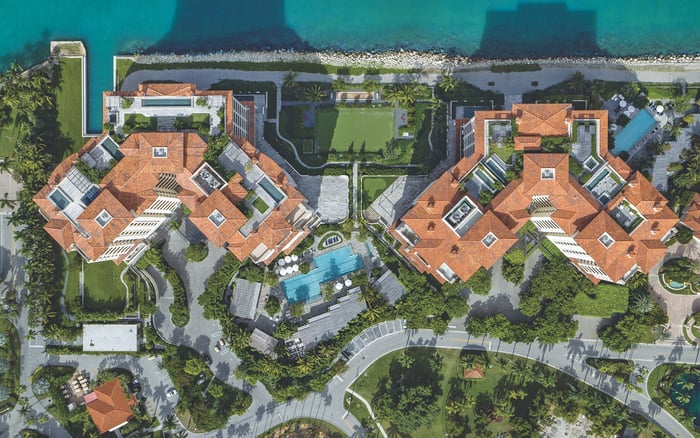
Fisher Island is a 216-acre private island off Miami Beach. Its internal scale and resort amenities support short, car-light trips. Club, beach, golf, spa, dining and marina facilities can reduce the need to leave for leisure or hospitality, while golf carts and low-speed electric vehicles are standard forms of on-island transportation.
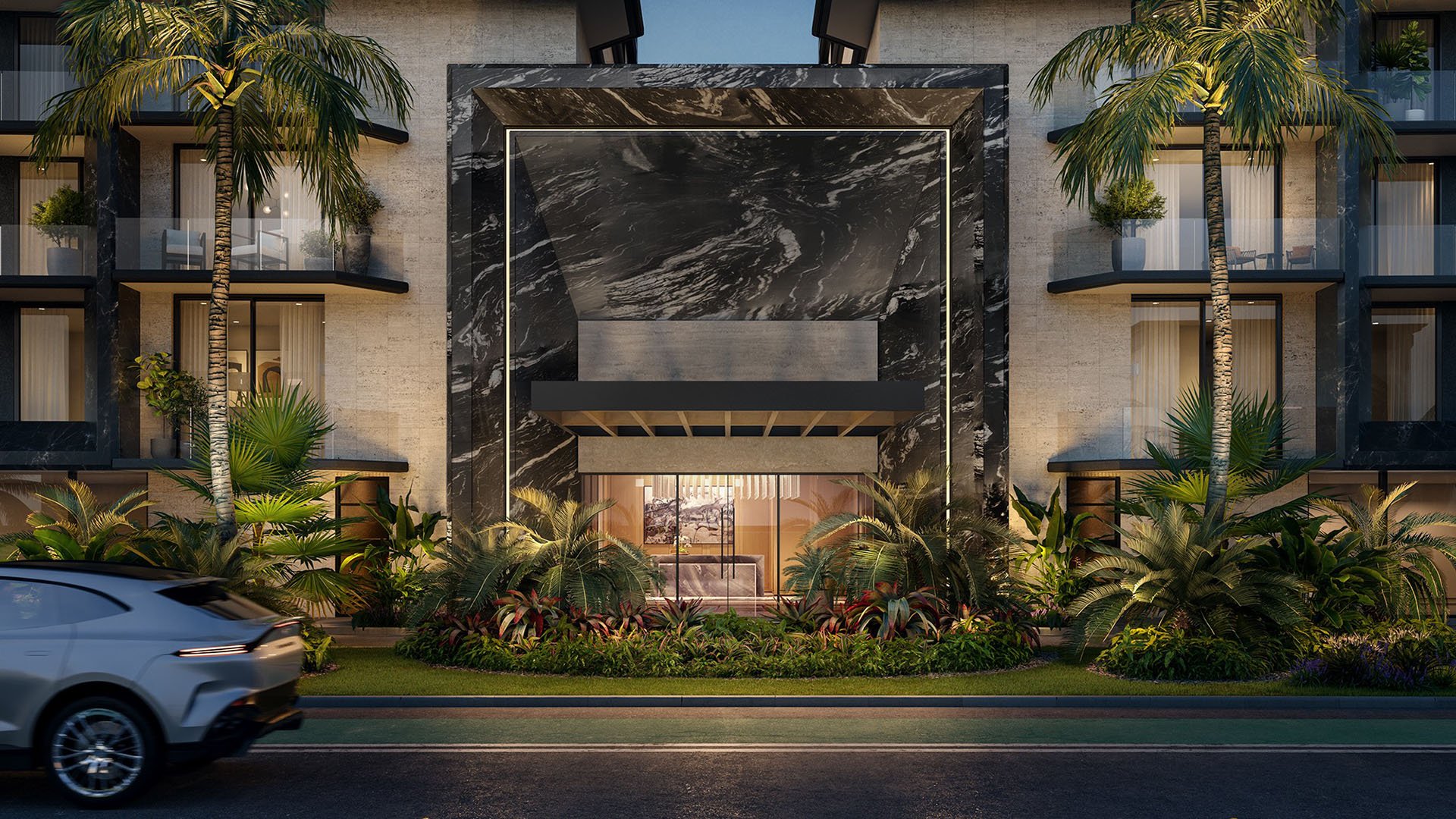
That makes Fisher Island internally walkable in a specialized sense, but not connected to surrounding districts by foot. A buyer touring The Residences at Six Fisher Island should therefore study the practical route from the residence to favored amenities, not merely the distance shown on a map. Large-scale condominium living in this private setting is paired with pedestrian, bicycle and golf-cart mobility.
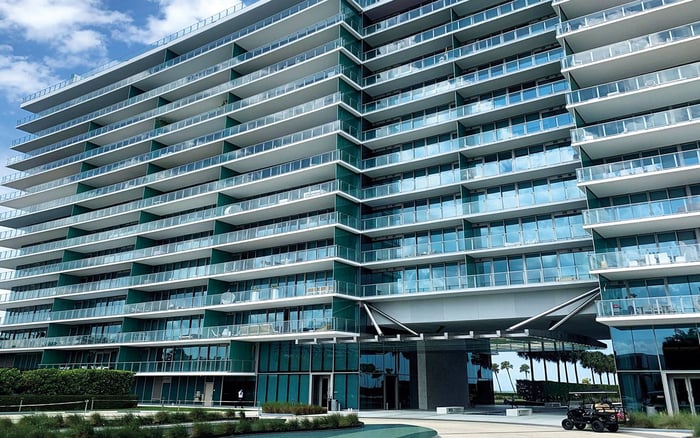
Apply the same residence-level test on Key Biscayne. A prospective owner might include Oceana Key Biscayne in a property tour, then personally verify the routes to every recurring destination. The useful questions are concrete: Would the owner comfortably make the trip on foot? Is the route still appealing in summer weather? What happens when carrying luggage, provisions or beach equipment? The answers should come from an actual trial, not an island-wide label.
Every conventional trip from Fisher Island to Miami International Airport begins with a ferry transfer. Passenger-and-vehicle ferry service runs 24 hours a day from Terminal Island near the MacArthur Causeway. Departures occur about every 10 minutes, but security, boarding and potential queues add time beyond the crossing itself.
This makes a fixed airport travel-time promise unhelpful. The more revealing measure is door-to-terminal variability. Owners should time the complete sequence: leaving the residence, reaching the landing, clearing the controlled process, boarding, arriving at Terminal Island and continuing through mainland traffic. A yacht, registered boat or authorized aircraft may create a different pattern, but it should not be treated as the default unless it truly reflects the owner’s routine.
For Key Biscayne, run the equivalent door-to-terminal exercise from the exact building and at realistic departure hours. Confirm the normal vehicle route, likely exposure to congestion, driver arrangements and contingency plan. The comparison is not simply ferry versus car. It is managed transfer time versus the verified reliability of the alternative journey.
Ferry boarding is restricted to residents and pre-approved guests, and the island is not open to the general public. That controlled perimeter limits casual visitors and through-traffic while adding an island-wide layer of security beyond an individual condominium’s services. For privacy-sensitive owners, this can be central to the purchase thesis.
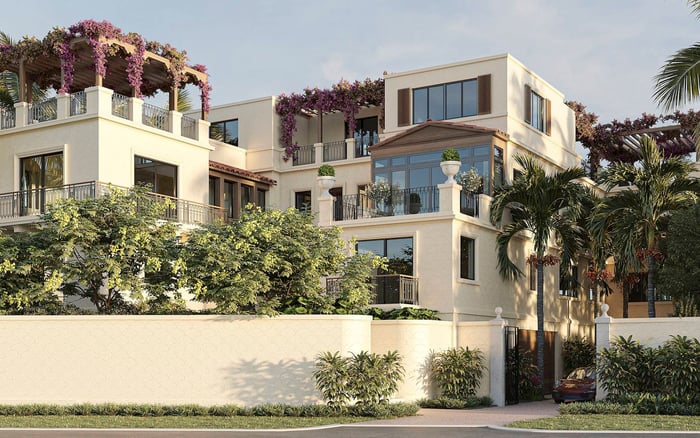
The corresponding tradeoff is reduced spontaneity. Guests must be cleared before arrival, and an impromptu trip to Miami Beach, Brickell or another mainland district includes the ferry and security sequence. An owner considering Palazzo del Sol should decide whether that ritual feels reassuring, neutral or burdensome after several days of realistic movement.
Yacht owners may view the equation differently. Fisher Island’s marina access supports direct arrival by water and limited public intrusion. Even so, buyers should establish which access modes they will actually use, who coordinates them and what the fallback is when plans change.
Fisher Island’s controlled entry can support lock-and-leave ownership, particularly for part-time and multi-home buyers comfortable with managed transportation. The surrounding amenity ecosystem can also reduce off-island trips after arrival. Privacy and resort convenience, rather than frictionless integration with Miami’s public street network, define the practical appeal.
Still, lock-and-leave is not a single building feature. It is a chain of responsibilities. Buyers should review residence oversight, access authorization, vehicle handling, deliveries, guest procedures, luggage movement and the transition from airport transfer to front door. The goal is to identify every handoff and determine who owns it.
A tour of The Links Estates at Fisher Island can serve as a rehearsal for that sequence, from landing to residence. On Key Biscayne, conduct the same rehearsal without assuming that a different access model automatically means less work. Building operations, staffing and the owner’s chosen service arrangements will shape the result.
Score each finalist from one to five across five categories, using personal observation and building documentation rather than generalized perceptions.
Weighting matters more than the raw total. A frequent flyer may assign airport predictability twice the value of amenity proximity. A privacy-led buyer may place controlled access first. A family that entertains often may care most about guest simplicity. Fisher Island is compelling when its managed perimeter, internal mobility and resort ecosystem outweigh the extra mainland step. Key Biscayne deserves preference only if the specific residence and verified routes better satisfy the same priorities.
Before contracting, simulate an ordinary arrival day and an ordinary departure day. Bring luggage, schedule a guest, make an evening mainland plan and time the airport sequence. On Fisher Island, include ferry clearance and boarding rather than timing only the water crossing. On Key Biscayne, verify each route from the actual property under realistic conditions.
The final decision should feel operational, not theoretical. Privacy, convenience and walkability are not universal qualities. They are outcomes produced by a particular residence, access system and household routine.
For discreet guidance in comparing South Florida’s most exacting addresses, connect with MILLION.
If branded residences are on your mind — as a home or as an allocation — we would be glad to share what we are seeing, privately.
Begin a quiet conversationIt primarily means short internal trips among residences and amenities by foot, bicycle or golf cart. It does not mean walking directly into mainland neighborhoods.
No. Fisher Island has no bridge or public-road connection to the mainland.
Residents and approved visitors can use the private ferry, registered boats or yachts, with authorized helicopter or seaplane access also described for the island.
Yes. The passenger-and-vehicle ferry operates 24 hours a day from Terminal Island near the MacArthur Causeway.
Departures have been described as occurring about every 10 minutes, although security, boarding and queues can extend the total transfer.
No. Ferry access is restricted to residents and pre-approved guests, so visitors must be cleared before arrival.
It can be manageable with planning, but every conventional airport trip begins with a ferry transfer. Buyers should test the complete door-to-terminal sequence rather than rely on a fixed estimate.
Controlled entry and an on-island amenity ecosystem can support privacy-sensitive, part-time ownership. The buyer must still assess residence oversight, deliveries and transportation handoffs.
Test routes from the exact residence to recurring destinations and consider weather, luggage and daily needs. Avoid relying on a general neighborhood label.
Simulate ordinary arrival, departure, guest and airport routines at each finalist. Weight internal mobility, mainland access, airport predictability, guest experience and absentee ownership according to personal priorities.