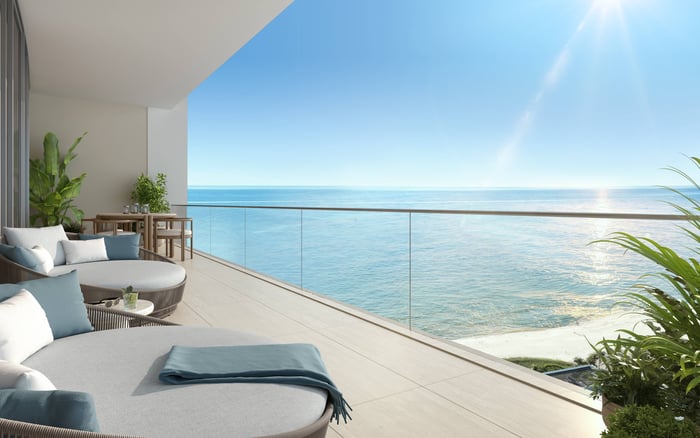
A refined oceanfront residence must also function as a secure setting for significant art, furnishings, and climate-sensitive possessions. Before closing, buyers should verify elevator geometry and access, approval pathways, structural capacity, and HVAC authority through building-specific records and written decisions.

An oceanfront condominium can be visually compelling yet operationally unsuitable for a serious collection. A monumental canvas may suit the living room but fail to clear the elevator door. A stone sculpture may appear modest in plan while imposing a concentrated load that warrants structural review. A conservation strategy may call for supplemental humidity control that requires condominium approval.
Begin with an inventory of the intended objects. Record crated dimensions, total weight, lifting requirements, turning radius, preferred display position, anchoring method, electrical demand, and climate sensitivity. This turns a broad lifestyle question into specific matters for the association, engineer, installer, conservator, and mechanical professional to address.
For buyers considering Rosewood Residences Hillsboro Beach or another residence along the Broward coast, these checks should occur before the contractual decision becomes irreversible.
A residence should be evaluated not only for what it displays, but for what it can safely receive, support, and preserve.
Ask the association for written specifications covering rated capacity, interior cab width, depth and height, clear door opening, threshold condition, and elevator configuration. A verbal assurance that the service elevator is large is no substitute for precise dimensions. Measure the entire route from the loading point through every entrance, corridor, turn, door, and vestibule to the unit.
Request available building records concerning the elevator's current status, maintenance, and alteration history. The objective is to confirm that the equipment information used to plan a move is current and building-specific rather than based on assumptions or marketing materials.
Obtain the building's current move policy and written approval covering reservation windows, delivery hours, padding, insurance requirements, deposits, escorts, approved vendors, staging limits, and protection of common areas. Ask what happens if the installation exceeds its scheduled window or requires another elevator trip.
This operational comparison is equally useful when viewing coastal alternatives such as Armani Casa Residences Pompano Beach. A project page can support an initial comparison, but only the target association's current written records can establish its procedures.
An installation affecting a lobby, corridor, façade, exterior wall, balcony, or another shared area should be evaluated through the condominium's documented approval process rather than treated as ordinary decorating.
Review the declaration, bylaws, house rules, and alteration application together. Look for provisions governing wall and ceiling penetrations, exterior attachments, balcony displays, installers, working hours, floor and wall protection, noise, debris removal, and restoration obligations. The target condominium's recorded documents and current rules should guide the review.
Request written approval tied to installation drawings. The request should identify the artwork, exact location, attachment method, contractors, required insurance, delivery route, schedule, and any engineering conditions. If an installation is visible from outside or extends beyond an owner-controlled area, determine whether a separate municipal review is required rather than assuming association consent is sufficient.
Buyers comparing design-led coastal residences, including The Ritz-Carlton Residences® Pompano Beach, should ask the same building-specific questions rather than carry assumptions from one condominium to another.
Do not infer residential slab capacity from appearances, marketing descriptions, or the absence of a posted notice. Those details do not establish whether a particular slab can support a sculpture, aquarium, compact archive, or heavy safe in a chosen location.
For an unusually heavy object, request building-specific structural drawings or reliable load information. Give a qualified structural engineer the object's weight, base dimensions, support points, intended location, anchoring proposal, and moving method. The review should consider load concentration, supporting conditions, placement near openings or edges, and temporary loads created during delivery.
The journey matters as much as the final position. Dollies, pallet equipment, lifting frames, and clustered installation personnel may create a loading pattern different from that of the displayed object. Coordinate written engineering conclusions with the association before fabrication, shipping, or closing.
A deliberate climate-control plan is important for climate-sensitive possessions, but the appropriate conditions should not be assumed. Collection-specific temperature and relative-humidity requirements should come from a qualified conservator or mechanical professional. The practical question is whether the residence and condominium rules can support that plan continuously.
Determine which HVAC components serve the unit, which responsibilities remain with the association, and who controls repair, replacement, condensate routing, fresh-air systems, and operating schedules. Review the governing documents, current rules, and available association records for the target property.
Ask whether supplemental dehumidification, monitoring sensors, dedicated equipment, or backup measures are permitted. Confirm restrictions concerning window or balcony equipment, exterior grilles, wall or ceiling penetrations, condensate lines, electrical work, and approved contractors. Supplemental equipment should be cleared in writing rather than presumed acceptable.
Have the mechanical professional evaluate the actual equipment, controls, distribution, and proposed display zones. A room with extensive glazing may require a different conservation response from an interior gallery wall, but the solution must remain specific to the unit and collection.
The final file should contain elevator specifications, available equipment records, the measured delivery route, move rules, governing documents, current alteration forms, written art approvals, structural information, engineering conclusions, and the proposed climate-control scope. Material decisions should state their conditions in writing rather than rely on informal assurances.
Exceptional real estate deserves technical scrutiny equal to its design ambition. Ocean views, privacy, and finish quality matter, but so do the systems and procedures that allow a residence to receive, support, and preserve significant possessions.
For discreet guidance on evaluating South Florida's finest residences, connect with MILLION.
If branded residences are on your mind — as a home or as an allocation — we would be glad to share what we are seeing, privately.
Begin a quiet conversationRequest rated capacity, cab width, depth and height, clear door opening, threshold details, and current building-specific equipment information in writing.
Equipment capacity alone does not establish when or how a resident may schedule a delivery. Obtain the current move policy and written approval conditions.
An object that fits inside the elevator may still fail to clear a loading entrance, corridor turn, vestibule, or unit doorway. Measure every stage from unloading point to final position.
Any proposed installation in a shared area should be checked against the condominium's governing documents and approval procedures. Written consent may require drawings, insurance, and restoration terms.
Yes. Confirm the condominium's requirements and determine whether municipal review applies to the proposed exterior work.
No. Suitability should be evaluated using reliable building-specific information and the precise weight, footprint, and location of the object.
Consider review for unusually heavy or concentrated objects such as substantial sculptures, safes, aquariums, or compact archives. The engineer should assess the exact object, route, and intended location.
Yes. Dollies, lifting frames, pallet equipment, and installation crews may create loading conditions different from the object's final position.
Review governing documents, current rules, alteration forms, equipment information, and available association records. Confirm responsibility for HVAC components and restrictions on supplemental systems.
A qualified conservator or mechanical professional should define collection-specific temperature and humidity needs. The proposed solution should then be checked against the unit's capabilities and condominium rules.