A disciplined framework for testing whether a Las Olas tower view is protected, merely open today, or exposed to development risk on surrounding parcels.
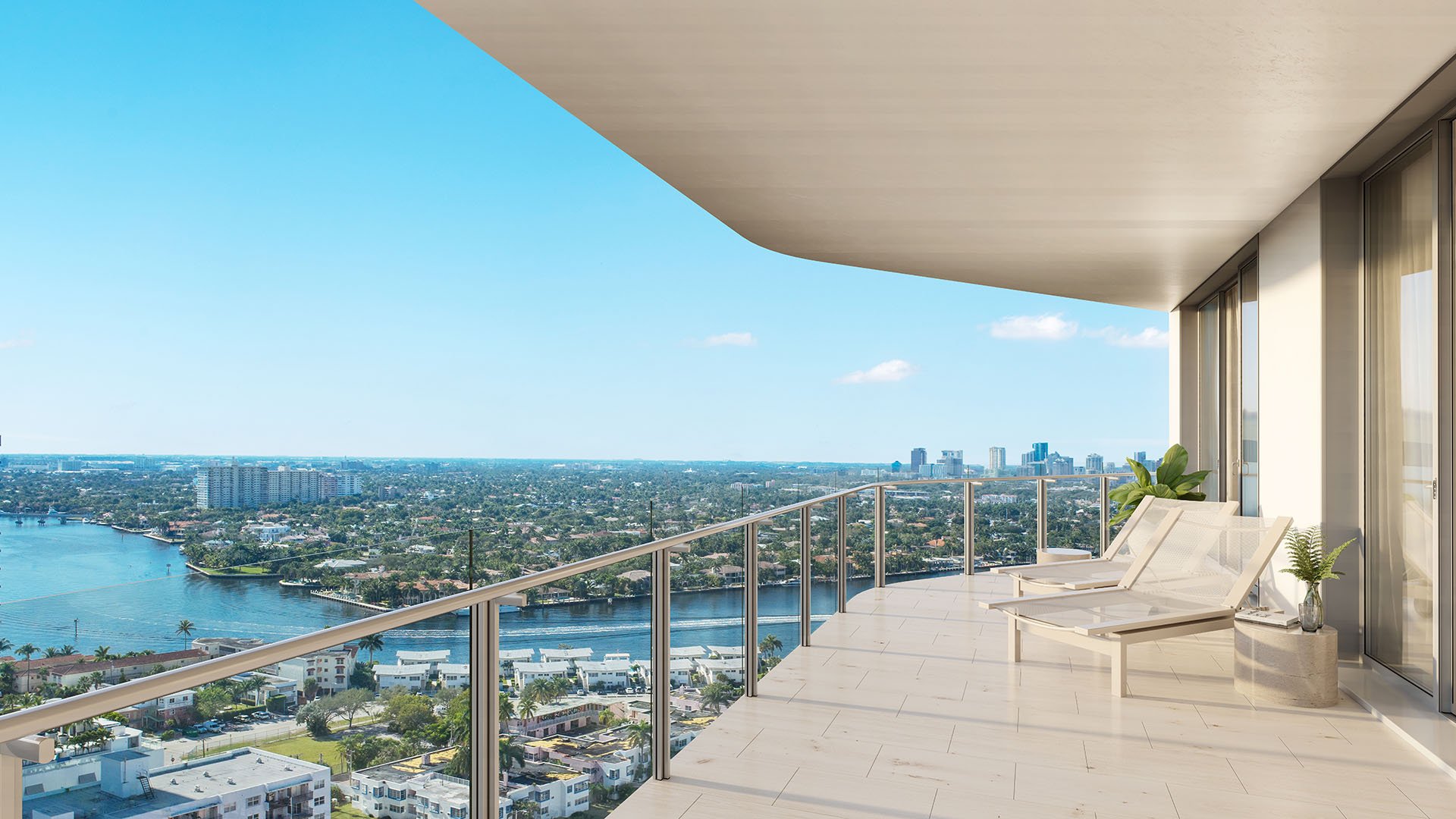
A residence in a full-service Las Olas tower can combine privacy, attentive service and an elevated outlook. Yet an open view observed during a showing should not automatically be treated as permanent. The more useful diligence question is what land and potential development capacity sit between the residence and the horizon.
Trace the principal sightlines from the specific residence, including views from living areas, bedrooms and terraces. Identify each parcel crossed by those sightlines rather than stopping at the adjoining property. Parking areas, low-rise buildings, vacant sites and neighboring lots that could potentially be considered together all deserve attention.
The quality of a view and the durability of that view are separate assets.
The review should also consider the width and angle of each outlook. A broad view over water or a public right-of-way presents a different risk profile from a narrow opening across privately controlled land. High elevation may clear an existing roofline without eliminating the possibility of future obstruction.
A parcel-level review is more reliable than a neighborhood-wide assumption. For each consequential property, buyers and their advisers should verify the applicable zoning district, overlays, permitted uses, height rules, setbacks and transition requirements through current official records.
Different development programs can also create different effects. Residential, hospitality, office or retail uses may produce distinct building forms, service areas, rooftop elements, lighting and activity. Height is therefore only one part of the analysis; placement, width, orientation and site access can be equally relevant to a residence’s view, light and privacy.
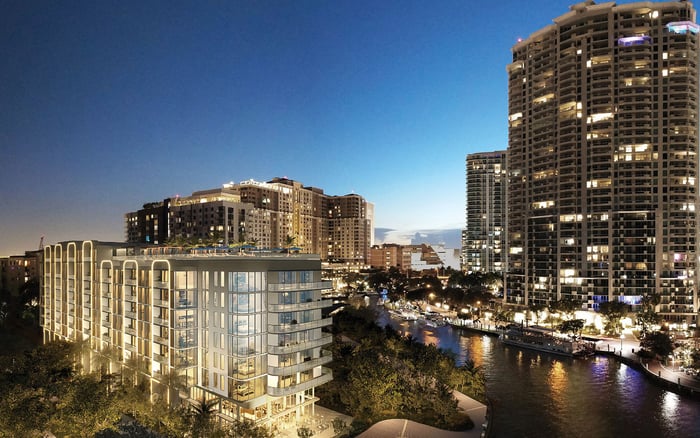
For buyers considering Sixth & Rio Fort Lauderdale or another urban address, the objective is to understand the rules governing the actual parcels within the view corridor. General impressions about Las Olas should not replace property-specific diligence.
Current base zoning may not reveal every factor affecting a potential building envelope. Applicable overlays, development standards, approved plans and pending applications should be reviewed separately with qualified local professionals.
For each parcel with meaningful obstruction potential, test several conditions: what current rules may permit, what has already been approved and what remains under review. The analysis should model plausible building placement rather than focusing exclusively on maximum height. A shorter structure directly within a narrow view cone may have more impact than a taller building positioned farther to one side.
Plans and applications can change. A diligence file should therefore capture the records available during the buyer’s review period and be refreshed before any relevant contractual deadline. Potential lot combinations should also be examined where they could materially alter building width or placement.
Descriptive language used in marketing does not, by itself, establish an enforceable property right. If a sightline is represented as protected, the buyer’s counsel should identify the recorded instrument and review its exact wording, affected land, duration, beneficiaries, amendment provisions and enforcement terms.
A general expectation of continued openness is different from a documented restriction or property interest. Buyers should avoid assuming that waterfront ownership, current site conditions or a neighboring low-rise building automatically protects a skyline or water outlook across other land.
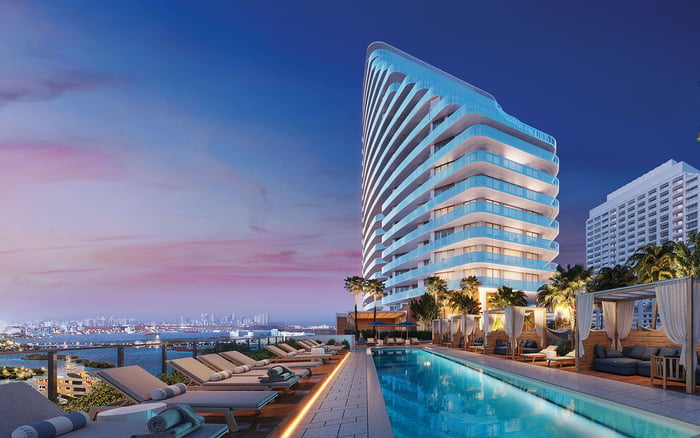
This distinction deserves attention whether the comparison includes Four Seasons Hotel & Private Residences Fort Lauderdale, The Ritz-Carlton Residences® Fort Lauderdale or a boutique building closer to Las Olas Boulevard. Full-service positioning may shape the lifestyle experience, but surrounding-parcel risk still requires independent review.
A view can be an important component of perceived value, but broad market observations are not a valuation formula for a particular residence. A disciplined analysis should consider the outlook’s width, orientation, focal point, elevation, distance from potential development and dependence on privately controlled parcels.
The review should distinguish a primary, room-wide panorama from a partial or angled view. It should also consider whether the same outlook is available from several rooms or only from a limited position on a terrace. These differences can influence how vulnerable the residence may be to a future change in its surroundings.
Model both the current condition and a plausible obstruction scenario. Consider possible effects on water visibility, daylight, privacy and the terrace experience. A buyer comparing Las Olas with a waterfront setting such as St. Regis® Residences Bahia Mar Fort Lauderdale should evaluate the durability of each outlook rather than treating all attractive views as equivalent.
A useful final file can pair a marked sightline plan with current parcel records, zoning and overlay information, applicable development standards, approved plans, pending applications and any recorded instruments relevant to the claimed view protection. Dated photographs from the principal rooms can document the condition reviewed by the buyer.
The file should also identify which parcels present the greatest potential obstruction risk and explain why. That structure turns an emotional feature into a reviewable real-estate variable and helps the buyer decide whether the asking price appropriately reflects uncertainty.
The most valuable conclusion may not be that a view is permanent. It may instead be a clear understanding of what could change, where a change could occur and how that possibility affects the residence’s appeal.
For discreet guidance on evaluating a full-service Las Olas residence, connect with MILLION.
If branded residences are on your mind — as a home or as an allocation — we would be glad to share what we are seeing, privately.
Begin a quiet conversationA residence’s sightline may cross multiple properties. A more distant project could still affect the view, daylight, privacy or sense of openness.
Review the current zoning district, overlays, permitted uses, height rules, setbacks and transition requirements with qualified local professionals.
No. The relevant rules and development conditions should be checked for each property within the residence’s principal sightlines.
Not by itself. Counsel should determine whether an applicable recorded instrument provides enforceable protection.
Overlays may affect how base zoning and development standards apply. They should be examined separately during parcel-level diligence.
Yes. Placement within a narrow sightline may matter as much as overall height when evaluating views, light and privacy.
Include current parcel and zoning records, applicable overlays, development standards, approved plans, pending applications and relevant recorded instruments.
Counsel should review the exact recorded language, affected land, duration, beneficiaries, amendment provisions and enforcement terms.
Refresh the review before any relevant contractual diligence deadline because plans, applications and property conditions can change.
Consider the view’s width, orientation, focal point, elevation and reliance on developable parcels, then compare the current outlook with plausible obstruction scenarios.