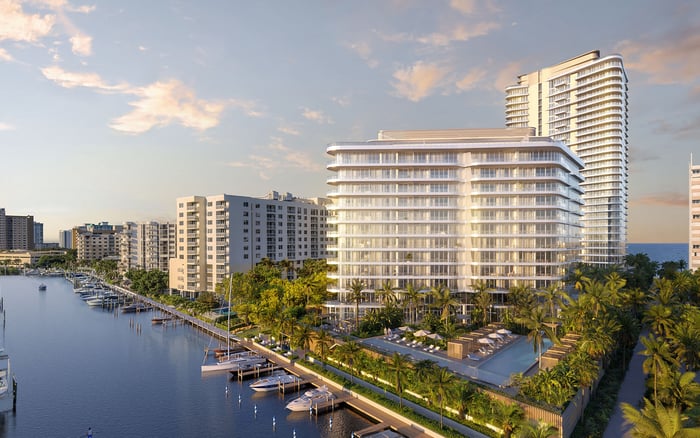
A discreet buyer’s guide to underwriting three South Florida Ritz-Carlton Residences through governance, capital structure, climate exposure, construction status, operating costs, rental rules, and resale liquidity.

For high-net-worth buyers, the Ritz-Carlton name carries an immediate promise: discretion, service, polish, and confidence in the daily rhythm of ownership. In South Florida, however, buyers evaluating The Ritz-Carlton Residences® Miami Beach, The Ritz-Carlton Residences® Palm Beach Gardens, and The Ritz-Carlton Residences® Pompano Beach should resist treating them as interchangeable versions of the same branded-luxury product.
The sharper lens is risk-based. Each property has its own development context, association structure, management framework, physical setting, and future resale audience. The brand may shape service standards and owner expectations, but it does not erase construction risk, governance risk, operating-cost risk, insurance risk, or association-health risk.
That distinction matters. A buyer is not simply purchasing finishes, views, amenities, and a hospitality flag. The acquisition is also entry into a legal, financial, and physical ecosystem that will evolve long after closing.
The first diligence principle is to separate three parties that marketing can make feel seamless: the brand, the local developer, and the residential management structure. They are connected in the owner experience, but they are not the same underwriting subject.
A buyer should understand who is responsible for delivery, who controls the association before and after turnover, who manages daily operations, and what the brand and management agreements actually require. Service standards, staffing levels, brand controls, fee formulas, and termination rights can materially affect carrying costs and owner satisfaction.
The prestige of the Ritz-Carlton name may be a meaningful demand driver, but it should not replace document review. The core questions are practical: What obligations survive turnover? Which fees are fixed, and which can move with staffing, insurance, utilities, and amenity demand? What rights do owners have if service levels change or if brand standards become more expensive to maintain?
For buyers comparing a delivered building with a development-stage offering, the risk conversation changes significantly. A completed building places greater emphasis on current association health, existing operating costs, maintenance cadence, and observable building performance. A development-stage offering calls for closer review of execution risk, association formation, amenity operating assumptions, and projected carrying costs.
New-construction risk is not only about whether a building will be finished. It also includes construction timing, deposit protections, completion obligations, possible cost escalations, and the strength of the sponsor behind those obligations. A buyer’s counsel should review purchase documents for remedies, delay provisions, budget assumptions, and the point at which responsibility shifts from developer to owner-controlled association.
For Miami Beach, Palm Beach Gardens, and Pompano Beach, the diligence should be property-specific rather than brand-wide. Buyers should confirm the current construction or delivery posture directly through the offering materials, contract documents, and professional advisers before relying on any marketing shorthand.
The most elegant amenity package still has to be staffed, insured, maintained, cooled, secured, cleaned, repaired, and eventually renewed. Association budgets deserve the same scrutiny as finishes and floor plans.
Buyers should review reserves, staffing assumptions, amenity costs, insurance premiums, management fees, utility assumptions, and potential capital-call exposure. In South Florida, long-term maintenance funding is central to preserving value, safety, financeability, and liquidity.
Diligence should move beyond the first-year budget. Luxury operating models often become clearer after full occupancy, after developer subsidies expire, or after the association transitions to owner control. Buyers should ask whether early budgets are normalized, whether staffing is adequate for the promised service level, and how reserves are intended to fund future repair and replacement needs.
In South Florida, water, weather, insurance, and maintenance should be part of the underwriting even when the lifestyle story is compelling. The view, arrival sequence, and amenity setting are only one side of the equation. The other side includes flood-zone status, elevation, storm-surge exposure, hurricane hardening, drainage, waterfront infrastructure where applicable, and the availability and cost of insurance.
Buyers should confirm each property’s specific exposure rather than assuming that one Ritz-Carlton Residences profile explains the others. The same diligence theme can lead to different conclusions in Miami-Dade, Broward, and Palm Beach depending on site conditions, building design, association documents, and insurance assumptions.
Insurance is not a static line item. It can shift with building characteristics, claims environment, replacement costs, and broader coastal-market conditions. Buyers should understand not only the current premium, but also the assumptions behind it and how increases would flow through the association.
Rental and use restrictions should be reviewed before a buyer falls in love with the service concept. These rules can affect lifestyle flexibility, investor demand, financing options, and resale value.
A private owner planning seasonal use may prefer restrictive rules that preserve residential quiet and service consistency. An investment buyer, by contrast, may care more about leasing windows, approval procedures, minimum rental periods, guest-access rules, and how restrictions compare with competing branded residences in the same market.
Neither approach is inherently superior. The issue is alignment. A buyer should confirm that the documents support the intended use and that future resale audiences are likely to value the same structure.
The Ritz-Carlton name may broaden recognition, but liquidity should be evaluated separately for each project. The relevant questions include competing branded residences, local buyer depth, available inventory, pricing discipline, and realistic exit timelines.
Miami Beach has a different demand profile than Palm Beach Gardens, and Pompano Beach has a different competitive context again. Resale performance will not be dictated by the brand alone. It will be shaped by carrying costs, association health, perceived building quality, view corridors, service consistency, rental rules, and how well each property ages against new supply.
A disciplined buyer should request comparable resale data where available, study active and pending inventory, and consider how long it may take to exit without compromising price. In branded residential real estate, liquidity often belongs to the best-underwritten asset, not simply the best-known name.
Before contract or during the applicable review period, buyers should move past renderings and hospitality language into the governing and operating file. Essential materials include the declaration, bylaws, rules and regulations, proposed or current budgets, reserve schedules, insurance summaries, management agreements, brand agreements where available, engineering or structural materials, and disclosures related to construction timing or completion obligations.
The goal is not to make the purchase feel less inspiring. It is to ensure that the inspiration is supported by durable economics. For The Ritz-Carlton Residences® Miami Beach, the emphasis may be current operations, maintenance funding, and resale liquidity. For The Ritz-Carlton Residences® Palm Beach Gardens, it may be development-stage execution, association structure, and amenity-cost assumptions. For The Ritz-Carlton Residences® Pompano Beach, it may be coastal exposure, construction profile, and future operating costs.
The best buyers preserve optionality. They know what they are buying, who controls the experience, how costs can change, and what the resale market may reward or discount later.
Should buyers view the three Ritz-Carlton Residences as comparable products? No. They should be evaluated as separate risk profiles with distinct development, governance, physical-setting, and resale considerations.
Does the Ritz-Carlton brand eliminate buyer risk? No. The brand can support service expectations, but it does not remove construction, association, insurance, operating-cost, or resale risk.
What documents matter most before contract? Buyers should review association documents, budgets, reserves, insurance assumptions, management agreements, brand-related agreements, and construction disclosures.
Why is association turnover important? Turnover can shift control from the developer to owners, making reserves, budgets, contracts, and governance rights especially important.
How should buyers think about Miami Beach specifically? Miami Beach should be reviewed through its own documents, operating structure, maintenance funding, insurance assumptions, and resale context.
How should buyers think about Palm Beach Gardens specifically? Palm Beach Gardens should be evaluated through its specific development posture, association structure, amenity operating assumptions, and buyer audience.
How should buyers think about Pompano Beach specifically? Pompano Beach requires careful review of its particular site conditions, construction profile, insurance assumptions, and projected operating costs.
Why do rental rules matter? Rental restrictions can affect owner flexibility, investor demand, financing, building culture, and eventual resale value.
What climate issues should be reviewed? Buyers should examine flood status, elevation, storm-surge exposure, hurricane hardening, drainage, applicable waterfront infrastructure, and insurance availability.
What is the most important diligence principle? Treat brand prestige as one factor, then verify the legal documents, budgets, engineering, insurance, and comparable resale evidence.
If you'd like a private walkthrough and a curated shortlist, connect with MILLION.
If branded residences are on your mind — as a home or as an allocation — we would be glad to share what we are seeing, privately.
Begin a quiet conversation