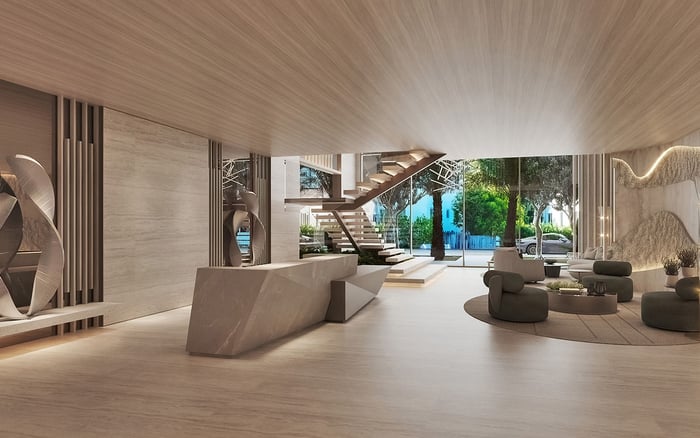
A buyer-focused examination of contracts, construction representations, financing, design specifications and ownership costs at The Residences at 1428 Brickell.

At The Residences at 1428 Brickell, the purchase decision deserves two distinct readings: one architectural, the other contractual. The address is 1428 Brickell Avenue, Miami, FL 33131, and the tower is described as approximately 70 stories. Those particulars establish the setting, not the protections attached to an individual purchase.
For a discerning buyer, diligence should translate the presentation into enforceable commitments: what will be delivered, when delivery must occur, which changes are permitted and what ownership will cost. An elegant specification matters most when its substance carries through to the signed documents.
The identified developer is Ytech - 1428 Brickell, LLC. Have counsel reconcile that name with the seller in the purchase agreement, the title documentation and the entity receiving contractual notices. Confirm who owes each obligation rather than treating a project name as a legal counterparty.
Request the condominium declaration, bylaws, rules, proposed budget, assessment schedule, reserve disclosures, insurance information and turnover provisions. Review them alongside every purchase-agreement exhibit and amendment.
The contract review should address deposit handling and protections, assignment restrictions, material-change provisions, inspection access and closing requirements. Ask counsel to distinguish express rights from requests that remain subject to the seller's consent. Resolve material questions in writing before committing funds.
The project is described as under construction and going vertical, with Coastal Construction identified as general contractor. Project representations place the start of demolition and site work in Q3 2023, irrespective of the percentage of residences sold, and describe construction as on schedule. These statements are not independent confirmation of present progress or a guarantee of delivery.
Request a dated construction update and compare it with the purchase agreement's completion provisions. Identify the outside completion date, permitted extensions, notice requirements and available remedies. Ask whether residence delivery and completion of shared amenities carry different obligations.
For a buyer coordinating another sale or a relocation, the relevant question is not simply whether work is advancing. It is how the contract allocates the consequences of delay.
The project is described as funded by J.P. Morgan. That identifies a financing relationship but does not establish the loan amount, conditions, collateral or requirements for releasing an individual residence from a construction lien.
A separate representation states that reaching 30-40% sales would help accelerate construction financing but was not a prerequisite for construction. That statement should not be read as a current sales percentage or evidence of remaining inventory.
Have counsel and the title adviser establish the unit-release mechanics, required payoff documentation and treatment of relevant liens at closing. A lender's name cannot substitute for understanding how the buyer receives title and which contractual conditions must first be satisfied.
The identified design team is ACPV ARCHITECTS / Antonio Citterio. For a design-led acquisition, the next step is to establish precisely which drawings, finishes, dimensions and equipment specifications form part of the purchase agreement.
The project's legal terms allow proposed sketches, renderings, plans, specifications and other statements to be modified, revised or withdrawn. Review substitution rights, tolerances and the definition of a material change. Determine which promised elements are binding and which remain illustrative.
Enhanced solid-concrete walls between residences are also advertised. Request the actual wall assembly, acoustic performance criteria and permitted substitutions. Concrete construction is not, by itself, a complete acoustic specification. Ask the technical adviser what evidence would demonstrate the promised performance and how potential deficiencies would be addressed.
Construction and improvements remain subject to required federal, state and local permits and approvals. General municipal permitting resources do not establish this development's permit status or inspection history. Request project-specific records and have an appropriate professional assess what has been approved, what remains outstanding and how those items relate to occupancy.
The technical file should also include flood and elevation information, stormwater design, glazing, waterproofing and backup-power documentation. Ask which systems serve the residence, which serve common areas and what operational limitations apply.
Review catastrophe-insurance information alongside the engineering materials. Design intent, an approved installation and insurance coverage answer different questions; none substitutes for the others.
Build an ownership budget that extends beyond the purchase price and initial assessment. Request the basis for projected operating expenses, reserve assumptions, insurance costs, taxes, parking, storage, utilities and working-capital contributions. Establish which charges recur and which are payable at closing.
Have advisers test the model against alternative assessment and insurance assumptions without presenting those scenarios as forecasts. Review how expenses are allocated and what the condominium documents provide for budget changes and owner responsibilities.
If Cipriani Residences Brickell is also under consideration, apply the same cost categories to each purchase. A comparison is useful only when it measures equivalent obligations rather than isolated headline figures.
For a buyer considering Una Residences Brickell alongside 1428 Brickell, the comparison should extend beyond visual preferences. Use a consistent framework for completion rights, deposits, assignment provisions, specifications and ownership costs, then assess each project's actual documents individually.
Do not assume that a familiar neighborhood or similar presentation produces equivalent legal terms. Request current availability and sales information directly, obtain an independent title review and have counsel investigate relevant litigation. Neither a sales narrative nor visible construction resolves those questions.
The objective is not to eliminate every uncertainty. It is to understand which uncertainties remain, who bears them and whether the purchase price and intended use justify accepting them.
Organize the final review around four deliverables: a legal assessment of the agreement and condominium documents, a title and lien-release review, a technical assessment of specifications and approvals, and an ownership-cost model informed by insurance advice.
Keep unresolved matters explicit. A promised finish, completion date or operating feature should be documented precisely enough for the buyer's advisers to evaluate it. Where confirmation remains outstanding, decide with counsel whether to seek clarification, negotiate protection or defer commitment.
For a considered approach to your next Brickell acquisition, connect with MILLION.
If branded residences are on your mind — as a home or as an allocation — we would be glad to share what we are seeing, privately.
Begin a quiet conversationThe project is located at 1428 Brickell Avenue, Miami, FL 33131, in Brickell.
The identified developer is Ytech – 1428 Brickell, LLC. Counsel should reconcile that entity with the seller named in the purchase agreement and relevant title documents.
Coastal Construction is identified as the general contractor. Buyers should separately request dated construction updates and project-specific approval records.
No. Under-construction and on-schedule descriptions are project representations; contractual completion dates, extension rights and remedies require separate review.
The statement that the project is funded by J.P. Morgan identifies a financing relationship, not its full terms. Buyers should verify unit-release mechanics and closing requirements with their advisers.
No. It describes a sales level that could accelerate construction financing, not a verified current sales percentage.
No. Buyers should check purchase-agreement exhibits and condominium documents because proposed plans, specifications and other statements may be changed under the project's legal terms.
Request the actual wall assembly, acoustic performance criteria and permitted substitutions. The advertised enhanced solid-concrete walls do not alone establish a complete acoustic standard.
Review assessments, reserves, insurance, taxes, parking, storage, utilities and working-capital contributions. Separate recurring expenses from amounts payable at closing.
Request project-specific permit and inspection records, plus flood, elevation, stormwater, glazing, waterproofing and backup-power documentation. Review catastrophe-insurance information alongside those materials.