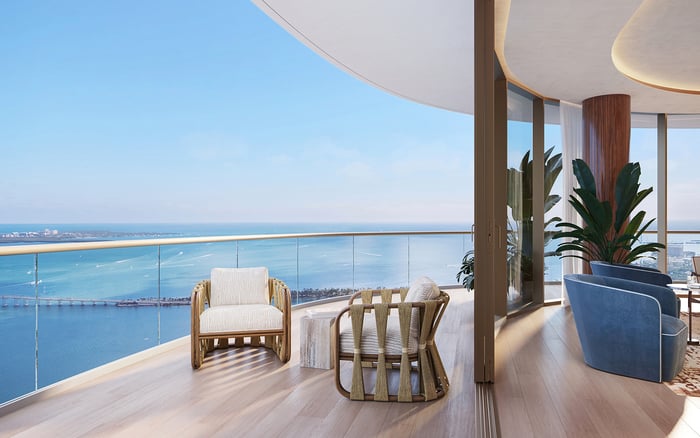
At Colette Residences Brickell, advertised private elevator access is only the beginning. Buyers should establish written pet permissions, trace approved relief routes, and review building-specific emergency procedures before relying on daily convenience or evacuation assumptions.

At Colette Residences Brickell, at 1880 Brickell Avenue in South Brickell, the advertised arrival experience is distinctly private: four private elevators with password-protected access directly into each home, complemented by a separate service elevator providing secondary access to each residence.
For buyers with pets, visiting caregivers, or mobility considerations, those features begin the inquiry rather than complete it. An elevator specification does not establish which car a dog may use, how a sitter enters, or what happens when ordinary access is interrupted. Luxury is most convincing when the daily routine works as elegantly as the residence itself.
The purchase question is practical: can management document a permitted, workable route from the residence to an approved outdoor relief area, with clear access rules and a separate emergency plan?
Pet permission remains unresolved: available descriptions conflict on whether pets are allowed. That conflict does not settle the association's rules. Current governing documents are essential.
Request the declaration, bylaws, current rules, and association application package. Have the provisions reviewed together, with written clarification of pet numbers, size and breed restrictions, registration, vaccinations, leash requirements, nuisance standards, and guest-pet permissions. Ask which provisions apply to the specific residence and whether any approval remains outstanding.
The distinction matters for households that use walkers or sitters. Permission to keep an animal does not automatically authorize a service provider to enter through a particular elevator. Nor should a visiting family member's pet be assumed to have the same standing as a registered resident animal.
If pets are essential to the purchase, resolve these questions before treating the residence as a suitable match.
Advertised green spaces, terraces, and private gardens in selected ground-floor residences do not establish permission to use those spaces for pet relief. A dedicated dog run, relief station, waste-disposal point, or authorized relief route has not been established here; that does not mean such arrangements are absent.
Request a marked plan identifying the approved relief location, permitted elevator, exterior access point, and waste station. Then ask to walk the complete route where access is available. Assess doors, thresholds, return-entry credentials, and the practicality of managing a leash or carrier while operating access controls.
Test the routine, not just the distance. Ask about early-morning access, wet-weather procedures, cleaning responsibilities, and restrictions on shared landscaped areas. Document the elevator-outage alternative separately from the ordinary route.
For buyers also considering 2200 Brickell, use the same route-based inquiry. This is a comparison framework, not an assertion that the properties share facilities or pet rules.
Colette's advertised private elevators and secondary service access describe physical access features, not operating rules for pets, guests, deliveries, move-ins, or emergencies. Secondary access also does not establish that a service elevator will remain available during an outage affecting another system.
Ask management to explain ordinary access in writing: which elevators residents may use with animals, whether hours or reservations apply, and how deliveries and move-ins affect availability. Request a demonstration of guest authorization without assuming owners should share their personal credentials.
Dog walkers, sitters, grooming providers, and veterinary transport require explicit access protocols. Confirm how authorization is issued and withdrawn, what happens when the owner is away, and whether providers may enter the residence unaccompanied. Ask who handles access problems outside normal staffing hours.
A buyer weighing Una Residences Brickell can apply the same discipline without assuming equivalent elevator arrangements. The useful comparison is the documented operating experience, not simply the promise of a private arrival.
General fire-evacuation advice does not establish Colette's adopted emergency procedures. Do not use elevators during a fire evacuation unless directed or assisted by Fire Department personnel.
Follow posted evacuation routes and emergency-personnel instructions. When directed to evacuate, use designated exit stairs and keep fire doors closed; do not assume the roof provides an exit.
Request Colette's building-specific emergency plan. Confirm stair locations, assembly areas, posted evacuation routes and telephone numbers, and any relocation or shelter-in-place instructions. Ask how those instructions reach residents and visitors, and what generator coverage actually supports. Do not infer emergency elevator availability from backup-power language.
For residents with mobility limitations, ask for the documented assistance procedure. A private elevator should never be treated as the household's fire-evacuation strategy.
For owners who travel, ask what procedures address pets left alone and whether an authorized local contact can assist. Do not assume building personnel will enter a residence or retrieve an animal. Establish the scope of any assistance explicitly.
Keep hurricane shelter planning separate from fire response. Before relying on a Miami-Dade pet-friendly evacuation center, confirm current admission and preregistration requirements. Plan to bring supplies and maintain control with crates, leashes, or other appropriate means. Prepare current medical and vaccination records, including rabies documentation, and a visible Miami-Dade dog license where applicable.
Eligible residents who require specialized transportation or cannot evacuate independently because of medical needs may seek assistance through the Emergency Evacuation Assistance Program. Treat that as a separate inquiry from pet-friendly shelter admission, and confirm arrangements before an emergency.
Complete the review with operational records: current elevator certificates, inspection and drill records, pending violations, outage history, and relevant association minutes. Request records applicable to the building's stage rather than assuming an operating history exists. Review these separately from household access rules.
Organize the decision around three deliverables: written pet permissions, a marked everyday route with an outage alternative, and the building-specific emergency plan. Distinguish adopted procedures from proposed arrangements and verbal assurances. Where an essential point remains unresolved, ask your adviser how to address it within the purchase process.
The objective is not to make a private residence feel administrative. It is to ensure that privacy, pet ownership, and preparedness coexist without relying on assumptions.
For a considered approach to South Florida residential decisions, explore MILLION.
If branded residences are on your mind — as a home or as an allocation — we would be glad to share what we are seeing, privately.
Begin a quiet conversationColette Residences is located at 1880 Brickell Avenue in South Brickell, Miami.
The advertised features include four private elevators with password-protected access directly into each home. A separate service elevator provides secondary access to each residence.
Available pet descriptions conflict and do not establish an association-issued policy. Buyers should review current governing documents and obtain written clarification for their household.
A dedicated relief area or authorized route has not been established here. This does not establish that such facilities are absent; request a marked plan and written permission.
No. Marketing references to terraces, green spaces, or selected private gardens do not establish permission to use those spaces for pet relief.
Confirm permitted entrances and elevators, how authorization is issued and withdrawn, and whether unaccompanied entry is allowed. Ask how access problems are handled when the owner is away.
Do not use elevators during a fire evacuation unless directed or assisted by Fire Department personnel.
No. Buyers should request Colette's own plan covering exit stairs, assembly areas, emergency instructions, generator coverage, and assistance procedures.
Confirm current admission and preregistration requirements before an emergency. Prepare supplies, crates or leashes, medical and vaccination records, and applicable dog-license identification.
Request current certificates, inspection records, pending violations, outage history, and relevant association minutes applicable to the building's stage. Review these separately from everyday pet and visitor access rules.