Downtown convenience, private waterfront access, and gated seclusion offer distinct versions of Coral Gables living. The right choice begins with separating everyday walkability from recreation, privacy, and boating priorities.
In Coral Gables, walkability is less a single neighborhood attribute than a question of what you want outside your door. Walking to dinner, strolling through landscaped residential streets, and heading to a marina on foot offer different pleasures. They are not interchangeable when choosing a home.
For buyers who want restaurants, retail, and everyday services in a concentrated district, Downtown is the strongest fit among these settings. Waterfront estates and gated enclaves serve other priorities: land, boating, controlled access, and privacy. These categories also overlap. A residence can be both waterfront and gated without offering downtown-style convenience.
The useful comparison is not which setting is universally best, but which supports your ordinary week. Begin with the destinations you expect to reach on foot, then weigh the private amenities you would genuinely use.
Downtown Coral Gables centers on Miracle Mile and Ponce de Leon Boulevard, where restaurants, shops, offices, banks, and condominiums form a relatively compact district. That concentration makes it a clear starting point for buyers who want to walk to a destination, not simply for exercise.
For a household that values spontaneous dinners or combining errands with an afternoon outing, this setting deserves early attention. Not every address delivers the same experience. Rather, the range of destinations within the downtown fabric makes an address-specific assessment worthwhile.
When considering Ponce Park Coral Gables, apply that distinction directly: identify the destinations that matter to you and walk the actual routes from the prospective residence. A project name or neighborhood label is no substitute for testing the journey.
The trade-off is a matter of priorities. A buyer seeking extensive grounds or private waterfront access has a different brief from someone who wants a restaurant district to function as an extension of home. Neither preference is more luxurious; each values a different kind of freedom.
Waterfront living in Coral Gables generally emphasizes estate homes, canals or Biscayne Bay frontage, and boating access rather than a concentration of public shops and services. The central question is how the property connects to the water, not how closely it resembles an urban neighborhood.
Gables Estates illustrates that distinction with its large estate lots, deepwater canals, and direct Biscayne Bay access. Its appeal rests on privacy, land, boating, and estate-scale architecture. Evaluate those qualities on their own terms, not as substitutes for walking to daily destinations.
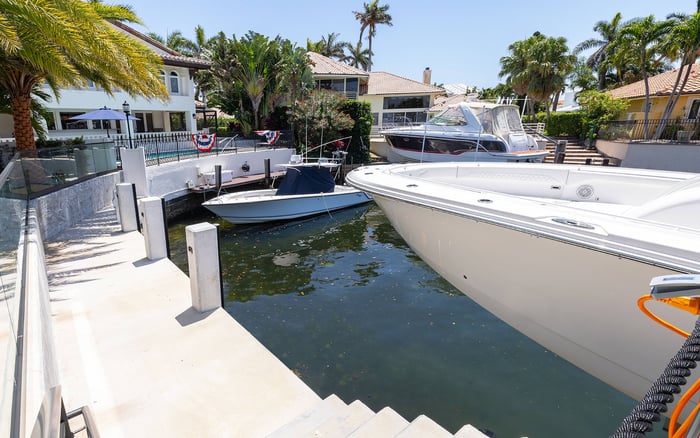
Cocoplum combines controlled access with waterfront homes, canals, and private docks in a boating-oriented residential setting. Old Cutler Bay is another gated waterfront enclave, while Tahiti Beach is associated with secluded estate living and controlled access. These are related choices, not identical settings.
Do not assume every residence in a waterfront community has a dock or the same boating access. For each candidate property, verify docking rights, canal conditions, bridge clearances, seawall condition, flood exposure, and insurance requirements separately. A community-level description cannot settle those property-level questions.
Coral Gables’ gated communities generally emphasize controlled entry, privacy, and larger residences. Their appeal differs from that of the open downtown street network, even where residents enjoy walking within the community.
Gables Estates, Cocoplum, Snapper Creek Lakes, Old Cutler Bay, and Hammock Lakes belong in this broader comparison, but they should not be treated as one lifestyle category. Hammock Lakes, for example, offers a secluded residential setting with mature landscaping. For a buyer seeking retreat rather than an urban environment, that distinction may matter more than proximity to retail.
A pleasant residential walk and a practical walk to groceries or dinner are separate tests. Controlled entry addresses access; it does not, by itself, establish pedestrian convenience or guarantee a particular security outcome.
For buyers also considering The Village at Coral Gables, keep the same hierarchy: assess the residence, its surroundings, and the routes you would actually use. Compare it with estate options against your own priorities, without assuming that different residential formats deliver equivalent privacy or convenience.
Deering Bay offers a private, resort-style residential setting organized around golf, marina, tennis, and dining amenities. Its appeal centers on on-site recreation rather than pedestrian access to downtown Coral Gables’ shopping and restaurant districts.
That arrangement can appeal to buyers whose regular activities revolve around recreation. But private amenities are not equivalent to neighborhood walkability. Access to golf or dining within a residential setting answers a different need from access to a range of public shops and services.
Treat membership, usage rights, and access conditions as separate diligence items. Before assigning value to an amenity, establish what accompanies the particular residence and what requires an additional arrangement. The relevant luxury is an amenity you can actually use, not simply one associated with the community.
Southeast Coral Gables and nearby High Pines offer another direction for buyers drawn to tree-canopied residential streets near Sunset Drive shops and restaurants. High Pines is a nearby comparison area, not automatically a Coral Gables neighborhood.
This is a useful alternative for buyers who want a residential atmosphere while remaining near commercial destinations. Still, proximity alone does not establish the quality of a walk. Assess crossings, sidewalks, shade, and the route from the specific home rather than relying on a broad area description.
If Cora Merrick Park enters the search, apply the same destination-first discipline. Compare the actual address against your routines without assuming that all Coral Gables residences offer the same pedestrian experience.
Before selecting a setting, write down three non-negotiables. They might be walking to dinner, keeping a boat close, or having substantial private grounds. Then distinguish the preferences only the property itself can satisfy from those that depend on the surrounding neighborhood.
Walk prospective routes at the times you expect to use them. For waterfront homes, commission the appropriate property-specific reviews. For gated and amenity-led settings, clarify access rules and rights. These checks turn an attractive neighborhood description into a better-informed ownership decision.
Downtown is the clearest starting point for destination-led walking; waterfront and gated settings deserve priority when boating, land, or seclusion lead the brief. The most satisfying choice is the one that makes your preferred routine feel natural.
Refine your Coral Gables search around the way you want to live with MILLION.
If branded residences are on your mind — as a home or as an allocation — we would be glad to share what we are seeing, privately.
Begin a quiet conversationDowntown, centered on Miracle Mile and Ponce de Leon Boulevard, is the strongest qualitative fit because restaurants, retail, offices, and services are concentrated there. The actual experience still depends on the address and route.
No. Many Coral Gables waterfront enclaves are also gated, so buyers should compare priorities rather than treat the categories as mutually exclusive.
Gables Estates emphasizes large estate lots, privacy, deepwater canals, and direct Biscayne Bay access. Downtown emphasizes a concentration of public destinations and services.
Do not assume so. Cocoplum includes waterfront homes and private docks, but docking rights and boating access require property-specific verification.
Tahiti Beach is associated with secluded estate living and controlled access. It is a different proposition from the open downtown street network.
Yes. Hammock Lakes offers a secluded residential setting with mature landscaping, making it relevant to buyers who prioritize privacy over an urban environment.
Deering Bay centers on on-site recreation, including golf, marina, tennis, and dining amenities. Downtown is the stronger starting point for walking to a concentration of public shops and restaurants.
No. Docks, club facilities, golf, and tennis serve different needs from pedestrian access to public shops and everyday services.
High Pines is treated here as a nearby comparison area. Alongside southeast Coral Gables, it offers an alternative involving tree-canopied residential streets near Sunset Drive shops and restaurants.
Verify docking rights, canal conditions, bridge clearances, seawall condition, flood exposure, and insurance requirements for the specific property. A community’s general waterfront character does not establish those details.