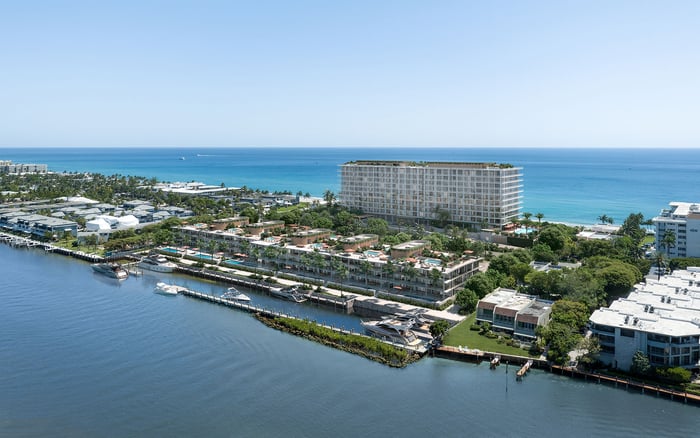
For Hillsboro Beach buyers, waterfront access deserves its own closing review. Establish the legal right, inspect the physical route, and confirm how storms, shoreline work, seasonal maintenance, and special events could affect use.

In Hillsboro Beach, the distinction between a water view and usable waterfront access warrants careful review before closing. The town occupies a narrow barrier-island setting between the Atlantic Ocean and Intracoastal Waterway, with Hillsboro Inlet at its southern end. That geography makes the relationship between a residence, its shoreline, and its arrival route especially important.
For a buyer considering Rosewood Residences Hillsboro Beach or another local residence, the question is not simply whether access is offered. It is what establishes that access, who maintains it, and what happens when ordinary use is interrupted. Private access should not be treated as guaranteed during an emergency.
The closing file should distinguish three issues: the legal right to reach the water, the route's present condition, and the procedures governing temporary restrictions. A beautiful shoreline does not answer all three.
Start by identifying whether the route is private, shared, public, or easement-based. Ask counsel to review the deed, recorded access documents, and applicable association rules together. The aim is to establish what transfers with ownership, rather than rely on the language of a property presentation.
Many Hillsboro Beach properties offer direct private beach access, while public access, parking, and restroom amenities are limited. Investigate any assumed public alternative rather than taking it for granted. If the property's usual route becomes unavailable, establish whether another route is both usable and authorized.
Request written clarification of guest access, operating restrictions, maintenance responsibility, and any association authority to suspend use. For shared facilities, ask who arranges repairs and how the buyer would be notified of restrictions. These questions apply to the beach path and, where relevant, to docks, lifts, and other waterfront facilities. Examine ownership rights separately from day-to-day operating permissions.
For an individual purchase, readiness depends on property-specific checks: evacuation zone, flood designation, insurance requirements, and association storm procedures. Those items belong alongside access diligence, not in a separate conversation after closing.
Check the town's official public-safety alerts before the final walkthrough and again before closing. Request the association's recent closure and repair notices, along with its procedures for restricting and restoring access. Ask who decides when a beach walkover, dock, or lift is ready for use after a storm, and what inspection or repair documentation supports that decision.
A quiet forecast does not resolve an outstanding repair. Conversely, the existence of storm procedures does not establish a current closure. Keep the questions precise: what is restricted, why, what remains to be done, and who can confirm its status? Do not accept a proposed reopening date as an assurance unless its conditions are clearly explained.
Renourishment can involve heavy equipment and active work zones. Before closing, check current county project schedules and ask whether planned work could affect the property's access route. Distinguish a shoreline construction restriction from a damaged private structure: each may require different decisions and different parties to resolve it.
For buyers also considering Ocean 580 Pompano Beach, the same diligence principle applies: review the schedule relevant to each property rather than carrying assumptions from one address to another.
Beach width and dune conditions can change with seasonal tides and renourishment. Document the existing route with dated photographs, including stairs, walkovers, landings, and the transition onto the sand. Confirm current town requirements for access structures and request applicable authorization and repair records. Where condition is uncertain, seek an appropriate professional inspection.
Use March 1 through October 31 as the sea-turtle nesting-season window to verify with the town. Before purchase, confirm the current requirements for shielding beachfront lighting, preventing man-made light from being visible on the beach at night, and clearing beach obstructions beginning at sunset.
These are practical ownership questions, not merely calendar details. Ask how the residence or association handles exterior lighting, beach furniture, and evening clearance. For a second-home buyer, establish who performs those tasks when the owner is away. Do not assume a service arrangement includes every seasonal responsibility.
Beach tilling before nesting season is another maintenance consideration, separate from hurricane-related disruption. Confirm the applicable schedule and whether it changes use of the property's access route. Seasonal stewardship need not diminish the appeal of beachfront living, but the operating arrangements should be clear before the first evening on the sand.
For special events, investigate the practical route to the residence and waterfront rather than assuming the beach itself will close. Ask the town and association about date-specific parking, roadway, bridge, and waterfront-access impacts. A change in arrival logistics is not the same as a restriction on shoreline use.
Make the inquiry specific to the closing, walkthrough, move-in, or planned visit. If a bridge is part of the route, verify any relevant operating arrangements directly rather than relying on a remembered schedule. Ask whether any event-related notice applies to residents, guests, deliveries, or waterfront facilities.
A buyer comparing The Ritz-Carlton Residences® Pompano Beach with a Hillsboro Beach residence should make these inquiries independently for each location. An access arrangement at one property does not establish the permissions or logistics at another.
Consolidate the findings in one access file: legal documents, association rules, dated condition photographs, structure authorizations, recent notices, current work schedules, and written maintenance responsibilities. Keep confirmed conditions distinct from estimates and unanswered questions.
At the final walkthrough, compare the route with the earlier inspection. If a storm, repair, or maintenance operation has intervened, request updated documentation before relying on the original condition assessment. Counsel can advise whether unresolved access issues warrant contractual protection, further inspection, or a change in closing arrangements.
The objective is not uninterrupted use under every circumstance. It is clarity about the rights being acquired, the condition being accepted, and the decisions governing a temporary interruption. That is the foundation of confident waterfront ownership.
For a discreet perspective on South Florida waterfront ownership, explore MILLION.
If branded residences are on your mind — as a home or as an allocation — we would be glad to share what we are seeing, privately.
Begin a quiet conversationNo. Review public-safety notices and association storm procedures, and do not treat private access as guaranteed during an emergency.
Have counsel review the deed, recorded access documents, easements where applicable, and association rules. Establish whether the route is private, shared, public, or easement-based.
Public access and parking are limited. Verify an alternative route's availability and permitted use rather than assuming it can replace private access.
Request recent closure and repair notices, association storm procedures, and documentation supporting reopening decisions. Also verify the property's evacuation zone, flood designation, and insurance requirements.
Renourishment can involve heavy equipment and active work zones. Check current project schedules for potential effects on the property's access route.
Dated photographs help establish the condition of the route being purchased. Request applicable authorization and repair records, and confirm current town requirements.
Verify the March 1 through October 31 nesting-season window and current requirements with the town before purchase. Confirm lighting and evening obstruction-clearance responsibilities.
No. Beach tilling before nesting season is a separate scheduled maintenance consideration, and buyers should confirm its timing and any access effects.
No. Ask about date-specific parking, roadway, bridge, and waterfront-access impacts, distinguishing arrival logistics from restrictions on shoreline use.
Request updated notices, condition documentation, and repair information. Have counsel assess whether unresolved issues call for further inspection or contractual protection.