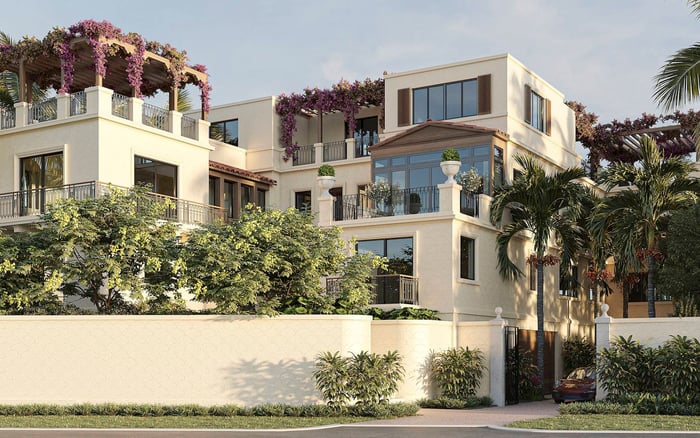
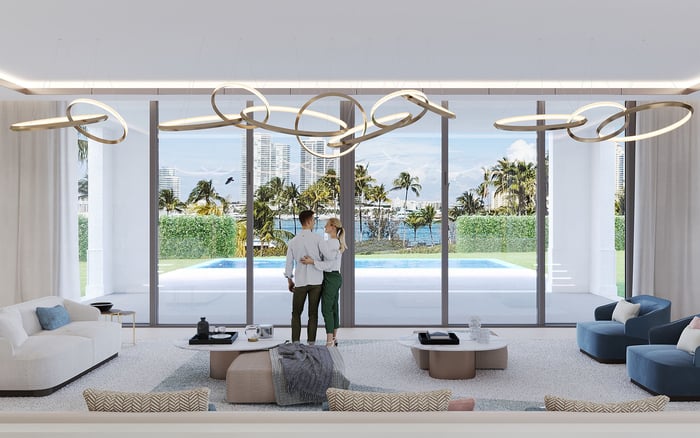
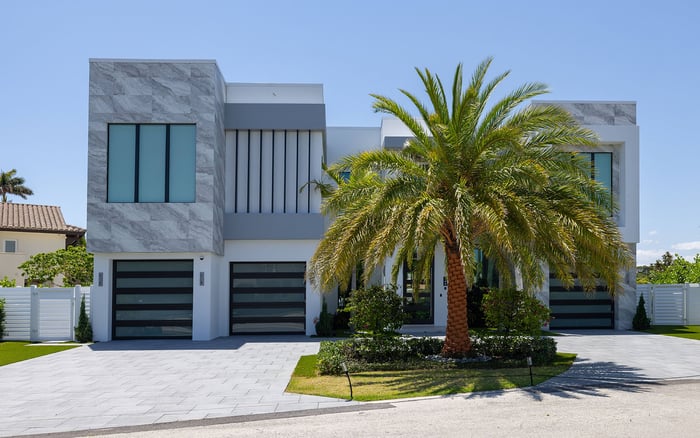
For a Fisher Island buyer, operational certainty is part of the luxury proposition. Before closing, test the full airport journey, document access and chauffeur protocols, and define exactly who protects the residence when its owner is away.

On Fisher Island, privacy and access are inseparable. The island has no bridge or public road connection. Residents arrive by private ferry, yacht, boat, or helicopter, while the 24-hour passenger ferry provides the essential link for vehicles, chauffeurs, guests, and service personnel.
That distinction should shape the closing review for Branded Residences. A beautifully managed home is only one part of the proposition. The buyer also needs confidence in the entire operating sequence-from the aircraft door and the Terminal Island ferry departure near the MacArthur Causeway to island security, the building entrance, and the residence itself.
This is particularly important for a second-home owner whose lifestyle depends on predictable arrivals and effortless departures. The right questions extend beyond whether transportation and concierge services exist. They concern who controls each step, what is contractually included, and what happens when routine conditions give way to congestion, weather, or an after-hours emergency.
On Fisher Island, operational certainty is part of the luxury proposition.
An airport transfer should be measured in three parts: ferry wait, crossing, and mainland drive. The ferry carries vehicles, and the crossing takes about 7.5 minutes, with departures occurring as often as every five minutes around the clock. Neither figure, however, captures the complete door-to-door journey.
Miami International Airport is roughly 20 to 25 minutes away under normal conditions. Treat that range as a starting point, not a promise. Ask management to model the buyer's actual routines, including early commercial departures, late private-aviation arrivals, checked luggage, family travel, and transfers involving Fort Lauderdale-Hollywood International Airport or a private fixed-base operator.
Request time-stamped sample itineraries that show when the car is called, where it waits, how security clearance is confirmed, which ferry departure is targeted, and how much contingency is built in. The analysis should also identify who monitors a delayed flight and whether the concierge, chauffeur operator, or owner must initiate a revised pickup.
When assessing residences such as The Residences at Six Fisher Island, request the service standard in writing. Clarify whether airport coordination is an operator obligation, a club or island service, or an introduction to a third-party provider billed separately.
The ferry crossing is removed from public-road congestion; the route to Terminal Island is not. Mainland traffic near Miami Beach and the MacArthur Causeway can materially affect the approach. Art Week and Art Basel are especially relevant, while major boat shows, F1 week, cruise peaks, holiday weekends, and prominent dinners can also render an ordinary estimate unreliable.
Ask management for historical transfer-time ranges and recommended buffers by time of day. The useful answer is not that the concierge will handle it. It is a documented plan identifying the pickup time, ferry target, alternative route or transport option, escalation contact, and decision point for an earlier departure.
Helicopter access may offer an alternative in some circumstances, but it should never be assumed. Confirm landing authorization, aircraft availability, advance-booking requirements, passenger and luggage handling, weather limitations, and the party responsible for coordinating the final transfer. For a waterfront home, marine access may also be part of the lifestyle, but yacht or boat arrival procedures warrant the same written scrutiny.
The Art Basel week calendar should be treated as a distinct operating condition, not a variation on an ordinary day. Owners comparing Palazzo del Sol or Palazzo della Luna should ask each residence how staffing, vehicle flow, and communication protocols change during peak periods, without presuming that island-level access and building-level service are identical.
Controlled access requires advance authorization for guests, drivers, vendors, and service personnel. Before closing, obtain the precise registration procedure. Ask how far in advance a chauffeur must be submitted, whether recurring personnel can be preapproved, what identification is required, and who resolves a denied or delayed entry.
Driver staging warrants its own written protocol for both Terminal Island and Fisher Island. The documents should address:
Approved waiting and pickup zones
Idling restrictions and maximum waiting periods
Building garage and loading-area access
After-hours arrival and departure procedures
Flight-delay and missed-ferry contingencies
Responsibility for security communication
Also confirm parking allocations, the permitted number of vehicles, valet capacity, EV charging, and scheduling rules for service vehicles. These details should not be inferred from a project's positioning. If an owner employs a personal driver, determine whether the residence maintains approved chauffeur partners and whether an outside operator can coordinate directly with security and the concierge.
For buyers also considering estate-style ownership at The Links Estates at Fisher Island, the same principle applies: privacy is strongest when every recurring person, vehicle, and handoff follows an established authorization path.
Lock-and-leave service should be defined by a schedule of duties, not a reassuring phrase. Establish who inspects the residence, how often inspections occur, what is photographed or logged, and how the owner receives reports. The agreement should allocate responsibility for housekeeping, preventive maintenance, climate monitoring, package handling, storm preparation, post-storm inspection, and emergency entry.
Separate services supplied by the branded-residence operator from those furnished at the island or club level. Concierge, security, engineering, housekeeping, and residence oversight may involve different entities, fee structures, response standards, and liability provisions. Ask whether routine oversight is included in common charges or billed separately, and whether special services require advance authorization.
The severe-weather plan is especially consequential because ordinary island access relies on marine transportation. Request procedures for ferry disruption, hurricane preparation, leaks, HVAC failure, power or communications outages, and vendor access when the owner is absent. The plan should name primary and secondary decision-makers, spending thresholds, emergency-entry authority, insurance-notification responsibilities, and escalation contacts.
The final diligence package should include current access rules, parking documents, chauffeur and vendor procedures, fee schedules, residence-management agreements, emergency plans, and named contacts. Sales assurances are no substitute for documents that identify service scope, timing, cost, and accountability.
The strongest closing question is simple: can the buyer follow the complete operating chain on paper? From aircraft arrival to ferry timing, from driver clearance to garage entry, and from an HVAC alert to emergency access, each handoff should have an owner and a fallback. That is how Fisher Island privacy becomes practical, repeatable ease.
For discreet guidance on evaluating Fisher Island ownership and its operating details, connect with MILLION.
If branded residences are on your mind — as a home or as an allocation — we would be glad to share what we are seeing, privately.
Begin a quiet conversationNo. Access is by private ferry, yacht, boat, or helicopter, so transportation planning is integral to ownership.
The crossing is commonly placed at about 7.5 minutes, but total travel time must also include the ferry wait and mainland driving.
Yes. The ferry carries vehicles, allowing residents and approved chauffeurs to travel between the island and mainland destinations.
Model the ferry wait, crossing, and road journey separately. Normal estimates of roughly 20 to 25 minutes should be tested against the owner's schedule and event-week conditions.
Traffic near Miami Beach and the MacArthur Causeway can intensify during Art Week, major boat shows, F1 week, cruise peaks, and holiday weekends.
Confirm preapproval timing, identification requirements, security coordination, staging locations, after-hours rules, and responsibility for delays or denied entry.
Buyers should ask whether recurring personnel may be preapproved and obtain the exact registration and identification requirements in writing.
It should address waiting zones, idling limits, garage access, loading areas, maximum waiting periods, and after-hours procedures on both sides of the ferry.
Define inspections, reporting, housekeeping, maintenance, climate monitoring, package handling, storm preparation, and emergency-entry authority.
Not necessarily. Buyers should distinguish club or island services from operator obligations, third-party services, and separately billed residence management.