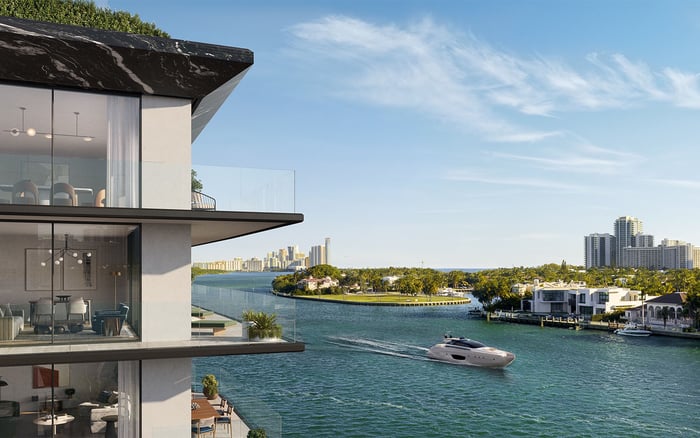
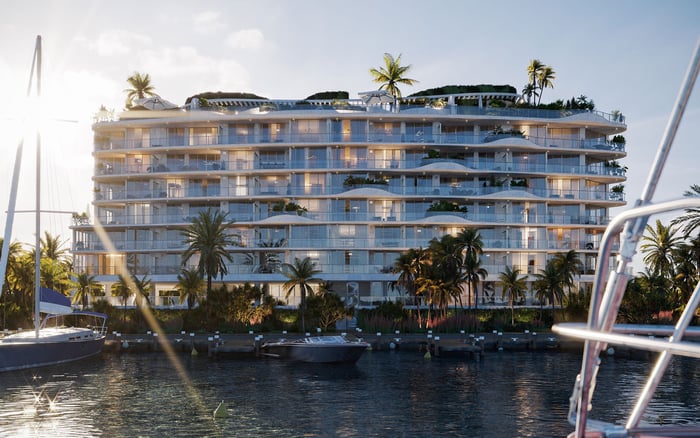
At Origin Bay Harbor Islands, closing-account clarity and long-term ownership planning require separate reviews. An estoppel certificate addresses unit-level charges within a defined period; reserve records and capital-project documents help buyers assess future funding needs.
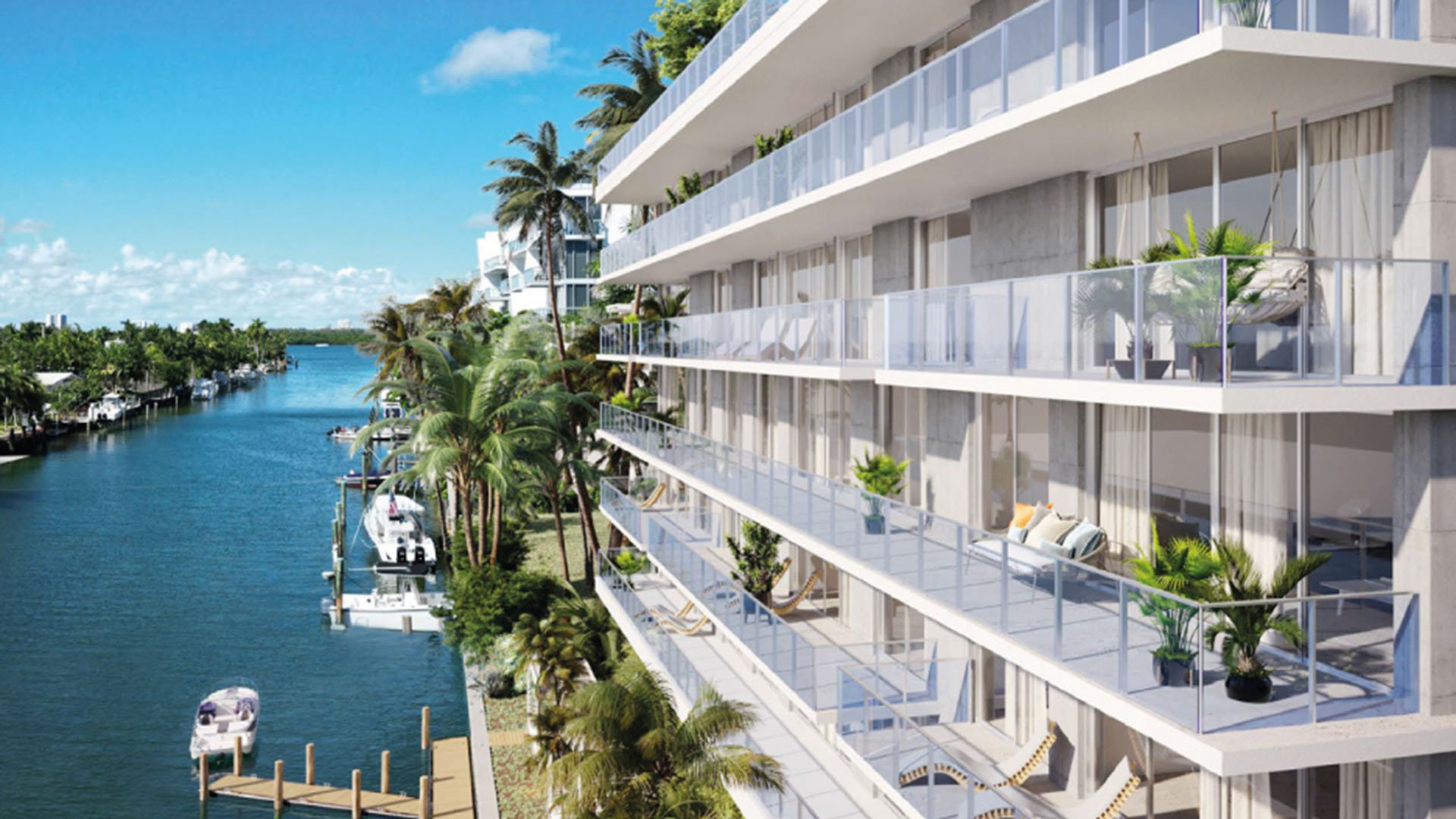
For a luxury condominium buyer, a well-managed closing should establish more than the amount needed to complete the purchase. It should also clarify the financial responsibilities that may follow. At Origin Bay Harbor Islands, distinguishing an estoppel certificate from a review of capital planning is essential.
Origin is a 27-unit condominium development at 9740-9760 West Bay Harbor Drive. Its intimate scale warrants careful ownership planning, but does not establish any particular financial exposure. No pending capital project, adopted special assessment, reserve shortfall or engineering defect at Origin is established here. This review is preventive due diligence, not a suggestion that the development has a maintenance or funding problem.
An estoppel certificate and a capital-project review answer different questions. One addresses specified unit-level amounts over a defined period. The other examines work, funding and decisions that may shape future ownership costs.
A Florida condominium association must issue an estoppel certificate within 10 business days after receiving a written or electronic request from a unit owner, mortgagee or either party’s designee. The certificate is effective for 30 days when delivered by hand or electronically, or 35 days when delivered by regular mail.
Its financial disclosures include an itemized account of assessments, special assessments and other amounts owed for the unit. The statutory certificate also addresses amounts scheduled to become due during its effective period. Describing it as merely a statement of what the seller owes today understates its scope.
That defined scope, however, is not a forecast of every future association expense. A certificate showing no outstanding balance does not confirm that all future capital needs are funded. Ask closing counsel to review the disclosed charges and the certificate’s effective period against the anticipated closing date.
Reserves are association funds set aside for future capital expenditures and deferred maintenance, not an individual owner’s account balance. Florida condominium budget provisions address reserve accounts for work such as roof replacement, building painting and pavement resurfacing.
Depending on the building and its applicable reserve framework, capital planning may also cover elevators, façades, HVAC equipment, pools and structural repairs. These are general categories, not a description of work required at Origin.
Request the latest reserve study, earlier studies where available, and the reserve funding policy. Read them alongside the applicable budget to understand what work is anticipated, how costs are estimated and how funding is intended to accumulate. Inadequate reserves can lead to future special assessments when major costs arise, but a future expense does not automatically imply an assessment.
For a buyer also considering Onda Bay Harbor, a useful comparison starts with the same financial questions-not an assumption that neighboring buildings share reserve conditions.
Capital planning becomes clearer when each item is classified by stage. A possible improvement, a priced proposal, an approved project and a scheduled unit charge are not interchangeable.
As a practical review sequence, ask whether any work is under discussion; whether a scope and vendor quotes exist; whether the association has approved the project; and whether a funding decision has been made. Obtaining quotes and approving a capital project before using reserve funds for it provides a useful diligence framework. It is not a claim about an Origin project or a substitute for the governing documents.
Where relevant records exist, request the project scope, quotes, approval records, funding plan and payment schedule. Then ask counsel to reconcile any adopted charges with the estoppel. Work being considered beyond the certificate’s effective period still deserves attention, even when no related amount is scheduled to become due within that window.
Origin’s stated construction status is in progress. That designation does not establish completed construction or occupancy. Buyers should confirm the development’s actual stage before treating the transaction as one involving an association with an established operating history.
A $30.5 million construction loan was originated for Origin in June 2025. Financing is a development fact, not proof of completion, association turnover or sufficient association reserves. It does not answer those separate questions.
Ask which budgets, reserve materials and capital-planning records exist for the contemplated transaction, and distinguish projections from operating results. If a requested document does not yet exist, ask what information is available instead and what remains prospective. The goal is to understand the basis of the ownership-cost assumptions, not to impose the documentary expectations of a mature condominium on a different development stage.
A 27-unit building naturally draws attention to how shared expenses are allocated. Yet unit count alone does not determine an owner’s exposure. Project scope, available funding and the applicable assessment allocation all matter. Buyers should not assume that boutique buildings invariably carry higher per-unit capital costs.
Ask how the subject residence would participate in any identified expense. Avoid simply dividing a hypothetical project total by the number of residences. Have counsel review the applicable allocation and distinguish an illustration from an adopted obligation.
The same discipline applies when extending a search to Bal Harbour and Rivage Bal Harbour. Compare each property’s documentation and development stage independently. Neither an address nor a smaller ownership community substitutes for an understanding of the funding structure.
A disciplined review keeps unit-account disclosures and association capital planning distinct, then reconciles them. Have the closing team confirm the estoppel’s timing and charges, while counsel and appropriate advisers evaluate available budgets, reserve studies and any documented capital decisions.
If work is identified, seek a written explanation of its scope, approval status, funding source and expected payment timing. Ask counsel how the purchase agreement addresses any relevant assessment. Do not assume that every future expense belongs to the seller or that every discussion creates an immediate buyer obligation.
For Origin, the conclusion is measured: an estoppel is an important closing document, but not a comprehensive assurance about future ownership costs. Confidence comes from understanding both what the unit is charged and how the association plans for the building’s future.
For a considered approach to South Florida condominium ownership, explore MILLION.
If branded residences are on your mind — as a home or as an allocation — we would be glad to share what we are seeing, privately.
Begin a quiet conversationIt includes itemized assessments, special assessments and other amounts owed for the unit. It also addresses amounts scheduled to become due during its effective period.
A Florida condominium association must issue it within 10 business days of a written or electronic request from a unit owner, mortgagee or either party’s designee.
It is effective for 30 days when delivered by hand or electronically, or 35 days when delivered by regular mail.
No. Unit-account charges and association reserve funding are separate matters, so the reserve and capital-planning records require their own review.
No pending capital project, adopted special assessment, reserve shortfall or engineering defect at Origin is established here. The review is preventive buyer due diligence.
Request the latest reserve study, prior studies where available and the reserve funding policy. Review these alongside the applicable budget.
It can cover roofs, painting, paving, elevators, façades, HVAC equipment, pools and structural repairs. These are general examples, not identified repair needs at Origin.
No. The $30.5 million construction loan originated in June 2025 does not establish completion, occupancy, association turnover or reserve adequacy.
No. Individual exposure depends on the project’s scope, available funding and the applicable assessment allocation, not unit count alone.
Ask for its scope, quotes, approval status, funding plan and payment schedule where available. Have counsel reconcile adopted charges with the estoppel and review their treatment under the purchase agreement.