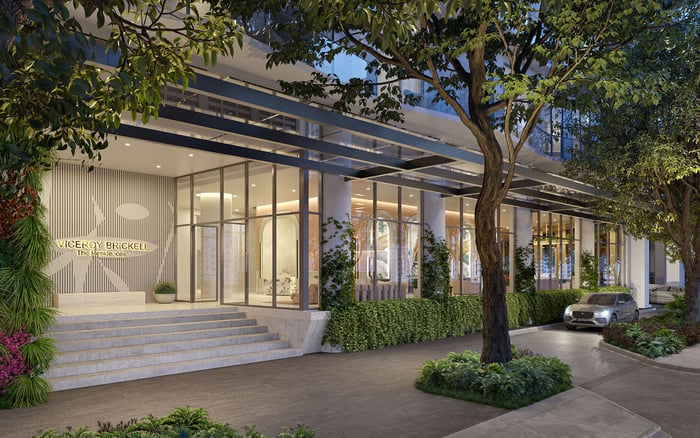
Cipriani’s advertised restaurant is private, not public. For buyers approaching ownership, the deeper questions concern permitted commercial uses, service circulation, acoustic separation, and the enforceable protections behind the hospitality promise.
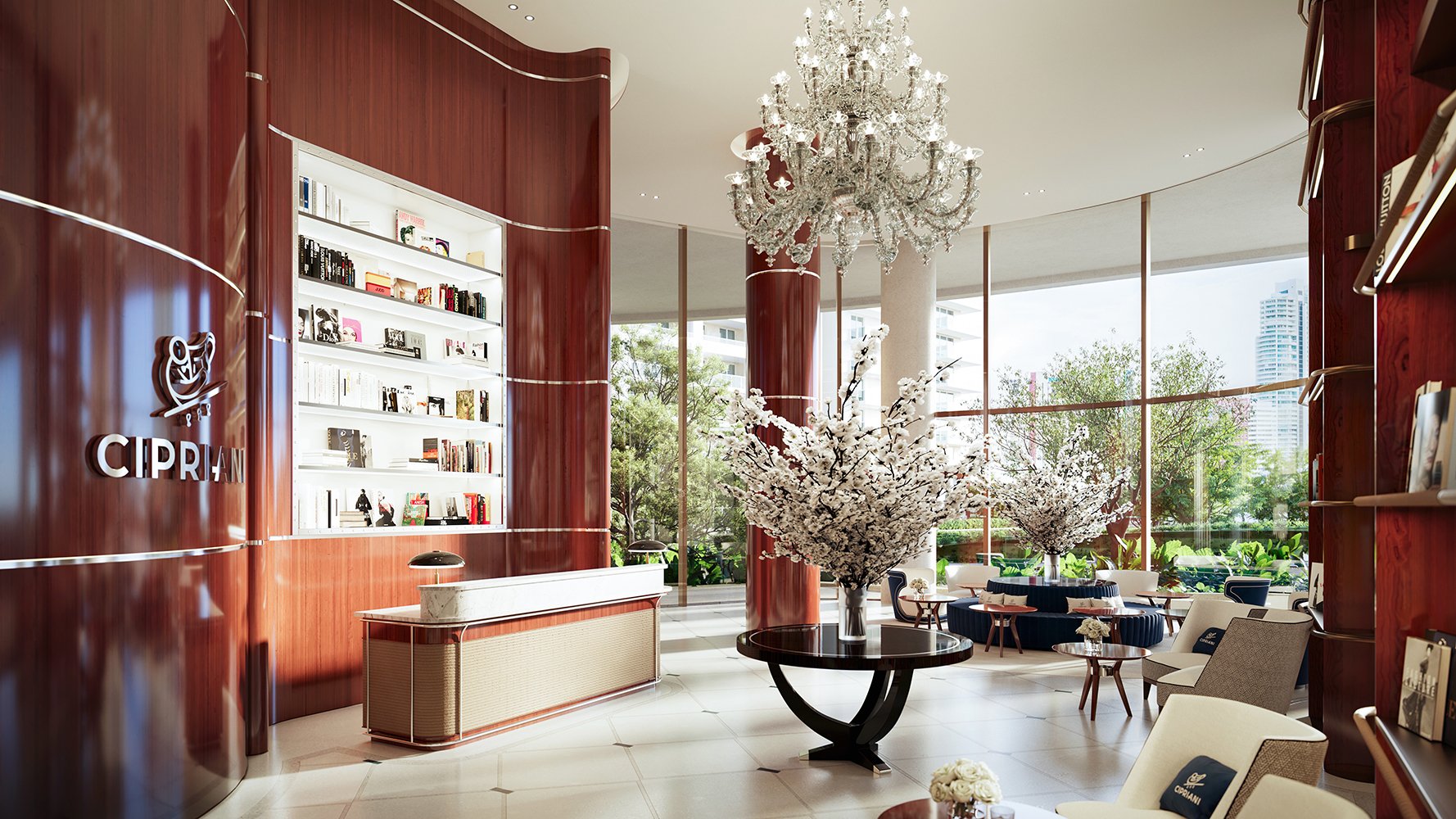
At Cipriani Residences Brickell, the central distinction is straightforward: the advertised Cipriani restaurant is private, reserved for residents and their guests. It should not be characterized as a public restaurant. That distinction matters to buyers who want hospitality without making their residential arrival part of a public dining destination.
The tower, developed by Mast Capital and branded by Cipriani, is located at 1420 South Miami Avenue in Brickell. Its appeal includes an unusually personal proposition: dining and service woven into everyday life. Yet a private restaurant does not establish that every commercial space within the broader development is residents-only.
For a purchaser, the question is not whether hospitality belongs in a luxury residence, but whether the boundaries between residential life, guest activity, and commercial operations are clearly defined. Privacy depends on access rights and operating rules, not simply on the word private.
Permitted uses, tenant identities, ownership structure, and the precise scope of commercial space all require confirmation before closing. Buyers should not assume that the restaurant’s resident-only designation governs other premises, or that residential owners will control future commercial decisions.
Ask counsel to identify any commercial units or parcels, their relationship to the condominium, and the documents governing shared facilities. If public-facing uses are permitted, seek clarity on operating hours, entrances, parking arrangements, loading, signage, and outdoor activity. These are questions for review, not descriptions of confirmed tenants at Cipriani.
That distinction becomes particularly important if an operator changes. A quiet initial use is no substitute for understanding what the documents could allow later. Ask who can approve a change of use, whether residential consent is required, and which restrictions bind successors. When an answer affects the purchase decision, seek the governing provision rather than relying on a verbal assurance.
Cipriani’s marketed program includes around-the-clock dining, in-home dining, reservable private dining rooms, and 24-hour catering exclusive to residents. Outdoor dining on the resort deck and sun terrace is also advertised. These offerings promise convenience, but their operational footprint extends beyond a single restaurant entrance.
A private guest event can still generate arrivals, departures, and service traffic. In-home dining raises questions about staff circulation and elevator access. Outdoor service warrants a separate discussion of hours, music policies, cleanup, and the relationship between dining areas and nearby residences. None of these questions establishes that a disturbance will occur.
Request a written explanation of guest admission and event policies. Can guests arrive before their host? Who authorizes entry for a private dining reservation? Are event staff handled differently from ordinary visitors? The goal is a discreet service model that pairs the privileges of entertaining with clear responsibilities to neighbors.
Private dining is not an acoustic guarantee. Potential sound sources worth evaluating include resident gatherings, outdoor dining, deliveries, waste collection, kitchen servicing, and mechanical equipment. No quantified acoustic performance should be assumed for a particular residence.
Ask to review the selected home’s relationship to dining terraces, service routes, loading areas, and equipment locations. Floor height alone is no substitute for that review. A residence’s orientation and proximity to a specific activity area deserve individual attention.
Where quiet is essential, request any available acoustic design criteria or testing relevant to the residence, and have an appropriate specialist assess their significance. Confirm whether operating restrictions address evening events, outdoor sound, and service schedules. If testing is unavailable before closing, ask counsel what the contract provides. Do not treat an untested expectation as a verified condition.
The key distinction is between potential exposure and a documented performance standard. Buyers should seek the latter wherever possible, without presuming either a problem or its absence.
Advertised provisions include 24-hour security guards, controlled building access, and an exclusive private entrance with landscaping and a porte-cochère. The marketed lobby leads to two banks of high-speed, touchless elevators. These features merit examination, but they are not evidence of actual operating performance or, by themselves, contractual guarantees.
Request a circulation review tracing residents, invited guests, restaurant staff, delivery personnel, contractors, and any commercial visitors from arrival to destination. Clarify where routes intersect, if at all, and how access is controlled at those points.
Touchless elevators do not, by that description alone, establish floor-by-floor authorization or separation from service traffic. Likewise, a private entrance does not establish whether a driveway, garage route, or loading facility is shared. Ask who administers credentials, how temporary access expires, and what procedures apply during busy event periods. Effective privacy should be clear in the plans and operating protocols, not merely suggested by the arrival experience.
For buyers also considering Baccarat Residences Brickell, a useful comparison does not begin with presumed equivalence of amenities. Apply the same questions to each property’s own documents: who may enter, what uses are permitted, and who has authority to enforce restrictions? A brand name cannot answer those questions on its own.
Likewise, if St. Regis® Residences Brickell is on the shortlist, compare documented protections rather than assuming similar positioning means similar ownership arrangements. Each purchase deserves an independent review.
At Cipriani, ask counsel to examine the declaration, applicable easements, rules, and relevant service agreements where available. Establish how shared security, maintenance, and service expenses would be allocated. Clarify the association’s enforcement rights and the process for resolving complaints involving commercial operations. These ownership questions have daily consequences, even when the architecture and service proposition are compelling.
Occupancy is advertised as beginning Summer 2027. That is a marketed timeline, not a confirmed closing date for an individual buyer. Vertical construction is described as complete, but that milestone should not be equated with completed occupancy, operational readiness, or closings.
Before committing to moving arrangements, have counsel review the contractual closing requirements, notice provisions, and any terms addressing amenity delivery. Ask which dining, security, and access services are expected to operate at residential handover, and whether any commercial fit-out activity could continue afterward. Do not assume the answer in either direction.
The final decision should rest on three aligned elements: the residence itself, the service model, and the enforceable ownership framework. Cipriani’s private dining proposition may be central to its appeal. Confirming how it coexists with other uses turns an attractive promise into a considered purchase.
For a discreet discussion of your South Florida residential shortlist, connect with MILLION.
If branded residences are on your mind — as a home or as an allocation — we would be glad to share what we are seeing, privately.
Begin a quiet conversationThe advertised Cipriani restaurant is private and exclusive to residents and their guests. That designation does not establish the access rules for every commercial space in the broader development.
The tower is located at 1420 South Miami Avenue in Brickell, Miami.
Mast Capital is the developer, and Cipriani provides the brand.
Occupancy is advertised as beginning Summer 2027. This is a marketed timeline, not a confirmed individual closing date.
No. Vertical construction is described as complete, but that milestone should not be equated with completed occupancy or closings.
The advertised program includes around-the-clock dining, in-home dining, reservable private dining rooms, and 24-hour catering exclusive to residents. Outdoor dining on the resort deck and sun terrace is also marketed.
Potential exposures to evaluate include guest events, outdoor dining, deliveries, service activity, and mechanical equipment. No quantified acoustic performance is established for a particular residence.
Marketed features include 24-hour security guards, controlled building access, a private entrance with a porte-cochère, and two banks of high-speed, touchless elevators. These descriptions do not independently establish contractual guarantees or operating performance.
Residential owners’ control over future commercial uses is not established. Buyers should have counsel confirm approval rights, permitted uses, and association enforcement authority in the governing documents.
Buyers should confirm the routes and access rules for residents, guests, staff, deliveries, and any commercial visitors. Particular attention should go to entrances, elevators, garages, loading areas, and any points where those routes intersect.