Casa Bella is marketed as a residential condominium, not a hotel-residence. Understanding that distinction is essential when evaluating replacement reserves, interior maintenance and the financial commitments that survive closing.

At Casa Bella by B&B Italia Downtown Miami, the first ownership question is not how often a hotel operator might replace the furniture. It is whether a hotel-style obligation applies at all. Casa Bella is marketed as a residential condominium, not a hotel-residence or condo-hotel. That distinction should frame every conversation about closing costs, replacement reserves and long-term interior upkeep.
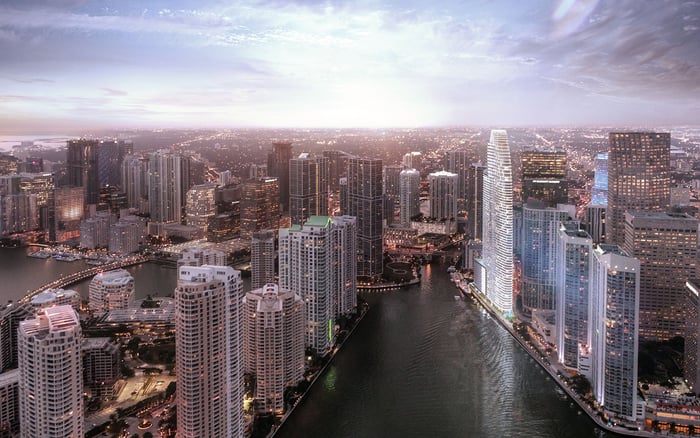
The 56-story tower at 1400 Biscayne Boulevard, in Downtown Miami’s Arts & Cultural District, is developed by Related Group and Alta Developers, with a stated count of 319 residences. The B&B Italia identity brings an Italian design perspective, but a design affiliation does not, by itself, establish hotel management, rental participation or a mandatory furniture-replacement program.
For a buyer, the useful hotel-residence comparison is contractual rather than aesthetic. Ask what must be maintained, who controls replacement decisions and which account pays. Do not import another property’s operating model into Casa Bella’s ownership budget.
Furniture, fixtures and equipment, abbreviated FF&E, describes a category of physical assets. The label alone establishes neither a reserve contribution nor a payment deadline or owner responsibility. Those questions require the applicable ownership and operating terms.
Consider a hypothetical hotel-residence agreement requiring an owner to fund replacements and comply with prescribed interior standards. Those provisions could affect cash flow and discretion over furnishings. They would arise from that agreement, not automatically from ownership of a branded home.
No project-specific FF&E reserve percentage, contribution formula or owner payment is publicly disclosed for Casa Bella. Nor is a hospitality-style refurbishment cycle or mandatory owner-funded interior replacement schedule specified. A mandatory hotel-management agreement or rental pool is likewise not disclosed.
This is a limit of disclosure, not assurance that no such obligations exist elsewhere. Buyers considering Aston Martin Residences Downtown Miami alongside Casa Bella should apply the same discipline: compare each property’s documents rather than infer financial commitments from its name.
A sound ownership budget keeps three questions distinct: how shared assets are maintained, how future common-area replacements are funded and what the individual owner must maintain inside the residence. Combining them into one assumed FF&E charge obscures the allocation that matters.
For association-funded replacements, request the association budget and any available reserve study. Ask which assets are covered, what funding assumptions apply and whether planned replacements are reflected in the budget. Do not assume that a reserve line covers every future expenditure.
For private interiors, obtain the maintenance obligations and applicable specifications. Ask whether furnishings are included in the purchase, whether any selections are mandatory and whether replacement standards extend beyond initial delivery. Casa Bella’s exact division of responsibility between the association and individual owners remains unestablished here.
The objective is a written allocation of costs. A buyer should be able to distinguish a documented obligation from a voluntary design preference or an unresolved question. None should quietly become an assumed monthly expense.
For an owner drawn to a carefully composed interior, refurbishment involves more than replacing worn items. It also raises a question of authority. Before closing, determine whether future changes require approval and whether applicable standards prescribe materials, suppliers or a particular aesthetic.
If a mandatory refurbishment provision exists, ask what triggers it: condition, a stated schedule or another contractual standard. Identify who determines compliance, how costs are allocated and whether the owner has a choice in execution. These are diligence questions, not established Casa Bella requirements.
No specific replacement interval has been publicly established for Casa Bella. Equally, the absence of an advertised cycle should not be treated as unlimited freedom to alter the residence. The answer belongs in the governing documents and any binding agreements.
Casa Bella topped off in July 2025. That milestone marked completion of vertical construction, not confirmed residential delivery. At that stage, summer 2026 was the targeted completion period. Neither the milestone nor that historical target establishes that a particular residence is ready to close. Actual closings remain unconfirmed here.
The published payment schedule set out 20% at contract, 10% at groundbreaking, 10% at top-off and 60% at closing. Treat those figures as a published schedule, not a current buyer-specific contractual obligation. The applicable purchase agreement and amendments should establish the purchaser’s actual payment requirements.
Before arranging final funds, have counsel reconcile the contract, deposit credits, applicable notices and proposed closing statement. Ask separately about any association funding or other contributions due at closing. Do not label an unexplained charge an FF&E reserve without the supporting provision.
For appointments, distinguish the property from its sales location: the tower address is 1400 Biscayne Boulevard, while the listed sales gallery address is 1444 Biscayne Boulevard.
Obtain the applicable purchase agreement, condominium declaration, association budget, available reserve study and maintenance obligations. Request any additional binding agreement that could govern furnishings, management or rental participation. The goal is not simply to collect documents, but to reconcile their financial consequences before committing final capital.
Have the relevant advisers identify what is payable at closing, what recurs during ownership and what could arise later under the documents. If a replacement obligation appears, establish its funding mechanism and approval process. If an allocation remains unclear, seek a written explanation tied to the controlling provision.
For buyers also evaluating Waldorf Astoria Residences Downtown Miami, this provides a consistent basis for comparison without assuming identical operating structures. Compare disclosed commitments property by property rather than carrying a reserve assumption from one residence into another.
Casa Bella’s appeal can be evaluated on its residential and design merits without assigning it an unverified hotel operating model. Financial clarity requires a separate assessment of initial payments, association responsibilities, private maintenance and any documented replacement requirements.
The decisive question is not whether an FF&E reserve sounds customary elsewhere. It is whether an obligation applies to the residence being purchased, how it is calculated and who controls the expenditure. A disciplined closing process preserves the distinction between a beautifully presented home and the commitments attached to owning it.
For a discreet conversation about Casa Bella and your South Florida ownership priorities, connect with MILLION.
If branded residences are on your mind — as a home or as an allocation — we would be glad to share what we are seeing, privately.
Begin a quiet conversationCasa Bella is publicly marketed as a residential condominium, not a hotel-residence or condo-hotel. Hotel-style obligations should not be assumed from its branding.
The tower is at 1400 Biscayne Boulevard in Downtown Miami’s Arts & Cultural District. The published sales gallery address is 1444 Biscayne Boulevard.
Related Group and Alta Developers are developing the 56-story condominium tower. Its published residence count is 319.
FF&E stands for furniture, fixtures and equipment. The term alone does not establish an owner’s contribution or replacement obligation.
No project-specific percentage, contribution formula or owner payment is publicly disclosed here. That does not establish that related obligations are absent from the governing documents.
No hospitality-style cycle or mandatory owner-funded interior replacement schedule is publicly specified here. Buyers should examine the applicable maintenance obligations and binding agreements.
Neither requirement is established here. Buyers should confirm any applicable management or rental terms in the binding documents.
The published schedule was 20% at contract, 10% at groundbreaking, 10% at top-off and 60% at closing. A buyer’s actual requirements depend on the applicable purchase agreement and amendments.
No—topping-off marked completion of vertical construction, while summer 2026 was a historical completion target rather than a guaranteed closing date.
Request the applicable purchase agreement, condominium declaration, association budget, available reserve study and maintenance obligations. Review any additional binding agreements separately for furnishing, management or rental commitments.