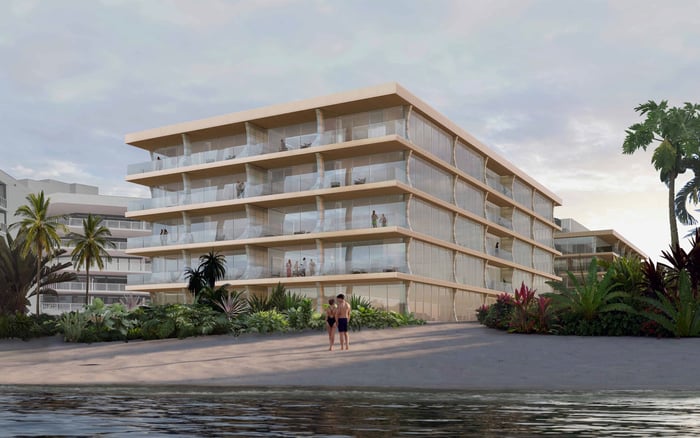
Both cities are inland, so the meaningful luxury-buyer distinction is not private ocean frontage but the route to preferred beaches, the jurisdiction governing each visit, and the contractual terms behind any cabana or guest privilege.

West Palm Beach and Palm Beach Gardens both offer residential settings near the Atlantic, but neither is an Atlantic oceanfront beach destination. West Palm Beach residents generally cross the Intracoastal to Palm Beach or travel north to other coastal areas. Palm Beach Gardens residents also drive east, with Singer Island, Juno Beach, and Jupiter among the relevant options.
That distinction reframes the buyer’s analysis. The question is not simply which city is closer to the beach, but which residence offers the most comfortable route to the shoreline, parking arrangement, access conditions, and beach environment a household expects to use. A convenient drive to a preferred beach can be more useful than nominal proximity to one that does not suit the owner’s routine.
The most useful comparison is residence to preferred shoreline, not city to ocean.
For buyers considering Alba West Palm Beach or another West Palm Beach address, Palm Beach may feel like the natural coastal counterpart. Buyers evaluating The Ritz-Carlton Residences® Palm Beach Gardens may instead orient daily life toward the northern beaches. In either case, buyers should test the actual drive when they expect to travel and treat parking and bridge crossings as part of the experience.
Beach access is not a single citywide amenity. Each coastal destination can have its own operating conditions, parking arrangements, permitted activities, accessibility features, and enforcement practices. Those details should be checked for the specific access points a household expects to visit.
A useful comparison begins with a short list of preferred beaches. Buyers can then evaluate the journey from each prospective residence, the ease of arrival, the walk from parking to the sand, and whether the setting supports early visits, family outings, waterside exercise, or quieter leisure.
Accessibility needs deserve the same residence-specific review. Equipment, pathways, and operating conditions can change, so buyers who rely on particular features should confirm current availability rather than assume every beach offers the same experience.
A West Palm Beach address does not make West Palm Beach rules controlling when the owner visits a beach across the Intracoastal. Likewise, living in Palm Beach Gardens does not establish the conduct rules at Juno Beach, Jupiter, Singer Island, or another coastal destination. Rules attach to the place being used and may differ among municipalities and county-operated locations.
This is the central beach-access diligence point. Owners should identify the beaches they are most likely to use and review the applicable requirements for each, including access conditions, permitted activities, parking, pets, and other local limitations. A policy at one beach should not be assumed to apply at the next access point.
The same principle applies when a household’s routine includes guests, children, pets, or mobility considerations. The relevant question is not whether a feature exists somewhere in Palm Beach County, but whether it is available at the specific beach and under the conditions the household expects.
The word “cabana” can describe materially different arrangements. At a public beach, a visitor may be able to rent chairs, umbrellas, or a cabana from a beach service. That is a transaction for equipment or service during a particular visit, not ownership, an easement, club membership, or a right attached to a residence.
Private cabana privileges are contractual. They may arise under a condominium declaration, association rules, club agreement, or resort policy. Buyers should not infer them from branding, proximity to the water, marketing language, or public beach access. They also should not assume that a cabana benefit transfers automatically with title.
This distinction warrants close attention when comparing residences such as Forté on Flagler West Palm Beach and The Ritz-Carlton Residences® West Palm Beach with options farther north. The project pages are useful starting points, but any beach, club, shuttle, cabana, or guest privilege should be confirmed in the current governing documents and applicable membership terms.
Guest access is often where an appealing lifestyle proposition becomes operationally complex. A privilege available to an owner may not extend in the same way to unaccompanied guests, tenants, adult children, houseguests, or staff. Visitors may also be subject to limits, reservations, fees, blackout periods, or different priority.
The review should establish who holds the privilege and what triggers access. Buyers should determine whether it attaches to the residence, the named owner, or a separate membership; whether it transfers upon resale; whether a spouse or family member may reserve independently; whether guests may enter without the member present; and whether parking is included.
Amendment rights matter as well. A current benefit may be governed by documents that permit later changes. Buyers should identify which entity controls the policy, how revisions are adopted, and whether the owner has any continuing right beyond the current rules.
Request the condominium declaration, amendments, rules and regulations, club agreement, current fee schedule, reservation policy, and guest policy when applicable. Compare those written terms with the household’s intended use. Verbal descriptions should not substitute for operative documents.
West Palm Beach may suit buyers whose preferred rhythm combines city living with trips across the Intracoastal to Palm Beach. Palm Beach Gardens may align with households that naturally gravitate toward Singer Island, Juno Beach, or Jupiter. Neither choice removes the need to drive, understand local rules, or distinguish public access from private privilege.
The decision can be made more concrete by mapping preferred beaches, testing the journey, reviewing parking, considering accessibility needs, and reading every provision governing cabanas and guests. Buyers should also compare weekday and weekend routines, accompanied and unaccompanied guest use, and the practical effect of any reservation process.
The better fit is the residence that supports the household’s actual habits with the least friction, not the one that relies on the broadest lifestyle description. For discreet guidance on comparing South Florida residences and their governing privileges, consult MILLION.
If branded residences are on your mind — as a home or as an allocation — we would be glad to share what we are seeing, privately.
Begin a quiet conversationNo. Residents generally cross the Intracoastal to Palm Beach or travel north to other coastal areas.
No. Buyers typically drive east toward coastal areas such as Singer Island, Juno Beach, and Jupiter.
The rules generally follow the county or municipality where the beach is located, not the visitor’s home city.
Compare the route, parking, access conditions, permitted activities, accessibility features, and overall fit with the household’s routine.
No. Requirements and operating conditions may differ among municipalities and county-operated locations.
No. A public beach rental provides temporary equipment or service, not ownership, club membership, or a right attached to a residence.
Not necessarily. Buyers should verify whether the privilege attaches to the residence, an owner, or a separate membership and whether it transfers at resale.
Confirm accompaniment rules, guest limits, reservations, fees, blackout periods, parking, priority, and access for tenants or family members.
They may be amendable under the governing documents. Buyers should identify who controls the policy and how revisions are adopted.
Review applicable declarations, amendments, rules, club agreements, fee schedules, reservation policies, and guest policies.