A Miami pied-à-terre should earn its place beyond race week. Balance the journey to Miami Gardens with personal routines, building operations, carrying costs, and property-specific rental restrictions.

A Miami pied-à-terre can begin with Formula 1 and become something more enduring: a familiar residence for spontaneous weekends, extended winter visits, and time with friends. The strongest purchase is not necessarily the one that feels most compelling during race week. It is the one whose location, layout, and operating arrangements remain compelling long after the event.
The 2026 Miami Grand Prix was scheduled for May 1-3, 2026, at the Miami International Autodrome around Hard Rock Stadium in Miami Gardens. That geography matters. The race venue is not in Miami Beach or Brickell, so a recognizable Miami address is not, by itself, a transportation strategy.
Begin with two separate briefs: how the residence should serve an F1 visit, and how it should function during ordinary stays. A property should satisfy both without requiring rental income to justify its appeal.
Use Hard Rock Stadium’s address, 347 Don Shula Drive, Miami Gardens, Florida 33056, as the starting reference when comparing prospective residences. Then confirm the event-specific arrival instructions relevant to your arrangements. A map destination is not an arrival plan.
Evaluate the entire sequence: leaving the apartment, retrieving a vehicle, meeting a driver, reaching the designated arrival point, and returning home. Ask where a car can wait, how guests enter, and whether building procedures accommodate your intended departure hours. Treat these as questions for each property, not benefits implied by a luxury designation.
Do not select a neighborhood on an assumed commute advantage. Compare actual routes at relevant times and allow for uncertainty. If you intend to entertain after the race, give the return journey and guest access as much attention as the outbound trip.
Aventura belongs in the comparison when it aligns with the places and people you expect to visit throughout the year. Do not treat it as an automatic compromise between the circuit and every other Miami destination. That judgment depends on your itinerary.
When considering Avenia Aventura, apply the same ownership brief you would elsewhere: desired occupancy date, preferred apartment configuration, arrival arrangements, and acceptable ongoing obligations. Confirm availability and timing independently before tying any purchase to a particular race weekend.
Plan an ordinary three-day stay before touring. Where would you go for breakfast, exercise, dinner, and time with guests? The more convincingly an address accommodates that ordinary weekend, the less the purchase depends on one exceptional event.
For an Edgewater search, evaluate a residence at Aria Reserve Miami against a straightforward question: would this be a satisfying base without a race ticket? Examine the particular residence, its orientation, usable rooms, and the practicalities of leaving it unoccupied between visits. Verify features rather than allowing neighborhood identity to substitute for due diligence.
Apply the same discipline in Brickell. When reviewing Una Residences Brickell, separate the appeal of the address from your requirements for privacy, guest accommodation, and work. Neither a district name nor a project presentation establishes the suitability of a particular unit.
For either area, build a personal route sheet covering the stadium, your arrival airport, regular meetings, and preferred leisure destinations. Compare the same destinations for every candidate. That exercise is more useful than a generalized neighborhood ranking.
If Miami Beach is central to your idea of a second residence, assess it on that basis rather than treating it as the race location. A beach-oriented ownership brief and a circuit-oriented transportation brief can coexist, but they require separate planning.
A buyer considering Setai Residences Miami Beach should establish the services, access arrangements, and ownership conditions applicable to the specific residence. Do not assume that branding determines housekeeping availability, guest privileges, or permission to lease.
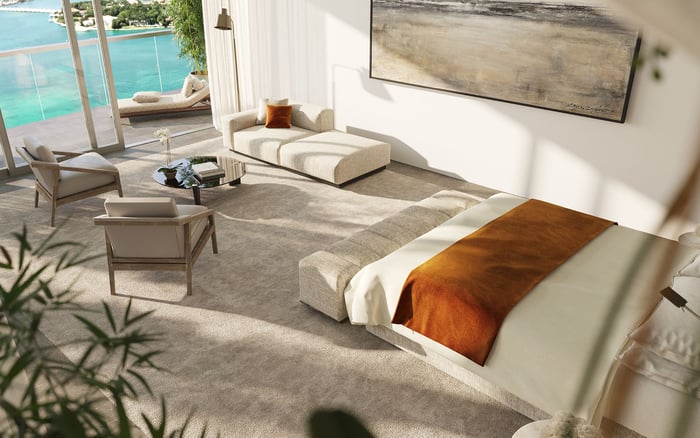
Consider the hours spent at home, too. Test bedroom privacy, luggage space, a comfortable place to work, and the relationship between entertaining areas and sleeping rooms. A residence that photographs beautifully still needs to accommodate a late return and a quiet morning.
The most valuable conveniences may be operational rather than decorative. Before committing, establish who can inspect the residence during an absence, admit an authorized contractor, respond to a maintenance issue, and prepare the apartment before arrival. Ask what is included, what is optional, and what requires a separate arrangement.
Review the ownership budget without anticipated rental proceeds. Include association charges, taxes, insurance, utilities, housekeeping, maintenance, and any management arrangements relevant to the property. Obtain current figures and supporting documents rather than relying on the purchase price alone.
Distinguish immediate usability from future intent. Confirm when the residence can legally and practically be occupied, along with any work or approvals needed beforehand. For an event-led purchase, the essential question is whether your intended stay is feasible-not merely whether a transaction can close.
A home that suits frequent personal visits is not automatically eligible for short stays by paying guests. In Miami-Dade County, a short-term vacation rental is accommodation rented for less than 30 days or one calendar month, whichever is less. That definition includes condominium, cooperative, and apartment units, not only standalone houses.
The definition does not grant blanket permission throughout the county. Confirm the applicable municipality’s requirements and the building’s governing documents separately. Condominium restrictions can prohibit short-term rentals or require longer leases even where local regulations otherwise permit vacation rentals.
Before assigning any income to race week, verify minimum lease terms, rental-frequency limits, and approval requirements. Where the county’s vacation-rental rules apply, operators must meet operating standards, including displaying a responsible-party certificate inside the property and maintaining a guest register available for inspection.
Have qualified advisers establish the requirements for the specific address. Until that review is complete, treat rental income as unconfirmed rather than as a foundation for the purchase.
Reduce the shortlist to a consistent set of questions: Does the residence suit ordinary stays? Can you manage arrivals and absences comfortably? Is the race-week journey acceptable? Are carrying costs sustainable without rental income? Are the intended uses permitted?
The right pied-à-terre need not win every category. It should make its compromises clear and leave you wanting to return when there is no event to attend.
Explore your Miami pied-à-terre options with MILLION.
If branded residences are on your mind — as a home or as an allocation — we would be glad to share what we are seeing, privately.
Begin a quiet conversationThe race takes place at the Miami International Autodrome around Hard Rock Stadium in Miami Gardens, not in Miami Beach or Brickell.
The 2026 Miami Grand Prix was scheduled for May 1–3, 2026.
Use 347 Don Shula Drive, Miami Gardens, Florida 33056, as the stadium reference. Confirm event-specific arrival instructions separately.
No single neighborhood should be treated as the automatic choice. Compare actual journeys, personal routines, and the suitability of each residence.
Plan an ordinary stay around meals, exercise, work, and guests. Evaluate whether the residence and location support that routine without an event on the calendar.
Establish who can inspect the residence, coordinate authorized access, respond to maintenance issues, and prepare it before arrival. Confirm which services require separate arrangements.
The county defines it as accommodation rented for less than 30 days or one calendar month, whichever is less. The definition includes condominium, cooperative, and apartment units.
No. Building restrictions can prohibit short-term rentals or require longer leases even where local regulations otherwise permit vacation rentals.
Review the building’s governing documents for minimum lease terms, rental-frequency limits, and approval requirements. Confirm applicable municipal and county obligations separately.
Treat rental income as unconfirmed until property-specific permissions and requirements have been established. Assess whether ownership costs remain comfortable without it.