A South Florida condominium can be considered as a family's sole residence, but the decision should turn on everyday privacy, verified connectivity, association rules, and building-level financial and structural diligence rather than amenities alone.
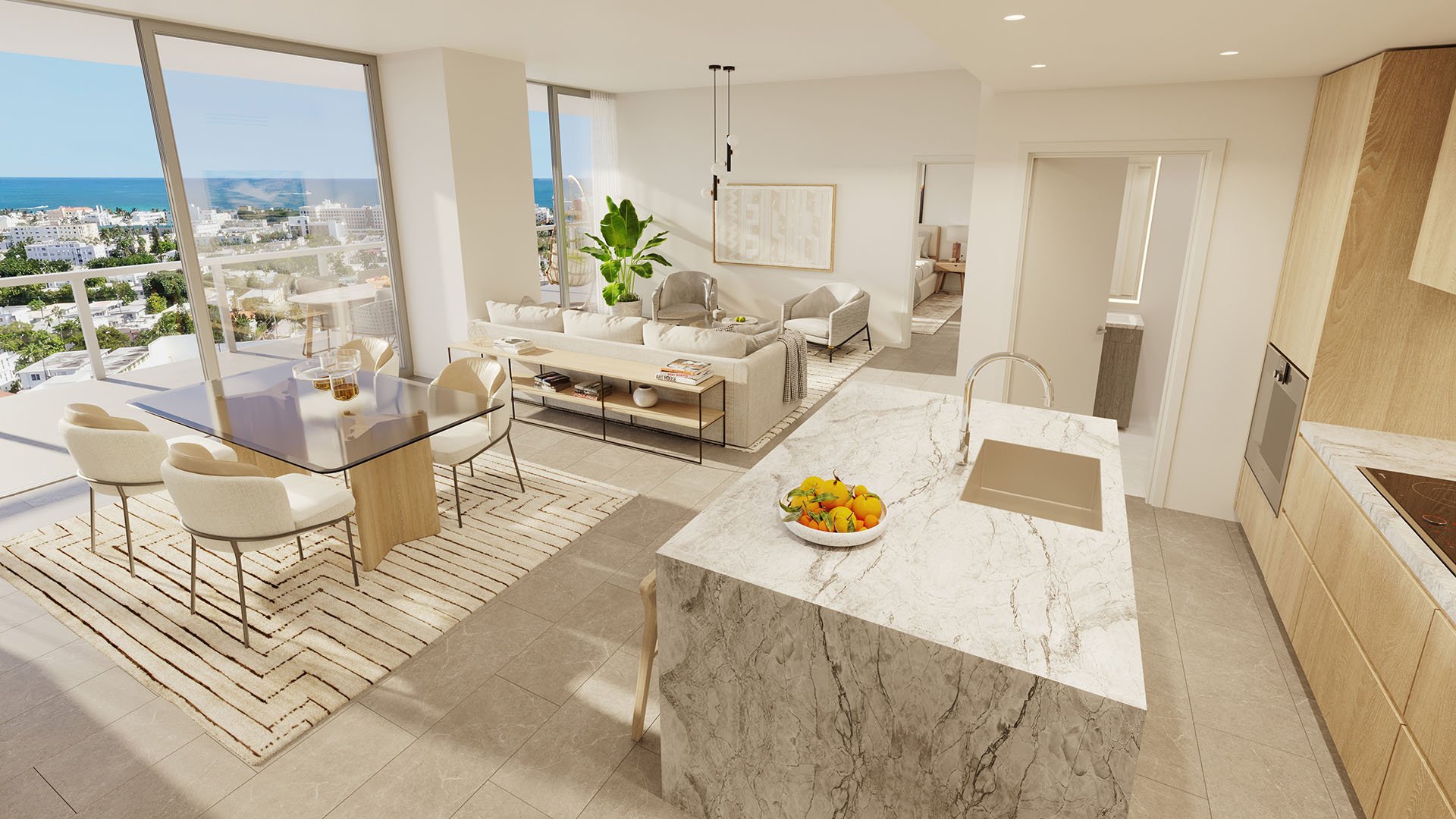
Yes, a South Florida condominium can serve as the family's only home when work and schooling happen remotely. But that is a property-specific judgment-not something an address, brand, or expansive view can establish. The residence must accommodate simultaneous demands, and the building's condition, finances, and operating rules require equally careful scrutiny.
Begin with an ordinary Tuesday rather than a holiday weekend. Picture two confidential calls, an online lesson, lunch preparation, a delivery, and someone needing quiet. Ask where each activity can happen without displacing another. For a household with no second residence to absorb inconvenience, everyday independence deserves more weight than a spectacular entertaining space.
The most useful distinction is between a condo that accommodates the family and one that requires the family to continually accommodate it.
Review the floor plan with furniture, doors, circulation, and working hours in mind. Evaluate a space labeled a den for the privacy, light, ventilation, and separation your intended use requires. Do not assume it functions as an enclosed office or a suitable study room simply because a desk fits.
When considering 2200 Brickell, apply the same test to the specific residence: can adults work while children study without turning bedrooms or the dining table into permanent overflow space? This is a selection question, not a claim about any particular layout.
During a viewing, test closed-door conversations and listen from adjacent rooms. Consider screen glare, camera backgrounds, charging locations, and storage for school materials. These practical checks do not replace an acoustic or technical assessment where one is needed.
Ask which internet services can actually be installed in the unit, what installation requires, and whether the proposed setup supports the household's simultaneous uses. Test connectivity in the intended workspaces rather than relying on a living-room demonstration. Consider whether an independent backup connection is feasible.
Be equally specific about power. Ask management to explain the actual scope of any backup system, including whether it serves only designated building functions or also supports anything inside the residence. Never infer whole-home continuity from the word generator.
For a sole residence, identify an alternative place to work and study if service is interrupted. Ask about access during maintenance, anticipated disruptive work, and communication procedures. The objective is not to promise uninterrupted living, but to understand what the family would do when normal operations change.
A home used for employment and education still needs to feel like a home at the end of the day. Look for ways to put work away, store projects, and preserve a place where nobody is attending a meeting. Consider laundry, groceries, sports equipment, visiting relatives, and the less photogenic demands of full-time occupancy.
A family exploring Coconut Grove through Arbor Coconut Grove should assess the surrounding daily routine as deliberately as the interior. Walk the routes your household expects to use and evaluate whether they suit your actual schedule.
Treat shared amenities as supplementary until their rules, hours, availability, and permitted uses are confirmed. Do not build a schooling or work plan around a lounge without the association's confirmation that it can serve that purpose.
Request the governing documents and relevant operating policies before treating a residence as a complete solution. Ask specifically about home-office activity, visiting tutors, deliveries, guests, renovations, and access to common spaces. Obtain clarification on any provision that could affect the family's intended use.
For a Miami Beach search that includes The Perigon Miami Beach, the principle is unchanged: evaluate the particular residence and applicable documents rather than assuming that luxury positioning resolves operational questions.
Remote schooling also requires its own educational planning. The property decision is no substitute for confirming the family's chosen educational arrangement. Keep those questions separate from whether the apartment has an attractive study space.
Ask management and qualified advisers to confirm whether milestone-inspection requirements apply to the building, which deadlines govern it, and whether any inspections or follow-up work remain outstanding. Do not infer compliance from a renovated apartment or a well-presented lobby.
Request any applicable milestone-inspection reports, documentation of identified follow-up work, and the relevant funding information. Have qualified advisers assess the documents and unresolved obligations. An assurance that an inspection is complete is not equivalent to understanding its findings or their implications for full-time occupancy.
Consider how any planned repairs could affect the household's routine. Ask about anticipated access restrictions, noise, and scheduling before deciding whether the residence can support uninterrupted work and study during that work.
A lower monthly association fee should prompt questions about obligations and funding-not an automatic conclusion that ownership is less expensive. Review the building's financial commitments alongside the unit's suitability for daily life.
Request any applicable structural integrity reserve study alongside current reserve balances, budgets, and information on assessments and planned work. Ask qualified advisers to explain the association's reserve obligations and whether its funding plans address the work identified in its documents.
Confirm the building's specific study deadlines, completion status, and any claimed extension with qualified advisers. Do not assume that a deadline or exception discussed for another association applies to the property under consideration.
Before committing, conduct a final review around three questions: can everyone function independently inside the residence, are the building's rules compatible with the routine, and are its structural and financial obligations understood? Any unresolved question should become a purchase condition or a reason to reconsider.
For this household, luxury is not simply having more services available. It is having enough privacy, operational clarity, and financial visibility to live without constantly improvising. A condominium should earn its place as the only home through those tests, not through the promise of effortless living.
Explore South Florida residences with MILLION to shape a search around your family's full-time needs.
If branded residences are on your mind — as a home or as an allocation — we would be glad to share what we are seeing, privately.
Begin a quiet conversationIt can be considered, but suitability depends on the specific residence, household routine, association rules, connectivity, and building condition and finances.
Evaluate whether simultaneous calls, lessons, and everyday activities can happen without repeatedly displacing one another. Check enclosed spaces, circulation, storage, and privacy rather than relying on room labels.
No. Evaluate its enclosure, light, ventilation, and separation against the intended use rather than assuming a desk makes it suitable.
Confirm which services can be installed in the specific unit, test intended workspaces, and investigate whether an independent backup connection is feasible.
Do not assume that it does. Ask management to explain exactly which building functions and in-unit services, if any, the backup system supports.
Treat them as supplementary until permitted uses, hours, availability, and rules are confirmed. A family should not depend on unverified access for essential work or schooling.
Ask management and qualified advisers to confirm whether the requirements apply to the building and which deadlines govern it. Request applicable reports and details of outstanding follow-up work.
Ask about anticipated noise, access restrictions, and scheduling. Consider whether the household can continue working and studying at home while the work takes place.
Request applicable milestone-inspection reports, the structural integrity reserve study, and related funding information. Review budgets, reserve balances, assessments, and planned work with qualified advisers.
No. Confirm the particular association's deadlines, completion status, and any claimed extension with qualified advisers.