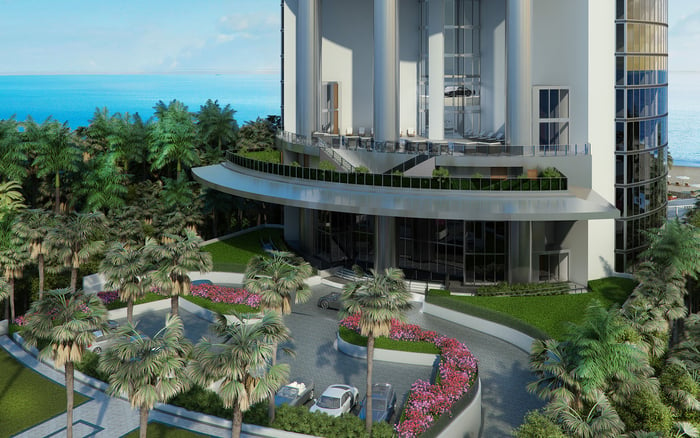
A discerning South Florida condominium comparison goes beyond unit count and monthly dues. Privacy, staffing intensity, reserve planning, and physical complexity shape the long-term ownership equation.

In South Florida luxury real estate, the distinction between a boutique condominium and a full-service tower is both a lifestyle and an operational decision. A low-density property may offer quieter arrival sequences, fewer neighbors per floor, and restrained common areas. A larger tower may provide a deeper service bench, more amenities, and a more active shared environment.
Neither format is inherently more economical. Smaller associations divide fixed expenses among fewer owners, while larger properties may support more employees, service posts, and complex facilities. A meaningful comparison begins with how a building operates, what its dues include, and how its long-term obligations are identified and funded.
The central question is not which model is universally superior, but which combination of privacy, service, and financial exposure best suits the owner's expectations.
The defining quality of a boutique building is typically lower density. Fewer homes per floor and fewer residents using the lobby, elevators, pool, and fitness areas can create a calmer daily rhythm.
A larger full-service tower can bring more movement through shared spaces. Buyers comparing a low-density setting such as The Well Bay Harbor Islands with larger urban options should assess the lived experience of arrival, elevator access, and amenity use rather than rely on residence count alone.
Privacy also depends on design. Elevator configuration, service entrances, parking circulation, and the number of homes sharing a corridor can matter as much as overall building size.
Concierge, valet, security, engineering, housekeeping, and amenity operations can create recurring payroll or contractual obligations. Expansive pools, spas, and dining spaces may add further labor and maintenance demands.
Scale can distribute fixed costs across more owners, but a larger ownership base may also support broader operating hours, additional equipment, and a more extensive service program.
A boutique building can still offer continuous front-desk coverage, valet, and on-site management. When extensive service is divided among relatively few residences, each owner may carry a larger share of the cost. In Brickell, buyers might compare the operating proposition of 2200 Brickell with that of The Residences at 1428 Brickell by mapping each staffed function, its hours, and its treatment in the annual budget.
A low monthly figure is not automatically evidence of efficiency, just as elevated dues are not necessarily excessive. The meaningful question is what the assessment covers. Valet, security, utilities, insurance, management, amenity staffing, and reserve contributions may be packaged differently from one association to another.
Buyers should separate operating expenses from reserve funding and distinguish discretionary services from core building costs. A smaller property with limited amenities may still carry significant building expenses, while a larger tower may divide certain costs among more owners while operating extensive shared facilities.
Compare cost per residence only after normalizing inclusions, staffing scope, and reserve contributions. Otherwise, two similar dues figures may represent very different service levels and approaches to future capital needs.
Reserve exposure should be evaluated at the association level rather than inferred from a building's boutique or full-service positioning. The relevant questions include which components are covered, how projected work is scheduled, how much has been accumulated, and whether planned contributions align with anticipated needs.
A boutique association may face concentrated per-owner exposure when major work is divided among relatively few residences. A large tower can distribute costs more broadly, yet its total capital needs may be greater because it has more extensive shared systems and facilities. Building condition, coastal exposure, physical complexity, and maintenance history can matter more than residence count alone.
For that reason, a Miami Beach search that includes The Perigon Miami Beach should still be evaluated building by building. The same discipline applies in Sunny Isles Beach when considering Bentley Residences Sunny Isles. Project category is no substitute for association-level diligence.
Before purchasing, request the current annual budget, available reserve studies, reserve balances, insurance information, pending or approved special assessments, recent board minutes, and material service contracts. Where inspection records apply, include them in the review. Buyers should also note evidence of deferred maintenance or significant planned work.
Ask management to explain staffing, outsourced functions, and the hours assigned to concierge, valet, security, and engineering. Determine whether amenities have dedicated staffing and whether dues include utilities, insurance, or other recurring expenses. Then compare the reserve schedule with available reserve funds and planned contributions.
The most persuasive building is not simply the quietest or the most fully serviced. It is the one whose operating model is clearly disclosed, financially supported, and aligned with how the buyer intends to live.
Is a boutique condominium always more private? No. Lower density may reduce traffic, but elevator layouts, service circulation, and access controls also shape privacy.
Is a full-service tower always more expensive? No. More owners may spread certain costs, although extensive staffing, facilities, and operating hours can offset that advantage.
Which services can increase recurring operating costs? Concierge, valet, security, engineering, housekeeping, and amenity operations may add payroll or contractual expenses.
Can a boutique building provide extensive service? Yes. Buyers should examine how that service is staffed and how its cost is divided among owners.
How should buyers compare monthly dues? Compare what each assessment includes, then separate operating expenses, service costs, and reserve contributions.
Why do reserve balances matter? They help buyers evaluate how an association is preparing for anticipated capital work and whether additional owner contributions may be possible.
Why can a small association face concentrated costs? Major shared expenses may be divided among fewer owners, increasing each residence's potential share.
Why can a large tower still have substantial capital needs? A larger property may operate more extensive shared systems, amenities, and facilities that require ongoing care.
Which records deserve priority before purchase? Review the budget, reserve studies, reserve balances, insurance information, assessments, board minutes, service contracts, and applicable inspection records.
What is the best final comparison between building types? Match the building's privacy, staffing, amenities, reserve planning, and disclosed costs to the way you expect to use the residence.
For a confidential assessment and a building-by-building shortlist, connect with MILLION.
If branded residences are on your mind — as a home or as an allocation — we would be glad to share what we are seeing, privately.
Begin a quiet conversation