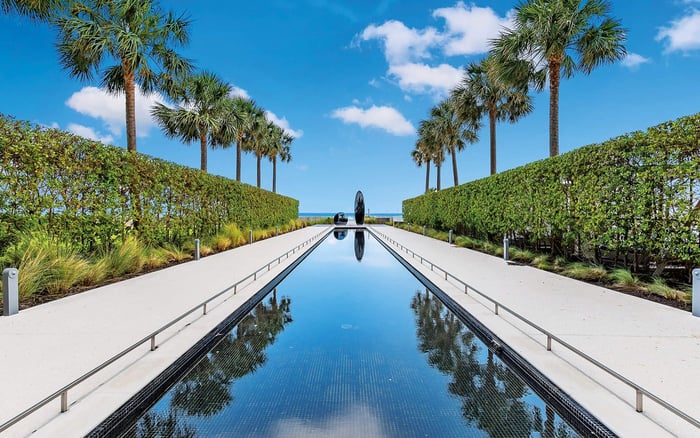
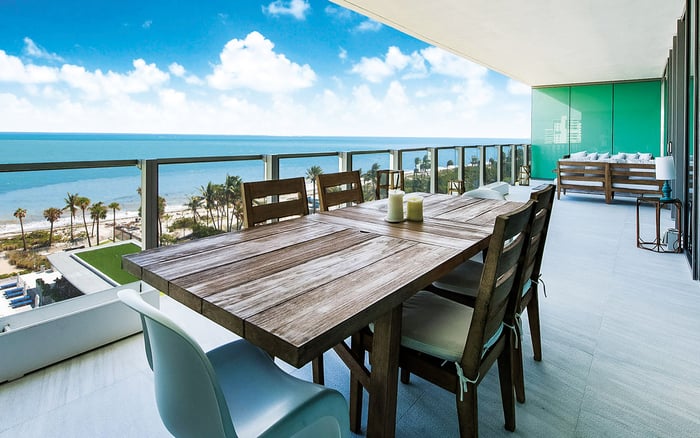
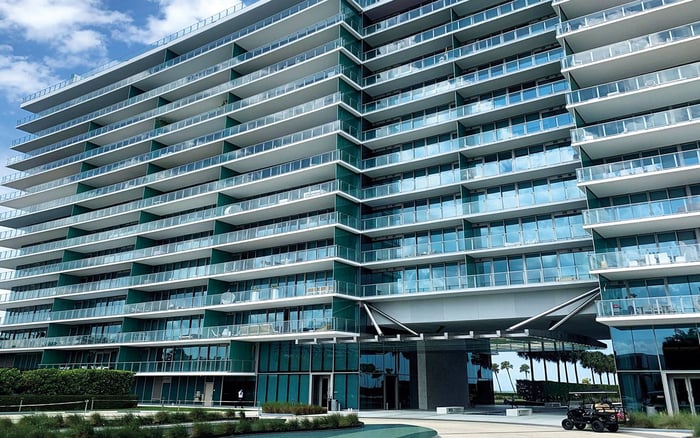
Oceana leads on documented same-unit gains, while Grand Bay and Commodore Club offer mature waterfront alternatives at different entry points and scales.
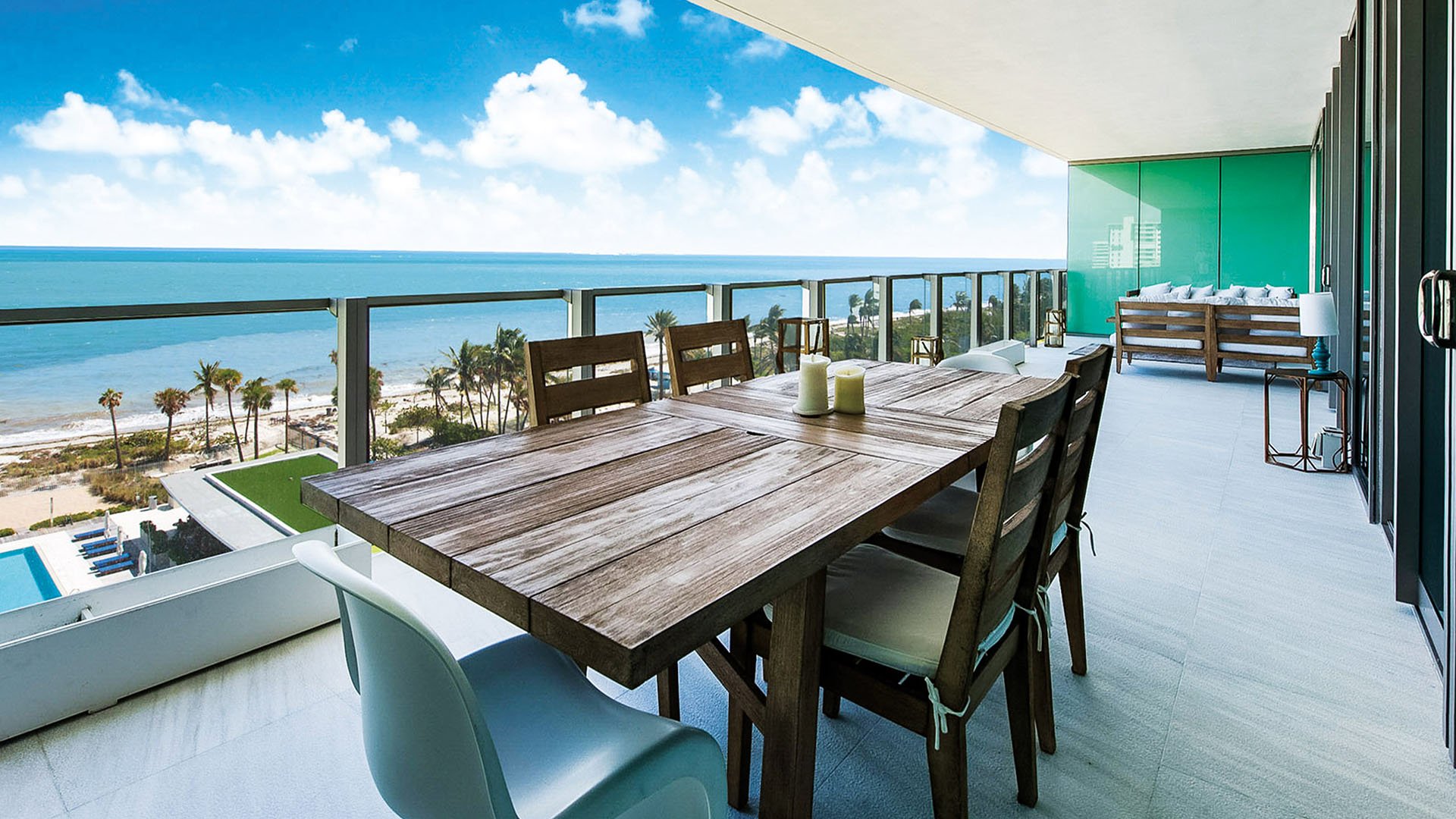
For buyers assessing Key Biscayne beyond launch-era excitement, the central question is not which residence carries the freshest identity. It is which building can sustain demand once every purchase becomes a resale, with floor, view, condition and price exposed to direct comparison.
That distinction favors established waterfront properties with recognizable positioning, sufficient transaction history to inform pricing and a residential experience that remains compelling through market cycles. It also requires patience. Appreciation and liquidity are related, but they are not interchangeable, particularly at the upper end of the island market.
The clearest evidence belongs to Oceana Key Biscayne, completed in 2014. Yet Grand Bay Residences and Commodore Club present credible alternatives for buyers who prefer a more mature basis, a broader inventory pool or less exposure to the highest quoted price per square foot.
The strongest resale choice is the residence whose scarcity remains legible after novelty fades.
1. Oceana Key Biscayne: 350-360 Ocean Drive
Oceana ranks first because its resale history is unusually measurable. The property has recorded 275 arms-length sales since 2014, representing approximately 6.9% annual turnover over the past decade. Among 122 same-unit resales, 94% closed above the prior recorded price, with a median gain of 28% over a median holding period of 4.6 years.
Recent pricing also indicates that the market continues to distinguish the building. Its 29 sales since 2023 carried a median price near $2,415 per square foot, compared with approximately $1,468 per square foot across its full sales record. In April 2025, residence 902S sold for $8 million, or about $2,385 per square foot across 3,354 square feet. Penthouse LPH2S closed in January 2025 for $15.2 million, equal to $3,192 per square foot.
The private oceanfront property contains 142 luxury residences and 12 villas. That limited scale supports differentiation, although buyers should not assume that historical appreciation guarantees a fast exit. Marketing periods can be lengthy, making acquisition price and holding flexibility essential.
2. Grand Bay Residences: 445 Grand Bay Drive
Completed in 1996, Grand Bay Residences is a 13-story condominium with approximately 137 residences beside the Ritz-Carlton Key Biscayne. It ranks second as a mature luxury option where the oceanfront setting and established residential identity may matter more than launch-era novelty.
A comparative snapshot placed Grand Bay's average asking price near $2,150 per square foot, below Oceana's approximately $2,400 per square foot. These are asking levels, not closed-sale benchmarks, but they illustrate a potentially meaningful distinction at entry. For a buyer seeking long-term resale appeal, that spread may create room to prioritize a superior line, renovation or outlook without automatically paying the island's highest quoted average.
3. Commodore Club North, East and South: 155, 177 and 199 Ocean Lane Drive
Commodore Club ranks third for its established waterfront fundamentals and breadth of inventory. Constructed between 1971 and 1974, its three 12-story towers contain 552 residences ranging from one to four bedrooms and approximately 308 to 2,825 square feet.
Balconies and Atlantic Ocean views give the community enduring direct-water appeal, while its much larger unit base creates more potential resale comparisons than at Oceana or Grand Bay. That scale can help buyers assess relative value, but it also makes unit-level selection especially important. Renovation quality, exposure and floor can produce materially different outcomes within the same community.
Oceana's advantage is not simply its relative newness. It is the combination of a defined private oceanfront setting, a finite collection and an observable pattern of same-unit gains. Closed sales over one 36-month period averaged approximately $2,382 per square foot, while a sample of 20 recent transactions showed averages near $1,872 per square foot for two-bedroom residences and $2,380 for three-bedroom homes.
Those differences caution against treating a building-wide average as a valuation shortcut. Four Oceana transactions recorded through October 2025 averaged $9.4 million and achieved a 98% list-to-sale ratio, but even strong headline figures cannot replace a residence-specific analysis.
On Key Biscayne, durable value begins with attributes a later owner cannot manufacture. Open-water orientation, compelling floor height, privacy and an efficient plan retain their relevance after interiors age. Renovation can elevate condition, but it rarely cures a compromised outlook or awkward line.
Buyers should also distinguish between scarcity and uniqueness. A singular residence may command attention, yet an overly individualized renovation can narrow its future audience. The more defensible approach is often a scarce physical position paired with restrained, enduring finishes. Pricing and trends should therefore be assessed at the line and bedroom level, not only by building.
Holding period matters as well. Oceana's median same-unit hold of 4.6 years provides useful context, but it is not a promise. Transaction costs, future condition and the number of competing listings can all influence the result at exit. A buyer with flexibility is better positioned to wait for demand that recognizes the residence's particular merits.
Key Biscayne buyers often cross-shop privacy, water and residential calm rather than architecture alone. For a mainland comparison, Park Grove Coconut Grove can help frame how another established bayfront address fits within a South Florida search. Buyers considering a different island setting may also examine Oceana Bal Harbour, while Continuum on South Beach offers another reference point for mature coastal ownership.
These comparisons should clarify priorities, not flatten distinct markets into a single price-per-square-foot table. Key Biscayne's value proposition is specific to its setting and inventory. The relevant test is whether the chosen residence offers qualities that a future buyer will still recognize without relying on the original sales narrative.
For the strongest long-term case, begin with the individual residence, then test the building. Review prior transfers of the same unit where available, compare like lines and distinguish asking prices from closed transactions. At older properties, weigh the quality and longevity of improvements against the entry advantage. At Oceana, avoid paying indiscriminately for the building name when floor, view or layout does not justify the premium.
The ranking therefore reflects three distinct paths: Oceana for the most persuasive quantified history, Grand Bay for mature luxury at a lower quoted asking level, and Commodore Club for broad, established waterfront exposure. Each can serve a patient buyer, but only when the specific residence is acquired with future comparability in mind.
For discreet guidance on selecting a Key Biscayne residence with enduring appeal, connect with MILLION.
If branded residences are on your mind — as a home or as an allocation — we would be glad to share what we are seeing, privately.
Begin a quiet conversationOceana Key Biscayne ranks first because it has the strongest documented resale record, including 94% of 122 same-unit resales closing above their prior recorded price.
The median gain was 28% across 122 same-unit resales, based on a median holding period of 4.6 years.
No. Strong historical gains can coexist with lengthy marketing periods, so sellers may still need timing flexibility.
A comparative snapshot placed average asking prices near $2,150 per square foot at Grand Bay and approximately $2,400 at Oceana. These are asking levels, not closed-sale benchmarks.
Grand Bay combines a mature oceanfront setting, approximately 137 residences and a lower quoted asking level than Oceana.
Its 552 residences provide established waterfront exposure, broad unit variety and a deeper pool of comparable inventory.
The residences range from approximately 308 to 2,825 square feet, with configurations spanning one to four bedrooms.
Floor, water orientation, privacy, layout, condition and renovation quality can materially affect demand and pricing.
No. Building averages can conceal substantial differences among unit lines, bedroom counts, floors, views and interior condition.
Evaluate the individual residence first, compare relevant closed transactions and distinguish durable physical scarcity from a temporary branding or design premium.