A buyer-focused guide to balancing waterfront setting, full-service ownership and durable condominium costs across Downtown Miami and Brickell.

For a Downtown Miami buyer, the most compelling residence is not necessarily the tower with the longest amenity menu or the lowest current association bill. It is the building where staffing, maintenance, insurance, reserves and capital planning combine to create a credible long-term ownership proposition.
That distinction is particularly important along the waterfront. Monthly totals alone can obscure meaningful comparisons. A large residence can carry a substantial bill yet remain efficient on a per-square-foot basis, just as a compact unit can appear affordable despite an elevated underlying rate.
The best ownership proposition is a credible service model supported by durable finances.
Because current dues reveal neither reserve strength nor pending capital obligations, the most defensible ranking focuses on ownership profiles rather than declaring any one building universally superior.
1. Established full-service waterfront tower: the balanced choice
An established property with professional staffing and a restrained amenity program may deliver a compelling service-to-cost balance. The opportunity is strongest when major capital work has been addressed and the association’s records demonstrate adequate planning.
2. Mature mixed-use residence: the practical urban choice
For buyers who value convenience and centralized operations, a mixed-use tower can provide a rational middle ground between limited-service ownership and a hospitality-led model. The association budget should clearly identify residential obligations and explain how shared costs are allocated.
3. Standard luxury high-rise: the measurable choice
A standard luxury condominium offers a useful baseline for comparing service levels, residence size and recurring obligations. Per-square-foot analysis can help buyers distinguish the effect of floor-plan size from the building’s underlying operating model.
4. New full-amenity trophy tower: the service-first choice
A highly amenitized property may suit buyers who expect to use hospitality-led services regularly. It may be less aligned with a mandate centered on restrained carrying costs, making careful review of included services and long-term obligations essential.
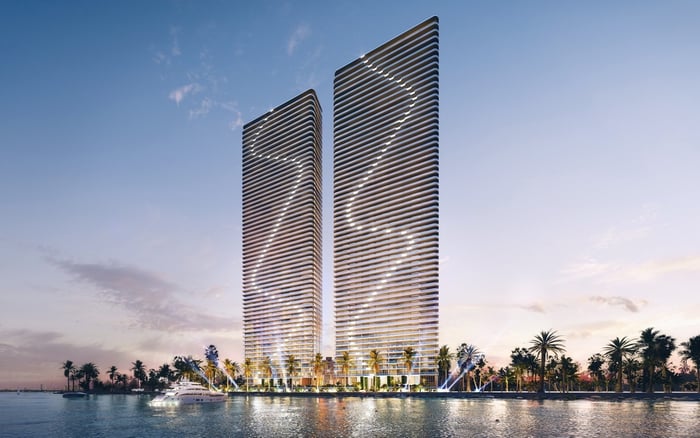
Downtown Miami presents distinct propositions rather than a homogeneous market. Buyers can use Aston Martin Residences Downtown Miami, One Thousand Museum Downtown Miami and Waldorf Astoria Residences Downtown Miami as reference points for comparing service intensity, residence size and the structure of recurring obligations. Their inclusion creates a practical comparison set; it does not imply that their fees, reserves or operating models are equivalent.
The same discipline applies immediately south in Brickell. Baccarat Residences Brickell and Una Residences Brickell broaden the conversation around waterfront-oriented luxury ownership and contemporary service programs. Buyers should request the current budget and governing documents for each property rather than extrapolate from neighborhood assumptions.
A low fee is a snapshot; stabilization is a financial condition. Insurance renewals, reserve contributions and special assessments can alter the ownership equation, particularly when a building has deferred structural, mechanical or exterior work.
A serious review should test five areas. First, examine multiple annual budgets for abrupt increases or expenses repeatedly classified as extraordinary. Second, review reserve studies and compare contributions with anticipated projects. Third, assess structural records and the status of completed or planned capital work. Fourth, study insurance renewals, coverage and deductibles. Fifth, read recent meeting minutes for discussions of assessments, litigation or major contracts.
An unusually low monthly charge deserves as much scrutiny as a high one. Neither figure independently proves value. The relevant questions are what the payment includes, what remains outside it and whether future obligations are being funded today.
Begin with association dues per square foot, then annualize the result. Add property-specific insurance, taxes, parking or storage charges where applicable, and any current assessment. Buyers should also model potential increases rather than treat the present budget as fixed.
This approach is especially useful when comparing floor plans. A larger residence may produce a higher monthly total even when the building operates at a more efficient rate per square foot. Reviewing both figures helps separate the cost of space from the cost of the service model.
Ownership format matters as well. A condominium can reduce an owner’s direct maintenance responsibilities, but recurring dues and assessments remain central to long-term affordability. Convenience has a measurable cost, and buyers should decide which services genuinely support daily life.
For a buyer prioritizing realistic stabilized costs, the ideal brief favors transparent finances over novelty. Seek a high-service residence with a comprehensible staffing model, documented capital planning, adequate reserves and an amenity program aligned with actual use. Building age alone never establishes value.
Downtown Miami and Brickell contain varied operating models, so neighborhood labels should never replace association-level diligence. The right residence is one whose services feel effortless because its finances and obligations have been examined with care.
To compare distinguished South Florida residences with a discreet advisor, connect with MILLION.
If branded residences are on your mind — as a home or as an allocation — we would be glad to share what we are seeing, privately.
Begin a quiet conversationPer-square-foot analysis helps separate the effect of residence size from the building’s underlying operating costs.
No. Staffing, insurance, reserves, maintenance and amenities all influence recurring obligations at the building level.
Stabilization depends on credible reserves, insurance planning, documented capital work and transparent budgeting rather than a low current fee alone.
Review recent budgets, reserve studies, structural records, insurance information, meeting minutes and details of current or contemplated assessments.
They may when professional staffing is paired with a restrained amenity program and documented capital planning.
The budget should explain residential obligations and how shared costs are allocated among the property’s components.
Not necessarily. Buyers should identify assessments separately and include them in the annual carrying-cost review.
Amenities affect staffing, maintenance and operating needs, so buyers should prioritize services they expect to use.
No. Individual associations can have different budgets, reserves, insurance structures and capital obligations within the same neighborhood.
It prioritizes transparent finances, understandable staffing, documented capital planning, adequate reserves and services aligned with the buyer’s needs.