The most resilient penthouse purchase is defined by documented building systems, not a generator line in a brochure. Buyers should examine backed-load schedules, fuel strategy, telecom redundancy, equipment siting, maintenance records, and written hurricane staffing procedures before treating any residence as storm-ready.

For South Florida penthouse buyers, resilience is becoming as consequential as ceiling height, water views, or private elevator access. Yet the phrase “backup generator” does not define which building or residential systems will remain available during an outage.
The best penthouses for resilience-minded buyers are those whose associations can document precisely what remains operational, for how long, and under whose supervision. This deserves particular scrutiny in waterfront buildings, where buyers should investigate flood exposure, salt-air protection, wind considerations, and post-storm access.
1. The residence with documented in-unit backup power
The strongest profile includes a written backed-load schedule identifying the precise penthouse circuits served during an outage. Buyers should look beyond general assurances and confirm whether refrigeration, lighting, selected receptacles, cooling, smart-home controls, and communications equipment are included. Generator capacity alone does not identify the circuits served.
2. The tower with protected critical infrastructure
A compelling building documents where essential equipment is positioned and the structural support beneath it. Buyers should ask how siting addresses flood exposure, outdoor operation, exhaust safety, wind resistance, and separation from openings.
3. The building with genuinely redundant connectivity
Connectivity should be assessed as a complete chain. Buyers should determine whether the property has more than one telecommunications pathway or provider, whether building network rooms receive backup power, and whether penthouse routers and related equipment are connected to backed circuits. They should also confirm whether separate providers rely on distinct entry routes.
4. The condominium with disciplined maintenance and fuel planning
Maintenance records should demonstrate recurring testing and pre-storm inspections rather than merely state the generator’s rated output. The association should also detail fuel capacity, anticipated runtime under specified loads, refueling arrangements, vendor priority, and post-event access. Any access to rental equipment should be documented separately from the permanent backup system.
5. The property with a written staffing and communication plan
Mechanical resilience also depends on an operating plan. A serious plan identifies which engineering, security, management, and maintenance personnel remain on site or return after a storm; how residents receive updates; who can authorize repairs; and how fuel, vendors, deliveries, and restricted access are managed.
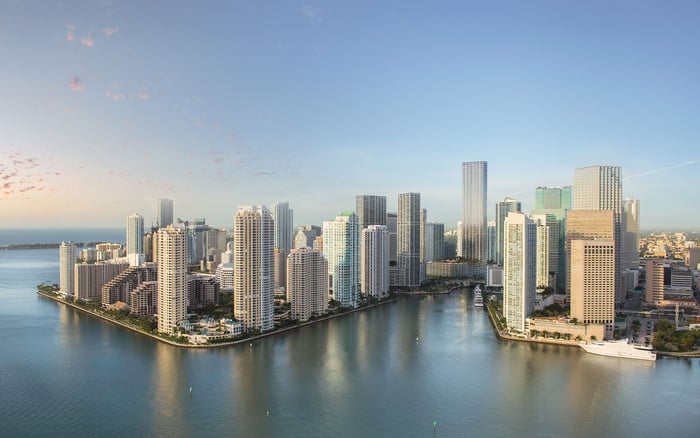
In Brickell, buyers comparing The Residences at 1428 Brickell with St. Regis® Residences Brickell can apply the same resilience questionnaire to each sales or management team. The objective is not to infer equivalent systems, but to make every response written and comparable.
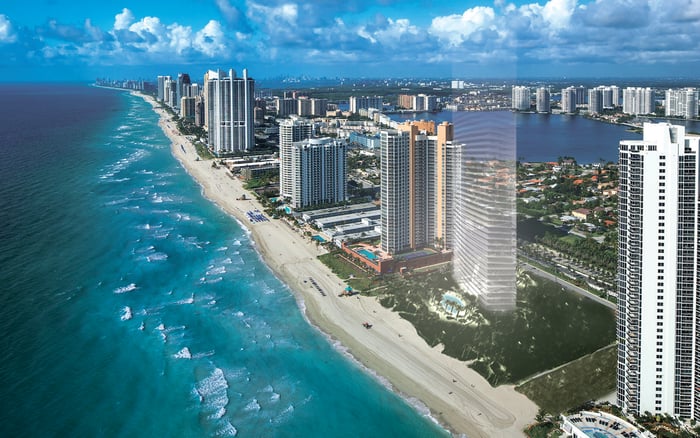
In Miami Beach, The Perigon Miami Beach offers another setting in which buyers should examine equipment elevation, coastal specifications, and post-storm access. The same discipline applies in Sunny Isles Beach when considering Bentley Residences Sunny Isles. Buyers seeking greater separation and controlled access may also assess The Residences at Six Fisher Island through the lens of staffing continuity and vendor logistics.
These are viewing candidates, not a ranking of disclosed resilience performance. The decisive distinction is the quality of documentation available for a specific building and residence.
Request available generator permits and inspection records. Review the backed-load schedule, one-line electrical diagrams, maintenance logs, recent test records, fuel agreements, equipment elevations, and specifications addressing wind and corrosion exposure.
Generator placement warrants equal scrutiny. Ask qualified professionals to explain outdoor-operation requirements, exhaust safety, separation from openings, anchoring, structural support, and any specifications intended for coastal conditions.
Request the hurricane plan, emergency contact tree, elevator protocol, water-pump strategy, telecommunications diagram, and written description of management coverage. A concise response supported by records carries greater weight than expansive marketing language.
Treat the penthouse, building, and operating team as a single resilience system. Determine whether backup power extends to network rooms, domestic-water systems, cooling, elevators, and the specific circuits serving the residence. Review fuel-delivery planning and post-storm access alongside the equipment itself.
A refined purchase decision tests these dependencies before contract deadlines. Strong infrastructure should be evident in available permits, engineering documents, service records, and association procedures, giving the buyer a clearer picture of life in the building after utility service is interrupted.
Does a condominium generator power the penthouse? Do not assume that it does. Confirm the exact in-unit circuits identified on the building’s backed-load schedule.
Should every elevator remain available during an outage? Do not assume so. Request written confirmation of which elevators operate and under what conditions.
Why does generator elevation matter? Ask the building’s qualified professionals how equipment elevation relates to the property’s documented flood exposure.
What generator records should a buyer request? Request available permits, inspection records, electrical diagrams, and documentation for the installation.
How should coastal corrosion be reviewed? Ask for specifications identifying components, enclosures, and hardware selected for the building’s coastal setting.
What helps document generator maintenance? Look for recurring test logs, service records, pre-storm inspections, and written operating protocols.
Is access to a rental generator the same as permanent backup? No. Document permanent backup separately from any rental-equipment contingency.
What should buyers ask about fuel? Confirm capacity, runtime assumptions, refueling arrangements, vendor priority, and post-storm delivery access.
How can buyers assess connectivity resilience? Verify telecommunications pathways, backup power for network rooms, and backed circuits for in-residence equipment.
What should a storm-response staffing plan include? It should define engineering, security, management, communications, vendor access, and resident-support responsibilities.
If you'd like a private walkthrough and a curated shortlist, connect with MILLION.
If branded residences are on your mind — as a home or as an allocation — we would be glad to share what we are seeing, privately.
Begin a quiet conversation