
A buyer-focused ranking of South Florida condominium candidates and the legal, electrical, and operational checks required to secure controlled parking and dependable EV charging.
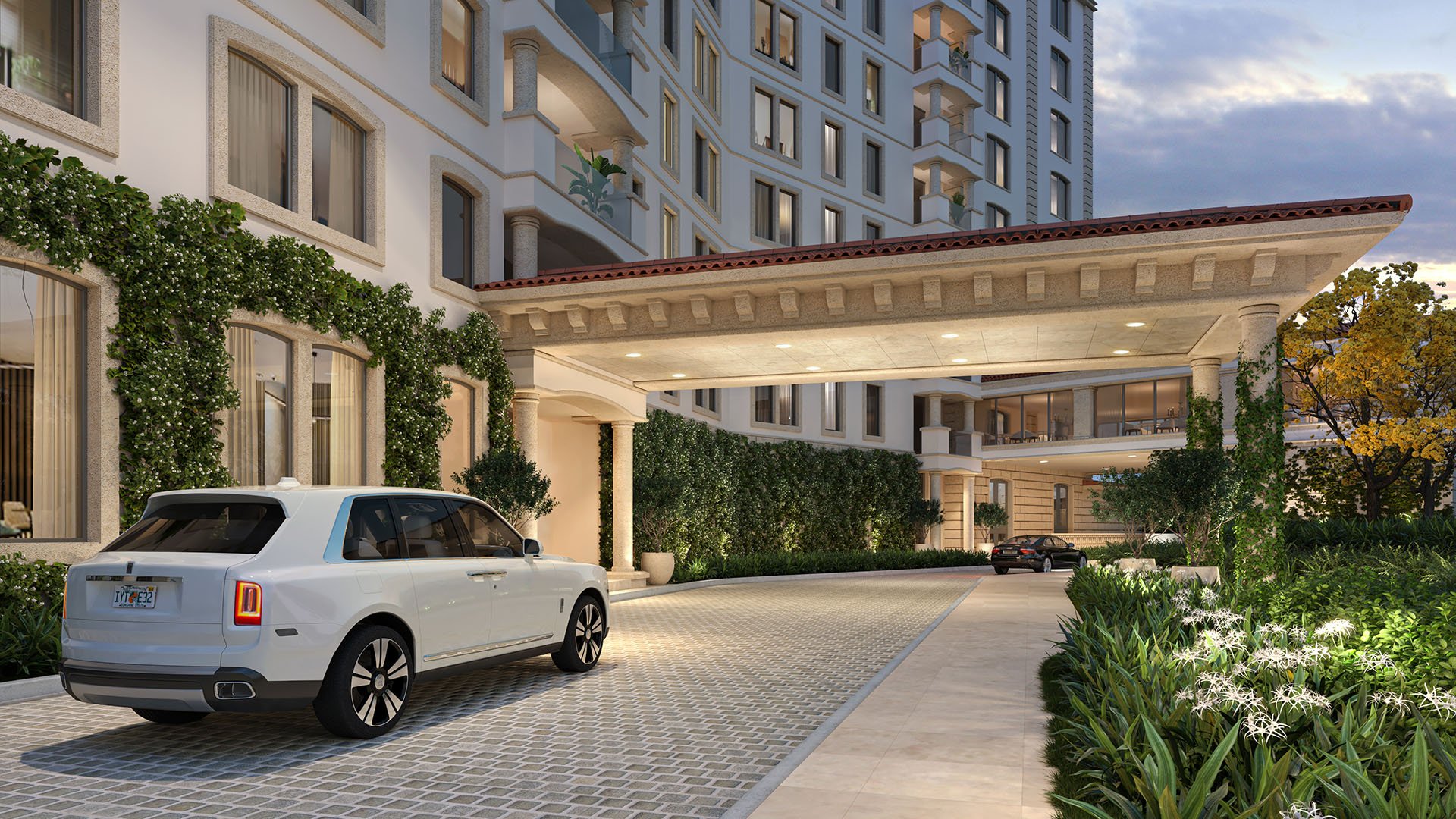
For buyers considering South Florida penthouses, parking is no longer a secondary amenity. Even a beautifully finished residence can become operationally frustrating when its owner must queue for valet, compete for a shared charger, or request staff assistance whenever a vehicle is needed. The more exacting standard is a complete chain of control: legally secure spaces, predictable garage access, dependable charging, and the freedom to arrive or depart without an intermediary.
Those four conditions are not interchangeable. A building may offer EV charging but provide only shared stations. An assigned space may ensure day-to-day consistency without being deeded. Valet may be an optional convenience, or it may effectively control the garage. This edition of MILLION's Buyer's Guides distinguishes among those arrangements before ranking the strongest candidates based on disclosed parking details.
True garage luxury is measured by control, not merely by the presence of parking.
This ranking prioritizes documented ownership or allocation, disclosed charging, and indications of resident-controlled access. Buyers should still confirm every right in the governing documents and purchase contract.
1. 1800 Sunset Harbour Drive, Unit 1612: two deeded spaces
This Miami Beach residence presents the clearest ownership baseline: two parking spaces expressly described as deeded. The property also offers valet service and available EV charging, creating a potentially attractive balance of private parking rights and optional assistance.
Charger control remains unresolved. Available details do not establish whether charging is installed at either deeded space, located in shared stalls, or managed through valet. Buyers should make charger location and independent overnight access central diligence questions rather than assume deeded parking and charging share the same footprint.
2. Le Jardin Residences: assigned parking with compatible charging
Le Jardin in Bay Harbor Islands provides assigned parking for each residence and a Tesla-compatible charging station. The combination supports predictable day-to-day parking and on-property charging-both valuable to an owner seeking to avoid routine off-site charging.
Assigned, however, does not necessarily mean deeded. The building also offers valet, making the decisive question whether residents can enter, park, connect, disconnect, and retrieve their vehicles without staff involvement at all hours. The declaration and garage rules should define the nature of the assignment and any operational limits.
3. Ocean 580: secure garage parking and EV stations
Ocean 580 in Pompano Beach offers secure garage parking and EV charging stations. Its resident-oriented amenity profile makes it a compelling candidate for buyers who prefer a more direct relationship with their building and garage.
The disclosed information does not confirm that spaces are deeded to individual residences. Buyers should determine whether parking is deeded, assigned, licensed, or designated as a limited common element, then establish whether the chargers are shared and whether valet plays any role in vehicle movement.
A disciplined search should compare the documented candidates with other luxury projects while treating parking rights as unresolved until verified. In Miami Beach, The Perigon Miami Beach merits a place on a coastal comparison itinerary, but buyers should request unit-specific parking schedules and EV rules before reaching conclusions.
The same principle applies across urban Miami. Buyers considering The Residences at 1428 Brickell in Brickell or Villa Miami in Edgewater should ask the same questions about title, access, metering, and staff control. In Broward, Sixth & Rio Fort Lauderdale provides another geographic reference point for a parking-focused search. Inclusion on the itinerary does not confirm deeded spaces or private charging.
The word “reserved” is insufficient. A space may be separately deeded, attached to the unit as a limited common element, assigned by the association, licensed to the resident, or subject to reassignment. Each structure affects control, transferability, and the owner's ability to install equipment. Tandem configurations also warrant scrutiny because one vehicle can obstruct another even when two spaces are allocated.
Request the condominium declaration, amendments, parking schedule, unit deed, garage plan, and current rules. These documents should align precisely with the sales representation. If they do not, the contract should not rely on an informal understanding or a parking map presented without legal context.
Many charger-equipped buildings provide shared Level 2 stations rather than equipment dedicated to an individual residence. Shared infrastructure can be useful, but its reliability depends on charger count, demand, reservation procedures, idle fees, overnight access, maintenance response, and whether staff must relocate vehicles. Charger-use logs can reveal more than an amenity description.
For a private installation, Florida condominium owners may install EV charging in designated parking areas at their own expense, subject to statutory conditions and reasonable, uniformly applied association rules. The owner may be responsible for installation, electricity, maintenance, repair, insurance, and eventual removal. Confirm panel capacity, cable routing, metering, approved vendors, and any electrical-capacity study before assuming installation will be straightforward.
Valet service can remain a welcome option without becoming a dependency. Request a live demonstration of resident garage entry, elevator access, charging, and vehicle retrieval during peak hours and overnight. Confirm whether residents retain their keys, whether attendants move vehicles, and whether an owner can depart immediately without calling ahead.
Sunrise Harbor provides a useful trial-living reference in Fort Lauderdale: its three-bedroom homes and penthouses receive two garage spaces, onsite EV charging is available, extra spaces carry a monthly charge, and valet is priced separately rather than required. As a rental community, its spaces are not deeded, but the arrangement can help a buyer evaluate preferred routines before purchasing.
Before contracting, request the EV policy, electrical-capacity materials, charger records, insurance requirements, garage-access rules, pending special assessments, and title documents. Public charging in Miami or a Fort Lauderdale city charging permit can serve as a fallback, but neither provides the control of dependable charging at a legally secure residential space.
For confidential guidance on parking-focused penthouse opportunities across South Florida, connect with MILLION.
If branded residences are on your mind — as a home or as an allocation — we would be glad to share what we are seeing, privately.
Begin a quiet conversationNo. Many buildings provide shared Level 2 stations rather than a charger attached to a residence's parking space.
The cited Unit 1612 at 1800 Sunset Harbour Drive is described as including two deeded parking spaces.
No. Available details do not specify whether charging is at those spaces, in shared stalls, or within a valet-controlled area.
Le Jardin lists assigned parking for each residence and a Tesla-compatible charging station, but buyers should verify the legal status of each space.
No. Ocean 580 advertises secure garage parking and EV stations, but deeded ownership of individual spaces is not confirmed.
Florida law permits installation in designated parking areas at the owner's expense, subject to statutory conditions and association rules.
Owners may bear installation, electricity, maintenance, repair, insurance, and eventual removal costs.
Request a live demonstration of garage entry, charging, elevator access, and vehicle retrieval during peak and overnight periods.
No. It is a rental community, so its parking allocations are not deeded, though it can serve as a trial-living alternative.
Request the declaration, deed, parking schedule, garage rules, EV policy, charger records, capacity materials, and pending special assessments.

.jpg&width=700&height=438&fit=cover)