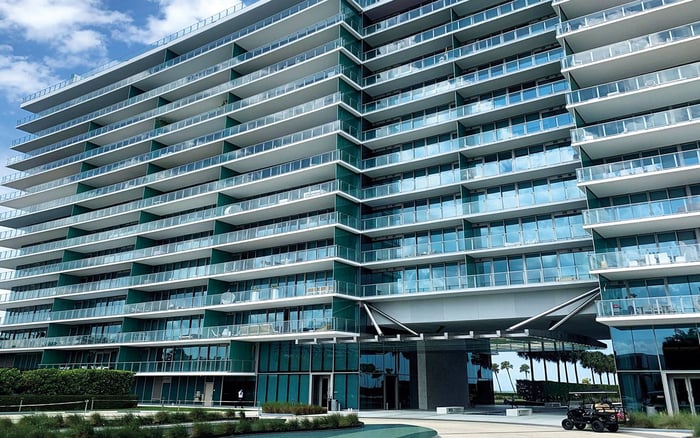
Oceana Key Biscayne presents the strongest documented combination of assigned parking, EV infrastructure and valet flexibility, but buyers must verify ownership, charger access and self-parking rights.
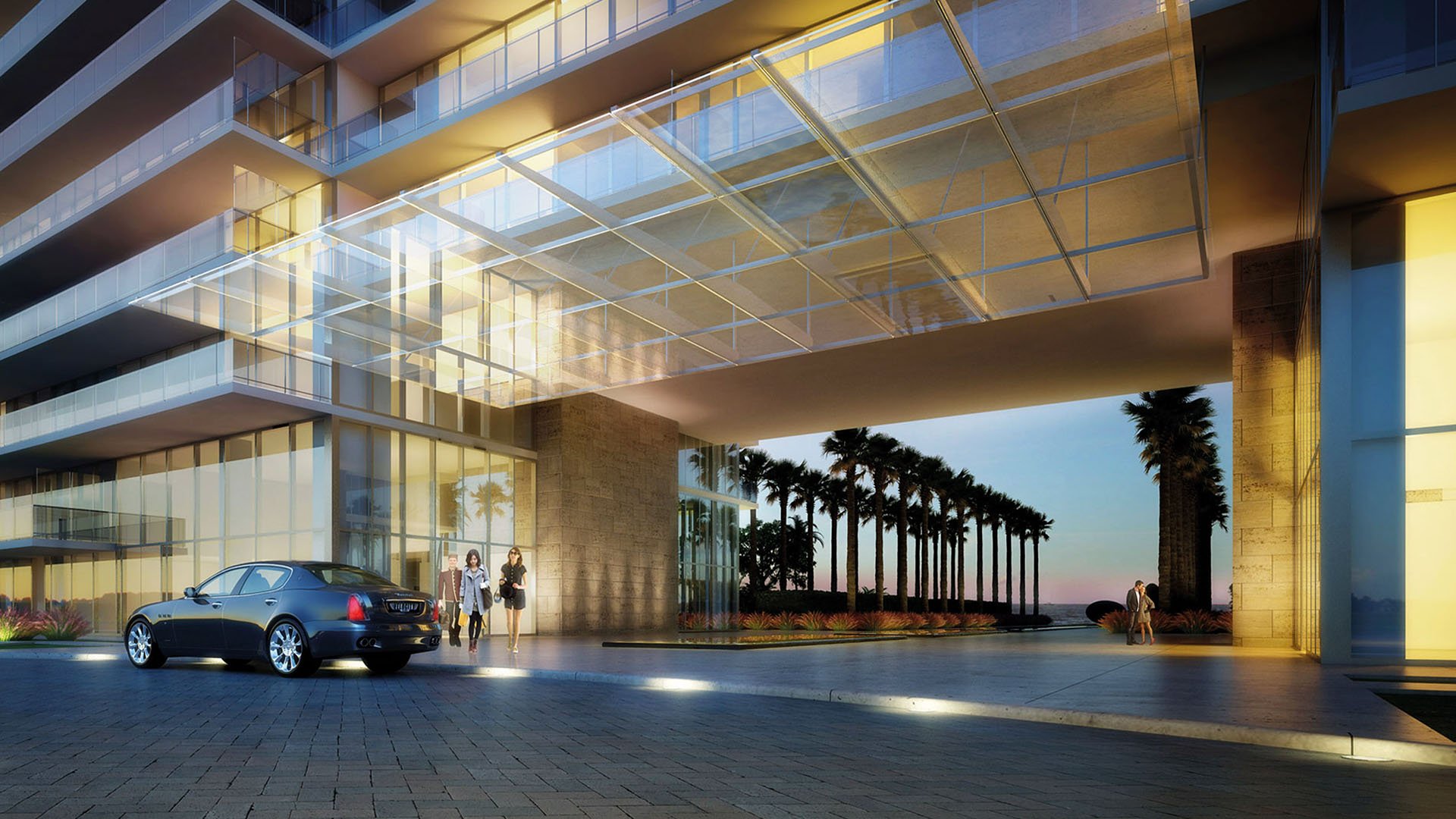
For an electric-vehicle owner, the quality of a condominium garage can matter as much as the residence itself. A graceful arrival quickly loses its appeal when daily access depends on a valet queue, charging proves unreliable, or an ostensibly private space turns out to be merely assigned by the association.
Within Key Biscayne, Oceana Key Biscayne is the strongest documented fit for buyers seeking a contemporary luxury condominium with meaningful self-parking potential. At 360 Ocean Drive, residence 1106S has been described as including two assigned spaces, EV charging stations, under-building parking, guest parking and valet service. A separate residence, 304S, has also been described as including two assigned, covered garage spaces.
That combination matters. Assigned spaces and valet service can coexist, offering an owner greater flexibility than a valet-only arrangement. It does not, however, establish that every residence has two spaces, that the spaces are legally deeded, or that a charger is dedicated to a particular unit.
The luxury is not simply having a charger, but knowing when and how it can be used.
The documented details support a practical conclusion: Oceana accommodates assigned garage parking, and EV charging infrastructure has been advertised within the property. They also support a more cautious legal conclusion: assigned parking should not be treated as synonymous with deeded parking.
A deeded space is generally identified in recorded property documents as part of the real-estate interest being conveyed. An assigned space may remain a common element whose use is allocated by the condominium association. That distinction can affect transferability, reassignment and an owner's ability to modify the space. Buyers should review the deed, condominium declaration, amendments, parking schedule and current estoppel rather than rely on marketing language.
The EV question requires equal precision. A reference to charging stations may indicate shared equipment elsewhere in the garage, not a charger installed beside the residence's assigned spaces. The decisive considerations are charger location, exclusivity, connector compatibility, power level, access hours, fees, metering and uptime.
Key Biscayne's resale inventory offers several useful reference points, although the available facts do not place these properties in the same fully documented category as Oceana.
KEY CASSA at 202 Sunrise Drive provides the most direct EV comparison. Residence 202B has been offered with a private parking space equipped with an EV charger. It is explicitly classified as not new construction, making it an established alternative rather than a match for a strict new-build mandate.
Grand Bay Tower at 789 Crandon Boulevard dates to 1998 and provides assigned covered parking plus valet. Another residence at 785 Crandon Boulevard has been described as including three assigned, covered garage spaces and valet, but no EV charging was identified. The Towers of Key Biscayne likewise offers secure, undercover assigned parking. A residence at 1111 Crandon Boulevard has been described as including one assigned, covered space in an upper-level garage, without a documented charger.
Other established options reinforce the same pattern. Residences at 177 and 199 Ocean Lane Drive have documented assigned parking but no specified EV equipment. Unit 7H at 881 Ocean Drive has assigned, attached and covered garage parking without an advertised charger. A residence at 723 Crandon Boulevard had two assigned covered spaces and guest parking, but its listing is closed and did not document charging.
For buyers willing to compare newer luxury formats beyond the island, Four Seasons Residences Coconut Grove offers a regional point of reference. Its inclusion here is not a claim about parking or charging specifications, which should be investigated independently using the same documentary standard.
Key Biscayne has 15 public charging ports within 15 kilometers. All are Level 2, and 13 percent offer free charging. Identified locations include Key Colony 2 at 251 Crandon Boulevard, Key Colony 4 at 101 Crandon Boulevard, stations at 1121 Crandon Boulevard and Village Green Park.
This network is a useful contingency, not an equal substitute for dependable overnight charging at home. Level 2 service can accommodate routine use, but availability, operating status and access can change. A buyer whose household relies on multiple electric vehicles should treat public infrastructure as backup capacity rather than the foundation of the ownership experience.
Oceanfront exposure also makes equipment placement and maintenance worthy of scrutiny. Buyers should ask who services the chargers, how quickly outages are addressed and whether the association has a funded plan for future electrical demand. Those questions connect lifestyle convenience with the less visible infrastructure supporting it.
Begin with the legal status of each parking space. Request the recorded documents establishing whether it is deeded, a limited common element, an assigned common element, or subject to association reassignment. Confirm the exact space numbers and whether they will remain with the unit after closing.
Next, test how the garage functions in practice. Determine whether an owner can enter, park and retrieve a vehicle without valet assistance at all hours. Ask whether residents must surrender keys, whether guest vehicles follow different procedures and whether oversized vehicles face restrictions. Where valet exists alongside assigned parking, confirm that self-parking is a protected practice rather than an informal courtesy.
For charging, determine whether the equipment is private or shared and whether access can be reserved. Obtain the charger's power rating, fee schedule, payment method and maintenance history. If no private charger exists, association documents should establish whether an owner may install Level 2 equipment, who approves the work, how electricity is metered and who pays for electrical upgrades.
A buyer comparing Key Biscayne with Miami Beach may also examine The Ritz-Carlton Residences® Miami Beach as another luxury reference point, while verifying every garage and charging detail rather than assuming consistency across premium properties.
For daily usability, Oceana stands first because its public unit details bring together two assigned spaces, covered or under-building parking, EV charging, guest parking and valet. The valet component need not be a drawback when it remains optional. It can add convenience for guests while preserving resident independence, provided direct garage access is confirmed.
KEY CASSA is the clearest alternative for a buyer who prioritizes a charger attached to a private space over new-construction status. Grand Bay Tower, The Towers and the Ocean Lane residences may suit owners who value established assigned parking and are prepared to resolve charging separately. Their investment appeal should still be evaluated residence by residence, since parking allocations and EV permissions can materially affect usability.
The final judgment is precise: Oceana Key Biscayne is the best documented overall fit, but the available evidence establishes assigned parking rather than universally deeded spaces, and it does not establish that every charger is exclusive to a residence. The right purchase is therefore the one whose recorded documents, association rules and physical garage inspection align.
For private guidance on Key Biscayne residences and South Florida's most considered addresses, connect with MILLION.
If branded residences are on your mind — as a home or as an allocation — we would be glad to share what we are seeing, privately.
Begin a quiet conversationOceana Key Biscayne is the strongest documented fit, with unit details showing assigned spaces, EV charging stations, covered parking, guest parking and valet.
The available details establish assigned parking, not that spaces are legally deeded to every residence. Recorded condominium and title documents should confirm the legal status.
No universal allocation is established. Two separate residences have been described with two assigned spaces, but each unit's parking schedule must be verified.
EV charging stations are documented, but the available facts do not establish whether they are shared or dedicated to a unit's assigned spaces.
Assigned parking and valet are both documented, suggesting flexibility. Buyers should still confirm direct garage access and current self-parking procedures.
No. Residence 202B has a private parking space equipped with an EV charger, but the property is explicitly classified as not new construction.
There are 15 public charging ports within 15 kilometers. All are Level 2, and 13 percent offer free charging.
Examples include Grand Bay Tower, The Towers of Key Biscayne and residences on Ocean Lane Drive, although documented EV charging varies or is absent.
Confirm its location, exclusivity, power level, fees, metering, uptime, maintenance responsibility and whether association approval is needed.
Assigned spaces may remain under association control, while deeded spaces are reflected in recorded property rights. The distinction can affect reassignment, transfer and modification.