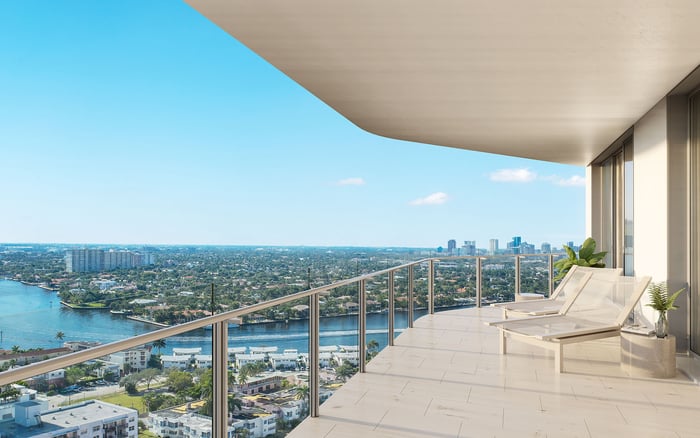
Fort Lauderdale condominium value increasingly depends on visible reserves, current structural studies, documented capital plans, and an association’s ability to explain every assessment.

In Fort Lauderdale, financial clarity may now be the most consequential residential amenity. Views, service, architecture, and private arrival experiences still shape desire, but sophisticated buyers are giving equal weight to reserve funding, inspection status, insurance, and the quality of association records.
That shift is especially relevant along Fort Lauderdale Beach and the Intracoastal, where salt, moisture, waterproofing, balconies, exterior openings, and seawalls can shape long-range capital planning. A polished lobby cannot reveal whether an association has aligned its budget with the projected life of critical common elements. The best residence, therefore, is not simply the most visually compelling address. It is a home in a building whose financial obligations can be understood before closing.
In a luxury condominium, transparent capital planning is part of the amenity package.
Several prominent addresses offer natural starting points for a luxury search, but none should be assumed to have verified reserve strength without a review of current association records. Buyers considering Four Seasons Hotel & Private Residences Fort Lauderdale or Auberge Beach Residences & Spa Fort Lauderdale can weigh service and coastal living alongside the financial questions relevant to every qualifying condominium.
The waterfront conversation can also include St. Regis® Residences Bahia Mar Fort Lauderdale. The disciplined inquiry is not whether a residence carries a celebrated name, but whether its governing documents, adopted budget, reserve schedule, insurance declarations, and applicable structural records present a coherent ownership picture.
Urban buyers may similarly examine Sixth & Rio Fort Lauderdale, while those considering another branded option can explore The Ritz-Carlton Residences® Fort Lauderdale. These are residences to evaluate, not proxies for confirmed HOA performance. Newer construction and branding do not replace document review, and an attractive monthly fee does not establish that future capital needs are adequately funded.
Florida condominium and cooperative buildings with three or more habitable stories generally must complete a Structural Integrity Reserve Study, or SIRS, at least every 10 years. Most qualifying condominiums were required to complete their initial study by December 31, 2025.
A SIRS examines the remaining useful life and replacement cost of critical common elements. Its scope can include roofs, structural members, fire protection, plumbing, electrical systems, waterproofing, exterior openings, balconies, and seawalls where applicable. For a buyer, this is more than a compliance record. It is a forward-looking map of obligations shared among owners.
Associations subject to SIRS can no longer waive or reduce required reserves for mandatory structural components. The prohibition applies to budgets adopted on or after December 31, 2024. This protection against chronic underfunding does not eliminate financial risk; it makes comparison more important. The required SIRS contribution should be set beside the actual amount in the adopted budget, with any gap or catch-up plan clearly explained.
Monthly condominium fees are an incomplete measure of affordability. A low fee may reflect efficiency, but it may also coexist with a reserve balance that is modest relative to projected work. The more revealing analysis compares the cash already reserved with the timing and estimated cost of major capital needs.
Request the complete SIRS, adopted budget, detailed reserve schedule, recent financial statements, insurance declarations, assessment notices, and relevant meeting minutes. Together, the documents should tell one consistent story. Reserve line items should correspond with study recommendations, project schedules should identify planned work, and minutes should clarify how directors are addressing known needs.
Every recent special assessment deserves its own ledger. Establish its purpose, original amount, payment status, remaining balance, and whether the underlying project is complete. A paid assessment does not automatically mean an issue is resolved if construction remains unfinished or additional work is contemplated. Conversely, a current capital project may demonstrate proactive stewardship when its scope, funding, and schedule are clearly documented.
Milestone inspections generally begin when a building reaches 30 years, or 25 years where coastal conditions trigger the earlier threshold, and recur every 10 years. Buildings over three stories must have these inspections performed by a licensed architect or engineer. Buyers should confirm the certificate-of-occupancy date to determine when the requirement arose or will arise.
Phase 1 is a visual examination. If deterioration is observed, a more invasive Phase 2 inspection and associated repair program may follow. For older coastal and Intracoastal towers, findings can lead to concrete restoration, waterproofing, and other capital work. The critical questions are whether the inspection is complete, what it found, how repairs are prioritized, and whether funding has been adopted.
A pending milestone date is not, by itself, evidence of poor governance. Uncertainty becomes more material when an association cannot promptly provide records, connect findings to a repair schedule, or reconcile planned work with available reserves.
Strong governance is visible in behavior. Early completion of required studies, intelligible reserve line items, documented project schedules, and prompt delivery of records all help a buyer determine whether an association manages long-duration obligations with precision.
Board minutes are particularly revealing. They can show whether capital work is discussed before it becomes urgent, whether bids and schedules are advancing, and whether owner communications align with the financial statements. Insurance declarations should also be read with professional guidance and considered alongside the physical and financial records, rather than in isolation.
The legal structure matters as well. Non-condominium HOAs may operate under different reserve requirements, so buyers should not assume townhome or single-family communities follow the same SIRS funding rules as qualifying condominium towers.
A lower purchase price can mislead when weak reserves create exposure to substantial future assessments. Buyers should model total ownership economics across the likely holding period, incorporating regular fees, disclosed assessments, unpaid assessment balances, identified capital work, and the possibility that study recommendations will require higher contributions.
This is where disciplined investment and resale analysis converge. Future purchasers are likely to request the same records, making clear governance relevant not only at acquisition but also at exit. Waterfront appeal remains powerful, yet the quality of the financial file increasingly distinguishes durable value from surface-level value.
For readers of MILLION Buyer's Guides, the central principle is simple: select the lifestyle first, then test the building’s economics with equal care. Florida’s post-Surfside reforms are intended to reduce deferred structural maintenance and systemic reserve underfunding, but regulation does not replace independent legal, engineering, insurance, and financial review.
For a discreet Fort Lauderdale residence search grounded in both lifestyle and ownership economics, connect with MILLION.
If branded residences are on your mind — as a home or as an allocation — we would be glad to share what we are seeing, privately.
Begin a quiet conversationA SIRS estimates the remaining useful life and replacement cost of critical structural and shared building components.
Florida condominium and cooperative buildings with three or more habitable stories generally must complete one at least every 10 years.
Associations subject to SIRS cannot waive or reduce required reserves for mandatory structural components in budgets adopted on or after December 31, 2024.
Compare the required SIRS contribution with the budgeted contribution, then test the current reserve balance against projected capital needs.
They generally begin at 30 years, or 25 years when coastal conditions trigger the earlier threshold, and recur every 10 years.
Phase 1 is visual; observed deterioration can lead to a more invasive Phase 2 inspection and a related repair program.
Request the complete SIRS, milestone reports, adopted budget, reserve schedule, recent financial statements, insurance declarations, assessment notices, and relevant minutes.
Confirm its purpose, payment status, remaining balance, and whether the underlying project has been completed.
Not necessarily. The reserve balance and projected capital obligations offer a more complete picture than the monthly fee alone.
Not always. Townhome and single-family associations may operate under different reserve requirements than qualifying condominium towers.