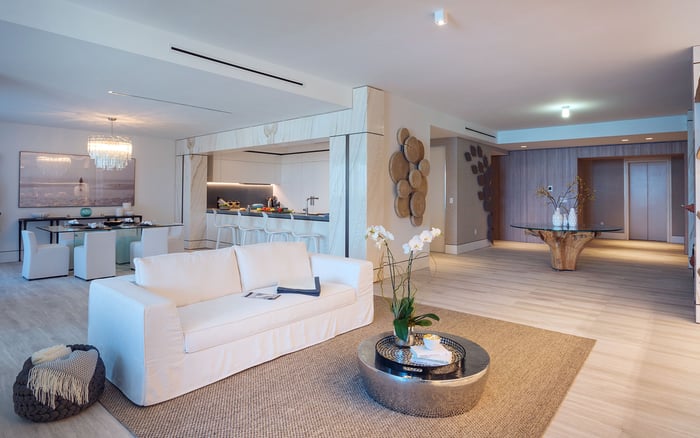
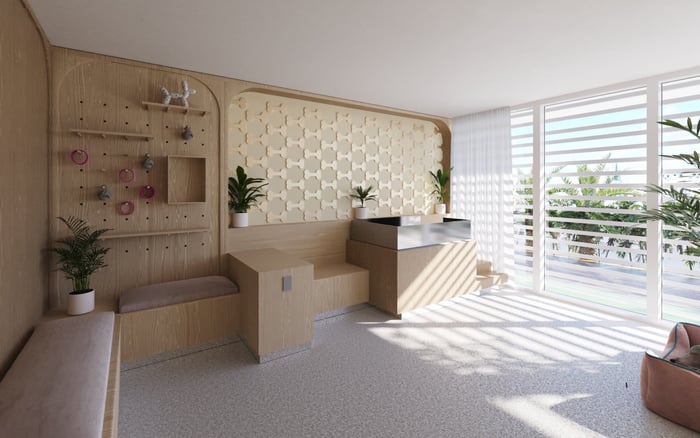
A discreet buyer’s framework for comparing Fisher Island residences by guest privacy, staff circulation, service capacity, storage, security, and long-term flexibility.

For families evaluating Fisher Island in 2026, the most consequential luxury is neither a decorative finish nor a dramatic first impression. It is a residence that remains calm when children, relatives, friends, household staff, deliveries, luggage, and private appointments converge.
Bedroom count alone will rarely identify the best choice. Buyers should examine how a home separates formal entertaining from family life, whether guests can retreat without crossing private zones, and how staff can support the household without making the residence feel operational. This is a lifestyle decision expressed through circulation, storage, acoustics, access, and policy.
A useful brief begins with three scenarios: an ordinary school or work week, a full holiday house, and an extended absence. Each reveals distinct requirements. The first tests routines; the second, capacity; and the third, whether a second home can be secured and managed without friction.
A focused search can begin with Palazzo del Sol. Rather than assume any residence will suit a multigenerational household, request the current floor plan, room designations, access conditions, and building rules for the specific offering. Test every route from the arrival point to the guest room, kitchen, laundry, terrace, and primary suite.
Families should also include Palazzo della Luna in the comparison. The essential question is not which name carries the greatest recognition, but which available home can accommodate the family’s actual operating pattern. Ask whether the proposed guest suite affords sufficient privacy, whether service functions are sensibly positioned, and whether storage works for both daily and seasonal needs.
For buyers considering a newer proposition, The Residences at Six Fisher Island belongs in the due-diligence conversation. Confirm every residence- and building-specific detail directly before assigning value to a configuration. Marketing terminology should never replace a marked plan, written policy, and physical walkthrough.
Families open to a different residential format can compare The Links Estates at Fisher Island with condominium alternatives. The comparison should remain disciplined: privacy, staffing, maintenance responsibility, security procedures, carrying obligations, and the ease of closing the home between visits.
A guest room becomes a suite only when it supports autonomy. During a showing, consider the route from the main entrance, proximity to social spaces, bathroom access, closet capacity, control of morning light, and acoustic separation. A beautiful room beside a busy family hub may work for a weekend yet disappoint during a month-long stay.
Multigenerational buyers should also examine mobility and nighttime movement. The strongest plan minimizes unnecessary crossings through the kitchen, children’s rooms, or primary bedroom corridor. If a study, media room, or sitting room may serve as overflow accommodation, verify that the conversion is both comfortable and permitted rather than relying on staging.
A waterfront outlook or grand terrace may shape the emotional decision, but privacy determines whether relatives return happily. Buyers considering a penthouse should apply the same discipline. Prestige does not automatically resolve service circulation or the placement of secondary bedrooms.
Discreet service begins with a written staffing map. Record who works in the residence, on which days, for how long, and with what equipment. A housekeeper, private chef, nanny, security professional, driver, or visiting care provider will create distinct access, parking, storage, and scheduling needs.
Ask how staff enter the building and residence, and where they wait, change, store personal items, receive instructions, and take breaks. Confirm delivery procedures, contractor access, elevator use, parking permissions, bicycle or equipment storage, and restrictions affecting recurring personnel. These questions should be answered for the specific building and offering, not inferred from another residence.
Inside the home, test whether household work can continue while guests sleep or entertain. Kitchen access, laundry placement, refuse handling, linen storage, and acoustic control merit close attention. Flow-through units may appear in a buyer’s search vocabulary, but their practical value depends on the precise plan and how movement is organized within it.
Tour once for atmosphere and again for operations. On the second visit, bring a printed plan and trace separate routes for family, guests, staff, deliveries, and emergency access. Open closets, inspect transitions, and determine where luggage, sports equipment, children’s items, tableware, linens, and owner possessions would live.
Measure the rooms intended for guest or staff use, then test them against actual furniture and privacy requirements. Review doors, sightlines, sound transfer, bathroom sharing, and access to outdoor areas. If the residence is offered as a resale, distinguish movable staging from permanent construction and request clarity on inclusions.
A family may also compare Fisher Island with Miami Beach, but the same operating brief should govern the comparison. Location preferences can change; the household’s need for privacy, reliable service, and graceful hosting usually remains consistent.
Before committing, obtain and review the documents relevant to the residence, association, ownership structure, proposed use, renovations, staffing, pets, vehicles, leasing, deliveries, insurance, and closing. Qualified legal, tax, insurance, design, and inspection advisers should evaluate matters within their respective disciplines.
Request written confirmation of any feature central to the purchase. This includes room use, access privileges, parking, storage, service procedures, renovation permissions, and any anticipated work. If combining rooms, adding millwork, improving acoustic separation, or changing staff areas is essential, assess feasibility, approvals, cost, and timing before treating the idea as part of the home.
The final choice should be the residence that performs with the least improvisation. For a family household, quiet competence is often more valuable than nominal size.
What makes a Fisher Island condo suitable for a family with guests? Look for privacy between sleeping zones, intuitive circulation, adequate storage, and rooms that remain comfortable during extended stays.
Is bedroom count the best starting point? No. Begin with household routines, then test whether the specific plan supports them without awkward room sharing or circulation.
Should a guest suite have a separate entrance? It depends on the family’s privacy preferences and the residence. Verify access arrangements, security implications, and building rules.
What staff logistics should buyers verify? Confirm entry procedures, parking, elevator use, deliveries, storage, break space, scheduling, and access for recurring personnel.
How should buyers compare condominium projects? Apply one consistent matrix covering privacy, service flow, storage, acoustics, policies, maintenance, and absence management.
Can a den serve as a guest suite? Possibly, but confirm dimensions, doors, bathroom access, ventilation, privacy, and any applicable use restrictions.
Why is acoustic separation important? It allows children, guests, and staff to follow different schedules without compromising rest or entertaining.
What should be tested during a second showing? Trace arrival, guest, staff, delivery, laundry, refuse, and nighttime routes while checking storage and sightlines.
Should renovation potential influence the purchase? Yes, but only after qualified professionals have evaluated feasibility, approvals, timing, and costs.
What is the best final decision rule? Favor the residence that handles ordinary days, full-house holidays, and extended absences with the least compromise.
For a tailored shortlist and next-step guidance, connect with MILLION.
If branded residences are on your mind — as a home or as an allocation — we would be glad to share what we are seeing, privately.
Begin a quiet conversation