A buyer-focused edit of Bay Harbor Islands residences, centered on private dining, gracious hosting, and the due diligence needed to distinguish presentation from true entertaining capacity.
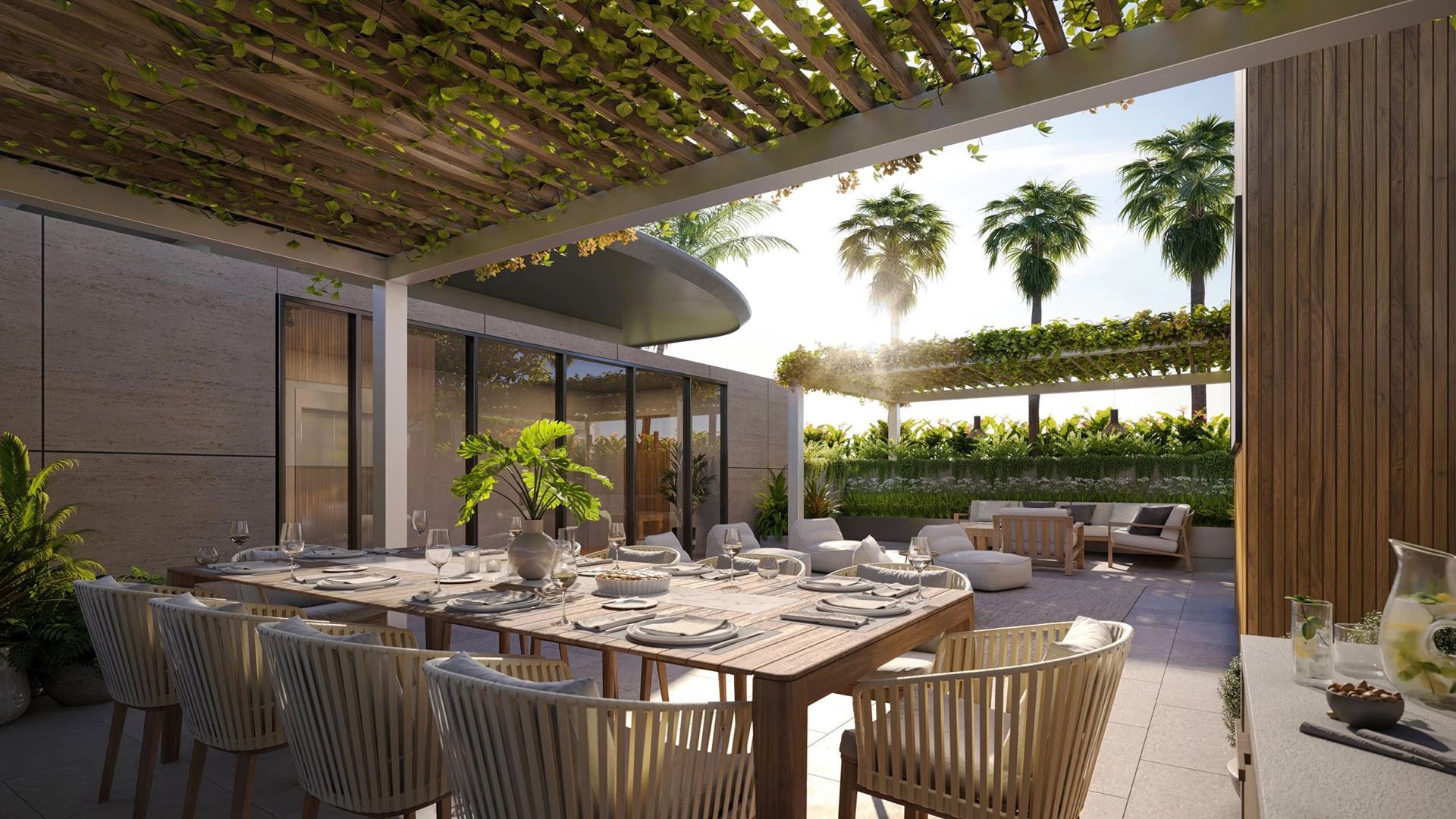
For the Bay Harbor Islands buyer, private dining is less about a photogenic table than how the entire residence performs when guests arrive. The essential considerations are circulation, separation between preparation and presentation, acoustic control, service access, storage, lighting, and the relationship between indoor and outdoor rooms.
That distinction is especially important within branded residences, where a compelling identity may shape the arrival experience but does not automatically ensure that an individual floor plan can accommodate a seated dinner, cocktails beforehand, and discreet clearing afterward. Buyers should assess the residence and the building as two related but distinct hospitality environments.
The following edit presents a buyer-oriented order of priority; it does not suggest that every entertaining feature is included in every residence. Final decisions should rest on current plans, specifications, governing documents, and written confirmation from the appropriate sales or management team.
1. The Well Bay Harbor Islands: first review for brand-led living
Place this residence at the top of the diligence schedule when brand identity is central to the purchase. Request the largest relevant floor plans, then determine whether the dining, living, kitchen, and outdoor zones can operate simultaneously without directing guests through work areas.
2. La Maré Bay Harbor Islands: first review for waterfront hosting
For buyers envisioning dinners framed by the water, begin with orientation and usable outdoor depth. Confirm how doors, structural elements, wind exposure, furniture clearances, and building rules shape the practical connection between the dining room and exterior entertaining space.
3. Onda Bay Harbor: first review for indoor-outdoor flow
Study the transition between principal rooms and outdoor areas rather than relying on total square footage alone. A successful plan should support intuitive movement, comfortable furniture groupings, and a clear service path while preserving privacy in the residential wing.
4. La Baia North Bay Harbor Islands: first review for gracious gatherings
Request dimensioned plans and test them against a realistic guest count. Decisive details include chair pullback, routes around the table, kitchen access, powder-room placement, coat storage, and whether pre-dinner seating can coexist with the principal dining arrangement.
5. Bay Harbor Towers: first review for flexible residential scale
Review the floor plans against several hosting scenarios, from an intimate dinner to a larger reception. Confirm which layouts provide sufficient wall length, practical furnishing zones, outdoor continuity, and back-of-house storage without compromising everyday comfort.
A polished entertaining residence should offer a legible sequence: arrival, greeting, drinks, dining, and departure. At The Well Bay Harbor Islands, prospective owners can compare that sequence across available plans rather than focusing solely on bedroom count.
The dining zone warrants measured scrutiny. Buyers should mark the proposed table size on a plan, add chairs in their occupied positions, and maintain comfortable circulation on every side. Apply the same exercise to La Maré Bay Harbor Islands, particularly when the desired lifestyle depends on natural movement between interior and exterior settings.
Kitchen configuration is equally consequential. An open kitchen can make cooking part of the evening, while a more concealed preparation area can support formal service. Neither is inherently superior. The right choice depends on whether the owner cooks, employs staff, brings in a private chef, or prefers catered events.
A terrace should be assessed by its usable dimensions, not its outline alone. Determine where a full dining table can sit once door swings, circulation, planters, railings, and lounge furniture are accounted for. At Onda Bay Harbor, the buyer conversation should address furniture plans and the operational details governing outdoor dining.
Waterfront outlooks can create a memorable setting, but successful hosting also depends on shade, lighting, power, weather exposure, and rules governing music, cooking, furniture, and hours of use. Any proposal for an outdoor kitchen, grill, or permanent service station should be confirmed before it becomes part of the purchase rationale.
The essential test remains the same: can the outdoor space function comfortably for the intended guest count without becoming a passageway or compromising the principal view?
Private dining capacity extends beyond the residence. Buyers considering La Baia North Bay Harbor Islands should determine how deliveries are received, where catering teams enter, whether service elevators can be reserved, and which protections apply to common areas during an event.
The same diligence belongs in any review of Bay Harbor Towers. Determine whether guest parking, valet procedures, loading access, elevator scheduling, and security protocols support the owner’s preferred style of entertaining. If shared dining rooms or bars are under consideration, verify reservation windows, fees, guest limits, staffing, cleanup obligations, and cancellation policies in writing.
A refined home should also recover quickly after an event. Pantry capacity, linen storage, refuse routes, dishwasher placement, refrigeration, and secure storage for wine or tableware are not secondary details. They are the infrastructure of effortless hospitality.
The strongest buyer’s guides begin with a specific brief. Define the usual dinner size, the maximum reception size, the preferred balance between indoor and outdoor use, and whether professional staff will be present. Then ask each sales team to demonstrate how a particular residence fulfills that brief.
Before contract, review the exact plan, finish schedule, appliance package, terrace rules, amenity procedures, and alteration restrictions tied to the residence under consideration. Brand language and renderings can establish atmosphere, but dimensions, documents, and operating policies determine whether the home will entertain with ease.
What defines a residence with genuine private-dining capacity? It combines sufficient dining dimensions with clear circulation, capable kitchen space, storage, acoustic comfort, and discreet service access.
Is a large open-plan room always better for entertaining? No. A smaller but well-zoned plan may accommodate dining, conversation, and service more elegantly than an undifferentiated great room.
How should buyers assess the dining area before purchasing? Place a scaled table and occupied chairs on the dimensioned plan, then test every circulation route and door clearance.
Why does kitchen layout matter for a private chef? A private chef needs practical preparation surfaces, refrigeration, ventilation, storage, and a route that does not interrupt guests.
What should be checked for terrace dining? Confirm usable depth, furniture placement, shade, lighting, power, weather exposure, and building restrictions on cooking or music.
Do shared dining amenities replace an entertaining residence? Not necessarily. They can extend capacity, but access may depend on reservations, fees, guest limits, staffing, and operating hours.
Which building policies matter most for larger gatherings? Review guest access, parking or valet, elevator reservations, catering deliveries, noise rules, security procedures, and cleanup requirements.
Should buyers prioritize interior area or outdoor area? The right balance depends on hosting style, seasonality, guest count, and whether the exterior space is genuinely usable for dining.
How can buyers compare these residences fairly? Give each project the same hosting brief and request dimensioned plans, relevant policies, specifications, and written operational answers.
What should be verified before contract? Verify the exact residence plan, included features, appliance and finish schedules, amenity access, terrace rules, and alteration limits.
To compare the best-fit options with clarity, connect with MILLION.
If branded residences are on your mind — as a home or as an allocation — we would be glad to share what we are seeing, privately.
Begin a quiet conversation