A generator amenity is not a continuity plan. Before buying an Aventura luxury condo, distinguish building systems from residence-level backup and verify elevator access, cooling, refrigeration, connectivity, and storm procedures in writing.
In an Aventura luxury condominium, continuity deserves the same scrutiny as the floor plan. The question is not simply whether a building has a generator, but what remains usable when normal power is unavailable, under what operating conditions, and for how long.
For buyers considering Avenia Aventura, start with a written request for the scope of coverage-not an assumption about backup power. Apply that standard to every residence on the shortlist. Building-level generation, backup inside the apartment, and storm operating procedures answer different questions; none substitutes for the others.
A “power generator” amenity description alone does not establish elevator availability, residential cooling, refrigerator power, or telecom continuity. Treat that wording as the beginning of due diligence, not its conclusion.
Organize the review around three distinct layers. First, establish which shared building systems receive generator power. Second, identify which circuits or appliances within the residence receive backup. Third, obtain the rules governing shutdown, access, and reopening during a storm.
Ask management to distinguish emergency functions-such as stairwell lighting, exit signs, fire alarms, and fire pumps-from conveniences and residential services. These are categories to investigate, not confirmation of any particular property's configuration.
Then request a residence-specific explanation. Selected lights and outlets are not equivalent to whole-residence power. Unit-level backup can support certain household essentials without powering shared systems such as elevators or hallways. The written response should state both inclusions and exclusions clearly.
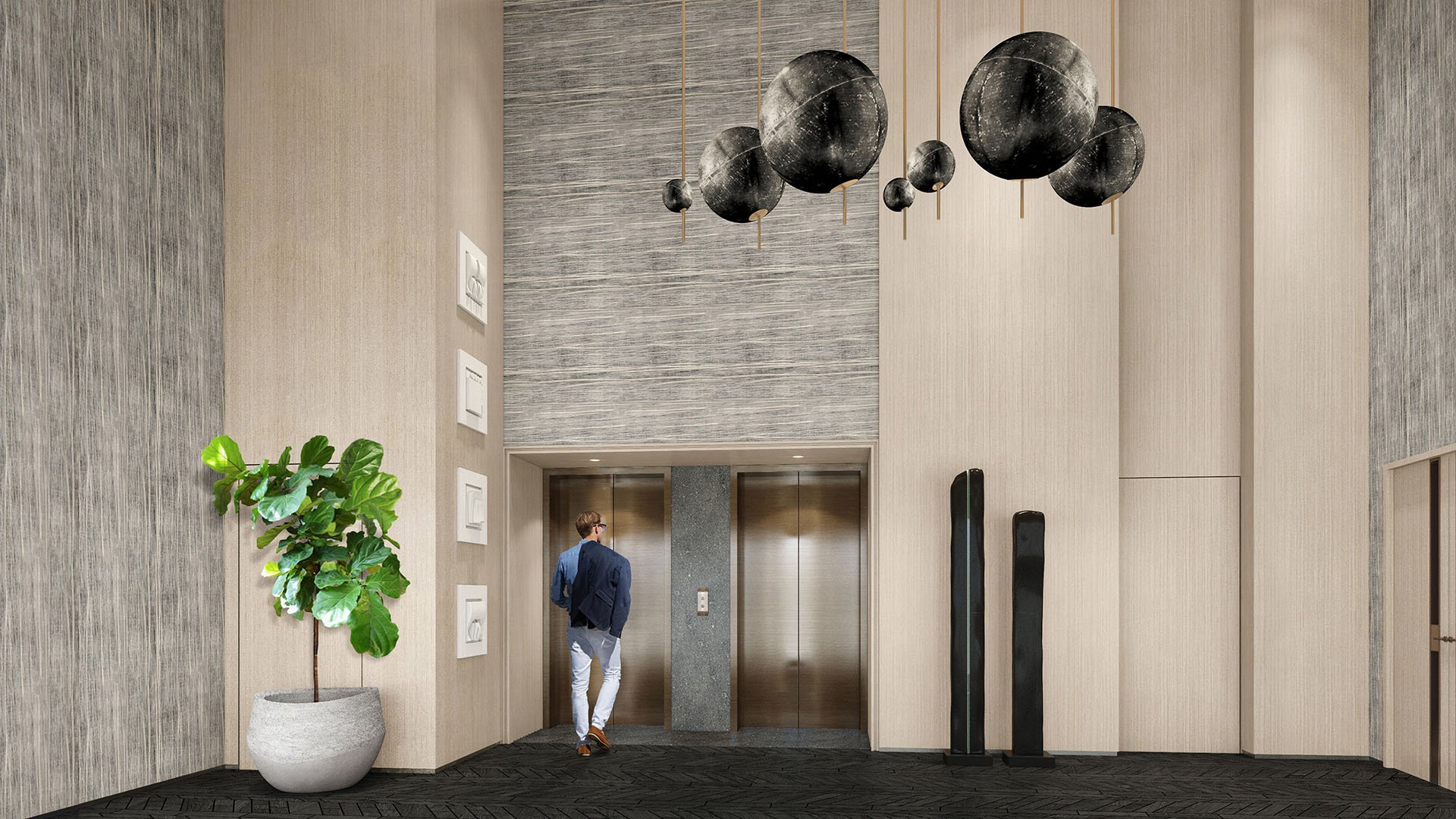
An elevator connected to emergency power answers only part of the access question. Ask which elevator receives backup, which floors it serves, and whether its use is restricted during emergency operation. Do not assume that backup for one car extends to every passenger or service elevator.
Request the building's elevator shutdown timing before hurricane season. Review the operating policy separately from the electrical arrangement: generator support does not establish that residents may use an elevator throughout a storm.
Ask management who authorizes shutdown and restart, how residents receive updates, and what arrangements apply when elevator service is unavailable. Obtain these answers from the building rather than inferring promises from an amenity description.
For a household that depends on elevator access, unresolved questions should inform the purchase decision, not wait until move-in.
Cooling warrants its own line in the audit. Do not accept “air conditioning is covered” without asking whether that means a common area, selected equipment, or cooling inside the apartment under consideration.
Request confirmation of the equipment required to cool the residence and whether every necessary component receives backup power. Ask whether coverage extends to the entire apartment or only designated spaces, and whether operating limits apply during an outage. Until that scope is confirmed, do not assume the building provides backup cooling.
If the search extends to Sunny Isles Beach and Bentley Residences Sunny Isles, carry the same questions into that evaluation. The purpose is consistency across the shortlist, not an implication that one address offers a particular generator configuration.
The decision standard is straightforward: treat residential cooling as unconfirmed until the scope is explicit.
A kitchen can look fully equipped while its outage plan remains undefined. Ask whether the refrigerator and freezer circuits receive association-provided backup, residence-level backup, or neither. Do not extend an answer about selected outlets to every appliance.
Ask whether any selected-circuit backup proposed for the unit includes refrigerators and freezers. The distinction matters: backup equipment serving the apartment is separate from the association's generator. Neither arrangement establishes the other.
For a residence with additional refrigeration, list each appliance in the request rather than relying on a general statement about the kitchen. Ask a qualified professional to confirm the intended equipment and load against the proposed backup arrangement. Where refrigerated medication is involved, seek an equipment-specific plan rather than treating household refrigeration coverage as sufficient assurance.
A glowing router light does not establish internet continuity. Ask whether residence-level backup covers a router, Wi-Fi equipment, phones, laptops, or other selected devices. That coverage does not verify the availability of the building's telecom infrastructure or upstream service.
Divide the inquiry into three parts: equipment inside the residence, shared equipment serving the building, and the external service connection. Request a separate answer for each. If management can confirm only the first two, do not interpret that as a promise of uninterrupted internet.
Buyers who work remotely should ask what communication arrangements the building intends to use when normal channels are unavailable. A powered device, a working connection, and a way to receive management instructions are related needs, not interchangeable assurances.
Generator scope describes what may receive power. Runtime addresses how long that arrangement is intended to last. Request the stated runtime, its load assumptions, and the refueling arrangements. A duration without supporting conditions is an incomplete answer.
Also ask who maintains the equipment, what testing documentation is available, and how residents are informed of operating limits. These are due-diligence requests, not assertions about a particular association's practices.
Obtain post-storm re-entry procedures separately. Backup power does not itself establish when residents may return or when normal building operations resume. Second-home buyers should also clarify how an authorized representative receives instructions and whether access procedures differ for owners, guests, and service providers.
Build a simple comparison sheet with separate entries for elevators, residential cooling, refrigeration, telecom, runtime, and storm access. For each, record the confirmed scope, exclusions, operating restrictions, and the document or management response supporting the answer. Mark unresolved items as unconfirmed; silence is not evidence of coverage.
A buyer also evaluating One Park Tower by Turnberry North Miami can use the same structure without presuming equivalence between properties. Compare the completeness of the answers before drawing conclusions about continuity.
The essential distinction is between what is advertised and what is specifically documented for the residence. A polished amenity description cannot replace a clear account of what stays powered, what remains accessible, and what requires a separate household plan.
For a considered approach to your South Florida residence search, explore MILLION.
If branded residences are on your mind — as a home or as an allocation — we would be glad to share what we are seeing, privately.
Begin a quiet conversationNo. A generator label does not establish which shared systems, residential circuits, or appliances receive power.
No. Ask which elevators receive backup and what restrictions govern their use during an outage or storm.
Backup capability does not establish permission to operate throughout a storm. Obtain the building's shutdown and restart procedures independently.
No. Request explicit confirmation of cooling inside the residence, including the necessary equipment and any operating limits.
No. Confirm refrigerator and freezer circuits individually and distinguish association-provided power from residence-level backup.
Unit-level backup does not power those shared systems. They require separate building-level provision.
No. Equipment inside the residence, shared building telecom equipment, and upstream service availability must be considered separately.
Request the stated runtime, the load assumptions supporting it, and the refueling arrangements. A duration without those conditions is incomplete.
No. Post-storm re-entry is a separate operational matter, so request the building's access and reopening procedures.
Use separate entries for elevators, cooling, refrigeration, telecom, runtime, and storm access. Compare written confirmations and keep unresolved coverage marked as unconfirmed.