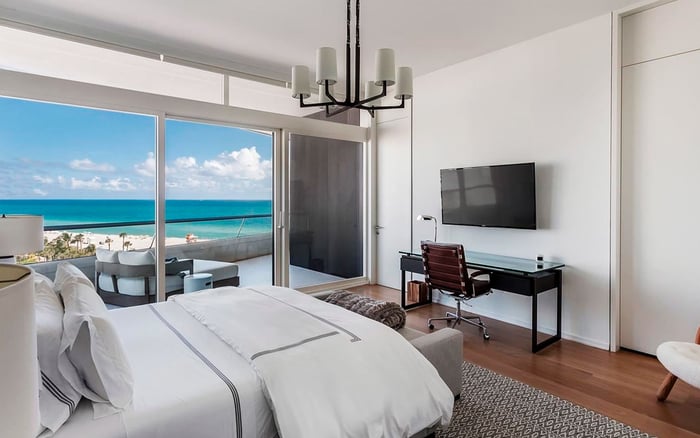
In a luxury condominium, the purchase price is only the opening figure. Buyers should evaluate recurring fees together with staffing, reserves, amenity operations, and the service experience those costs are intended to support.

For buyers considering North Bay Village, the ownership equation extends well beyond the contract price. Association fees shape annual cash flow, but the more revealing question is what those fees support. A residence with a polished service culture, meticulously maintained common areas, and responsive operations may justify a different cost structure than a property with fewer service touchpoints.
The inverse matters just as much. A lower fee is not inherently efficient if it reflects limited staffing, deferred work, or an operating model that falls short of the buyer’s expectations. The goal is not to find the smallest monthly number, but to understand the relationship among cost, service, physical upkeep, financial planning, and personal use.
This is especially relevant when comparing current opportunities such as Continuum Club & Residences North Bay Village and Shoma Bay North Bay Village. Project positioning may attract attention, but buyers must still examine the ownership structure and documents specific to the residence under consideration.
Begin by annualizing every recurring housing expense. Place association fees alongside property taxes, insurance, utilities, financing costs, interior maintenance, and any services purchased separately. For an investment or second-home purchase, also account for management, routine inspections, and periods when the residence is unoccupied.
Then divide the association budget into broad functions: personnel, common-area operations, amenities, insurance, administration, utilities, maintenance, and reserves. Precise categories will vary, but the exercise reveals whether the fee primarily funds visible service, long-term stewardship, or both.
Run several scenarios rather than relying solely on the current figure. Consider the effect of a moderate fee increase, a change in insurance expense, or an unexpected capital contribution. This is not a prediction; it is a liquidity test showing whether the residence remains comfortable to own if its cost profile changes.
Luxury service is labor-intensive. Front-desk coverage, valet operations, security, shared-space housekeeping, engineering support, management responsiveness, and amenity staffing can all shape the ownership experience. Buyers should ask who is present, when coverage is available, which roles are filled by employees or contractors, and which services require separate payment or gratuities.
Headcount alone is not enough. A building may have numerous positions yet deliver inconsistent service if responsibilities are unclear or turnover is high. Another may operate with a leaner team and still feel attentive because its systems, training, and accountability are strong. Visit at different times, observe arrivals and departures, and note how naturally the staff handles ordinary requests.
A buyer exploring Pagani North Bay Village or Tula Residences North Bay Village should therefore evaluate service as part of due diligence, not simply as a sales-gallery impression. For a waterfront home, operational execution can be as consequential to daily life as the residence itself.
Request the current budget, recent financial statements, reserve information, insurance details, material service contracts, and available association meeting records. Review them with qualified legal, financial, insurance, and inspection advisers. The objective is to determine whether a building’s service proposition is supported by a durable operating plan.
Look for internal consistency. If extensive amenities and broad service are promised, does the budget appear structured to operate and maintain them? If fees seem unusually restrained, what assumptions make that possible? If staffing is outsourced, how are quality, pricing, and contract renewals handled? If a line item changes materially, what operational reason explains the movement?
For new construction, distinguish preliminary estimates from an established operating history. Early budgets may be useful planning tools, but buyers should test the assumptions behind staffing, amenity use, utilities, insurance, maintenance, and reserves. Ask what the stated fee includes, what may be billed directly, and when owners can expect updated figures.
A meaningful comparison requires normalization. Calculate the cost per residence and, where useful, the cost relative to interior area-but do not let either ratio become the verdict. Two properties may produce different figures because they offer different staffing levels, shared spaces, operating hours, or service standards.
Create a simple scorecard with four columns: annual carrying cost, included services, staffing coverage, and financial preparedness. Add a fifth for personal relevance. A private amenity has little economic value to an owner who never uses it, while reliable arrival service may be indispensable to someone who travels frequently.
Comparisons with Miami Beach can offer broader perspective, but they should not replace a building-specific review. The most rational choice is the property whose operating model aligns with how the owner intends to live, hold, and eventually present the residence for resale.
Ask for a written schedule of fees and inclusions. Clarify whether parking, storage, valet, package handling, amenity access, private events, management, and other conveniences carry additional charges. Confirm any known owner approvals, planned projects, pending budget changes, or material contracts that could alter future obligations.
Finally, examine governance and communication. Prompt, clear answers are informative in themselves. Luxury ownership depends on both tangible assets and the quality of decisions made after closing. A disciplined buyer treats service staffing and association finances as interconnected components of value, then decides whether that value aligns with the intended holding period and lifestyle.
Are lower HOA fees always better for a buyer? No. A lower figure may suit some owners, but it should be weighed against staffing, maintenance, reserves, amenities, and expected service.
How should I compare fees between two condominiums? Annualize all costs, identify what each fee includes, and compare service coverage and financial preparedness on the same basis.
Why does service staffing matter financially? Personnel and contracted services can influence operating costs, while staffing quality directly affects convenience, upkeep, security, and responsiveness.
What association documents should I review? Request available budgets, financial statements, reserve information, insurance details, material contracts, governing documents, and recent meeting records.
How can I evaluate staff quality before buying? Visit at different times, observe routine interactions, ask about coverage and responsibilities, and note how clearly management answers operational questions.
Should a second-home buyer assess fees differently? Yes. Consider absence management, inspections, package handling, access coordination, and any separately billed services required while away.
What should an investor include in the calculation? Include recurring ownership costs, management, maintenance, insurance, financing, possible vacancy, and conservative scenarios for changing association expenses.
Are pre-construction fee estimates final? Buyers should treat early estimates as planning figures and examine the assumptions supporting staffing, utilities, insurance, amenities, maintenance, and reserves.
How should I prepare for possible fee changes? Stress-test the annual budget against higher recurring expenses and an unexpected capital requirement before deciding how much liquidity to retain.
What is the best final decision rule? Choose the residence whose total cost, service model, financial structure, and amenities align with your priorities and holding plan.
When you're ready to tour or underwrite the options, connect with MILLION.
If branded residences are on your mind — as a home or as an allocation — we would be glad to share what we are seeing, privately.
Begin a quiet conversation