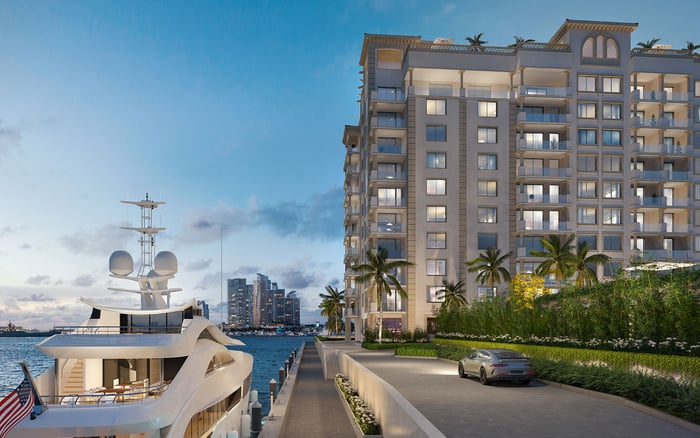
In Miami Beach, a condominium’s future liquidity can depend less on its tower-wide average than on the resale history of its exact line, floor and orientation. Buyers should separate the value of layout, view protection and replacement scarcity before deciding what premium is defensible.
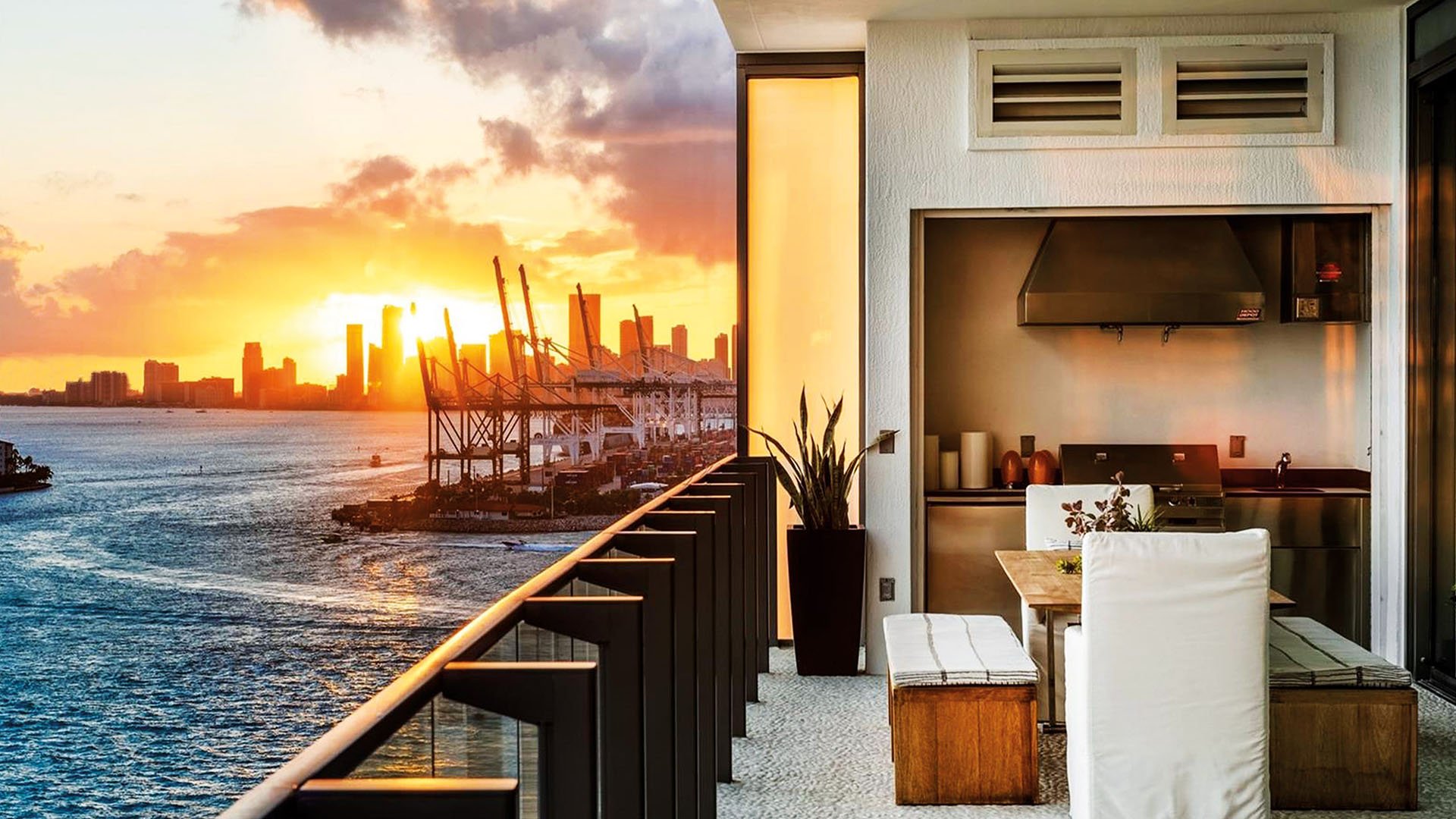
A Miami Beach condominium may appear straightforward to value: select a building, compare recent closings and apply a price per square foot. At the luxury end of the market, however, that approach can obscure the variables most likely to shape both enjoyment and eventual liquidity.
A more precise ownership equation begins with three questions: How deep is the buyer pool for this exact residence? How does its line compare with neighboring positions? Is its view truly scarce, or merely attractive in today’s photographs?
These distinctions matter in a market where trophy residences can remain active while older, mid-tier inventory faces muted volume and longer marketing periods. South of Fifth illustrates the divergence. In 2026, one measure placed the area near $1,950 per square foot with 9.6 months of inventory, while a Q1 snapshot recorded 189 active listings and 11.8 months of absorption. Timing and methodology can produce different figures, but both reinforce the need to look beyond a neighborhood headline.
Resale analysis should span the previous 12 to 24 months and include closed, pending, withdrawn and expired listings. Closed sales show what buyers accepted. Pending contracts indicate current momentum. Withdrawals and expirations reveal the prices or configurations the market declined to absorb.
The inquiry should then narrow from neighborhood to building, building to price tier and price tier to exact line. In South of Fifth, about 70% of listings sell within six months, while approximately 8% remain available for more than a year. That broad statistic is useful, but it cannot tell an owner whether a highly specific four-bedroom line has three plausible replacement buyers or 30.
Functional layouts can broaden demand. Two-bedroom condominiums led Q1 2026 activity in South of Fifth, with 48 closings and an average of 154 days on market. Yet broad demand for a residence type does not make every example interchangeable. Awkward circulation, unusual room proportions and highly personalized renovations may narrow the replacement-buyer pool.
Request separate comparable sets for the target line, adjacent lines, similar floor heights and competing buildings. At Apogee South Beach, values have exceeded $3,300 per square foot, while Portofino Tower has been measured near $1,282 per square foot. Even within one prestigious enclave, a generic area average can mislead.
A line is more than a stack number. It combines orientation, floor plan, terrace geometry, privacy, noise exposure, afternoon sun and the way the view presents from the primary rooms. Each element should be priced separately before a buyer accepts a single blended premium.
At Continuum on South Beach, the North Tower’s 01 and 02 lines and the South Tower’s 03, 04 and 05 lines are particularly favored positions. That does not mean every residence in those lines merits the same valuation. Floor height, condition and obstruction risk still determine how much of the line’s reputation carries into the individual home.
The same discipline applies farther north. At Eighty Seven Park Surfside, the 01 and 02 lines are preferred positions. Even so, a buyer should compare the target residence with its own vertical stack and nearby alternatives at similar elevations, rather than treating the building name as a substitute for unit-level diligence.
Ocean-facing and bay-facing residences in the same Miami Beach building can differ by roughly $150,000 to more than $400,000, depending on the floor, building and neighborhood. At Faena House Miami Beach, direct-ocean residences have traded above $3,000 per square foot, compared with approximately $2,200 to $2,500 per square foot for bay-facing homes.
The premium is most defensible when the exposure is unobstructed, front-row and protected by a park, established setback or completed development pattern. Angled water, a narrow sightline between buildings or a view dependent on undeveloped neighboring land presents a different risk profile.
Scarcity also has a regional dimension. Only about 12% of South Florida’s new-development condominium pipeline is oceanfront, yet oceanfront projects account for more than half of tri-county sales volume by dollar. That imbalance helps explain why irreplaceable water exposure can command lasting attention, but it does not validate every asking price attached to an ocean view.
Liquidity at the upper end can be powerful, but selective. From January through September 2025, the tri-county market recorded 609 condominium sales above $3 million, compared with 330 during the same period in 2024. Sales above $10 million rose from 36 to 71, while 82% to 88% of high-end transactions were cash purchases. Active inventory above $10 million also declined from 284 listings in October 2024 to 104 one year later.
Those figures describe a concentration of capital, not universal velocity. Buyers should use months of inventory, price reductions, failed listings and line-specific closings to shape an offer and expected holding period. A rare view may justify patience and a premium. A compromised line in a famous tower may require a meaningful discount and a longer exit horizon.
The final decision should distinguish lifestyle value from resale defensibility. A purchaser may willingly pay for sunset color, a generous terrace or a preferred bedroom orientation. The essential point is to identify which portion of the price reflects personal utility and which is likely to be recognized by the next buyer.
What is resale depth in a condominium building? It is the volume and quality of relevant closed, pending, withdrawn and expired listings across the building, price tier and exact line.
How far back should a buyer review listing history? A 12- to 24-month review can capture recent closings as well as listings that failed to trade.
Why is an exact-line analysis important? Residences within the same tower can have materially different layouts, exposures, privacy and buyer demand.
Is price per square foot enough to compare residences? No. It can obscure floor height, terrace utility, condition, orientation, noise and view quality.
What makes a view genuinely protected? Parks, established setbacks and completed development patterns can make an exposure more defensible than one dependent on a nearby open parcel.
Are direct-ocean views always worth the premium? Not automatically. The premium should reflect protection, width of exposure, floor height and evidence from comparable closings.
Do functional layouts improve resale prospects? They can broaden the replacement-buyer pool, particularly when circulation and room proportions suit multiple ownership profiles.
How should renovations be valued? Separate durable improvements from highly personal design choices, which may not be fully recognized by the next buyer.
What do expired listings tell a purchaser? They can reveal where pricing, condition or configuration failed to attract a contract during the listing period.
How should buyers set an expected holding period? Use line-specific demand, months of inventory, reductions and failed listings rather than relying on a neighborhood average.
When you're ready to tour or underwrite the options, connect with MILLION.
If branded residences are on your mind — as a home or as an allocation — we would be glad to share what we are seeing, privately.
Begin a quiet conversation