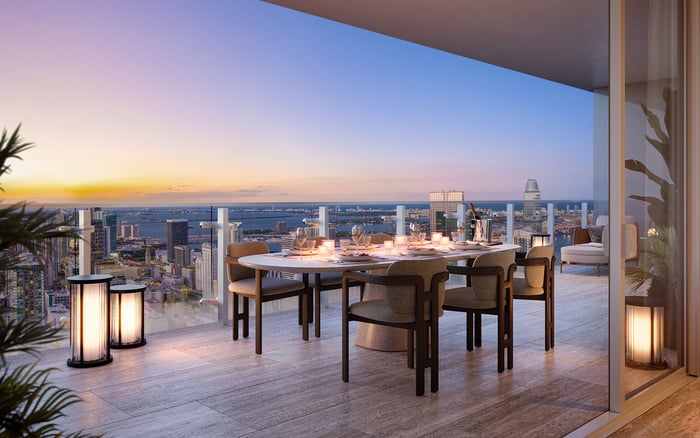
A buyer-focused framework for assessing guest access, staffing, entertaining rules and operational resilience before selecting a South Florida residence for F1 weekends.

For buyers planning to use a South Florida residence during the Miami Grand Prix, the experience will depend on more than interiors, views and proximity. A home may be beautifully suited to entertaining, yet the building’s procedures for visitors, vehicles, deliveries and private staff can determine whether race weekend feels composed or complicated.
The right questions belong before contract, not after the guest list is set. Governing documents, management procedures and building-specific policies deserve the same scrutiny as floor plans and finish schedules. This MILLION Buyer’s Guide framework is designed for buyers who see F1 as part of a broader lifestyle calendar while expecting privacy throughout the year.
Ask counsel to review the declaration, bylaws, rules and any leasing provisions. The central question is whether those staying in the residence are treated as personal guests, authorized occupants or tenants. Each category may carry different registration, duration and access requirements.
Private entertaining should also be distinguished from rental activity. A buyer may be comfortable hosting family, friends or business associates without any intention of offering the residence commercially. Short-term rental permissions, if relevant, require separate review rather than assumptions based on guest privileges.
For a second-home buyer, frequency matters as well. Ask whether repeated visits by the same person, unaccompanied stays or the owner’s absence alter the approval process. Obtain the current written policy and confirm who has authority to interpret it.
Guest management is best assessed as a complete journey. Ask how names are submitted, identification is checked and credentials are issued, as well as whether access is limited by time or destination. Determine whether the owner must be present and whether household staff may receive visitors.
Vehicle handling warrants equal scrutiny. Confirm how the building manages valet, self-parking, rideshare arrivals, chauffeurs and oversized vehicles. Ask what happens when several guests arrive at once and whether event weekends bring revised traffic procedures. Buyers comparing urban options such as 888 Brickell by Dolce & Gabbana and The Residences at Mandarin Oriental, Miami should test each property’s arrival logic rather than rely on neighborhood-level assumptions about Brickell.
A polished lobby alone does not reveal how a residence operates under pressure. Ask management about front-desk coverage, valet capacity, security supervision, engineering response and housekeeping coordination during high-demand periods. The objective is not a promise of perfection, but a clear account of procedures and accountability.
Owners who travel with assistants, chefs, drivers, security personnel or childcare providers should ask how each service professional is registered. Clarify whether recurring personnel can receive standing credentials, which entrances they use and whether vendors must provide insurance documentation.
Also ask how management communicates temporary changes. A discreet digital notice, direct resident message or written event protocol is far more useful than discovering a revised access rule when guests are already at the door.
The floor plan should support the intended style of hosting. Consider the separation between bedroom suites and social areas, powder-room placement, acoustic privacy, terrace circulation and the route used by catering staff. Ask whether private gatherings are subject to notice, capacity, noise or common-area restrictions.
In Miami Beach, buyers may compare the hosting character of Shore Club Private Collections Miami Beach with other residential formats, but the decisive details remain property-specific. Confirm whether guests may use pools, lounges, beach facilities or wellness spaces, and whether the owner must accompany them.
The same discipline applies farther north. A buyer considering Bentley Residences Sunny Isles should request the precise guest, vehicle and amenity protocols for the residence under consideration. Brand identity should never replace document review.
Race-week hosting often involves florals, food, luggage, wardrobe deliveries or additional household supplies. Ask where deliveries are received, what hours apply and whether loading access must be reserved. Confirm the rules for catering teams, outside bartenders, rental furniture and temporary equipment before assuming any of them can be brought upstairs.
Storage warrants attention as well. Package rooms, refrigerated holding, luggage staging and resident storage can shape how gracefully a household prepares for visitors. If the residence will remain closed for part of the year, determine whether management can accept items before arrival and who may authorize their release.
A written operating plan is especially valuable when several vendors are involved. It should identify the owner’s representative, the building contact, approved arrival windows and backup instructions if traffic or schedules change.
Before purchasing, request a focused meeting with management and prepare scenarios rather than broad questions. Describe the likely number of overnight guests, vehicles, staff members and deliveries. Ask how the building would process each under its current rules.
Review costs alongside permissions. Valet charges, guest parking, move procedures, elevator reservations, deposits, staffing requests and responsibility for damage may all shape the final experience. Policies can change, so buyers should rely on current documents and professional advice rather than informal assurances.
The strongest choice is the residence whose physical design, governance and service culture align with the owner’s actual pattern of use. Race weekend may be the stress test, but the same operational clarity preserves privacy and ease throughout the South Florida social season.
Can owners host overnight guests during Miami Grand Prix weekend? That depends on the residence’s governing documents and current guest policies. Confirm registration, duration and owner-presence requirements in writing.
Are guest privileges the same as short-term rental rights? No. Personal hosting and rental occupancy may be governed by different provisions and approval processes.
Should a buyer ask about special F1 procedures? Yes. Ask whether management anticipates temporary changes to access, valet, deliveries or staffing during major event periods.
Can a personal assistant register guests for the owner? Authority varies by property. Confirm whether an authorized representative can submit names, receive visitors and resolve access issues.
How should buyers evaluate valet capacity? Ask how simultaneous arrivals, chauffeurs, rideshare vehicles and guest parking are handled during periods of concentrated demand.
May guests use the building’s amenities? Access may depend on accompaniment, registration, capacity and property rules. Review each amenity separately.
What should owners ask about caterers and chefs? Confirm credentialing, insurance, service entrances, loading procedures, elevator access and permitted working hours.
Can a building limit the size of a private gathering? It may impose occupancy, noise, security or common-area rules. Buyers should review current restrictions before planning an event.
What documents matter most during due diligence? Counsel should review the declaration, bylaws, house rules, leasing provisions and current guest-management procedures.
Why test guest operations before buying? A scenario-based review reveals whether the residence can support the owner’s preferred level of privacy, service and entertaining.
When you're ready to tour or underwrite the options, connect with MILLION.
If branded residences are on your mind — as a home or as an allocation — we would be glad to share what we are seeing, privately.
Begin a quiet conversation