A buyer-focused guide to verifying guest accommodations, reservation priority, amenity access, occupancy definitions, fees, and amendment authority before planning recurring family stays.
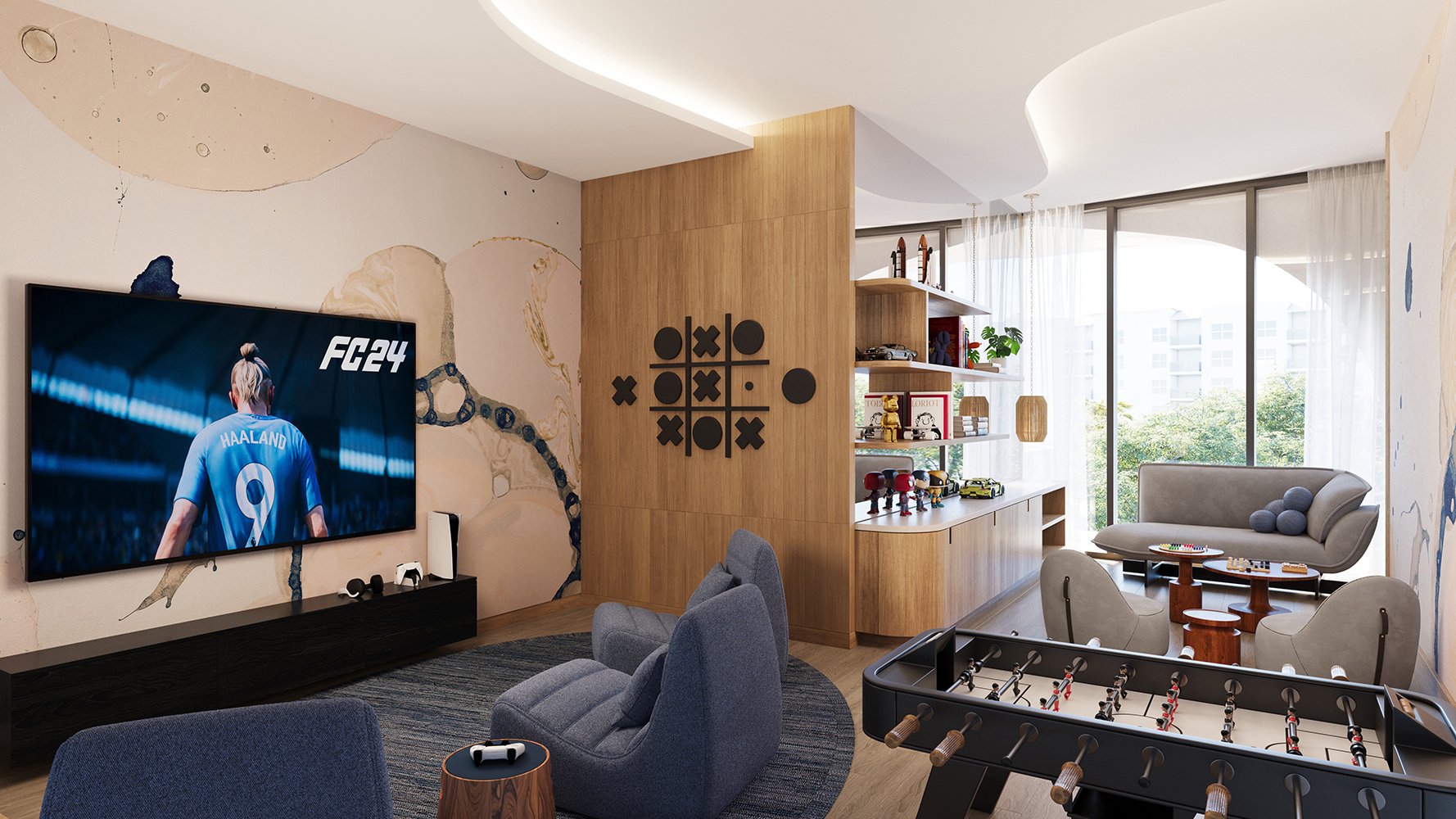
A buyer considering Waldorf Astoria Residences Pompano Beach may envision visits from adult children, grandparents, caregivers, or several generations at once. Those plans should be tested against the applicable purchase materials and governing documents rather than inferred from branding, renderings, or informal descriptions.
Write down the visits that matter before reviewing the documents. Useful scenarios include a holiday gathering, a seasonal stay by grandparents, an adult child visiting while the owner is away, and a caregiver remaining in the residence for an extended period. Specific scenarios make it easier to identify rules that could affect arrival, occupancy, amenity access, parking, supervision, and reservations.
The phrase “guest suite” can be interpreted in different ways. Before treating it as overnight overflow space, ask whether the term appears in the controlling documents, what physical space it describes, who may reserve it, and whether its use is subject to availability.
Buyers should also request written clarification of the reservation process. Relevant questions include when booking opens, whether priority varies by ownership or occupancy status, how peak dates are handled, whether an owner must be present, and whether limits apply to the number or length of reservations.
If overnight accommodations are not expressly documented, the family plan should not depend on them. A prudent review should distinguish confirmed rights from proposed features, discretionary services, and policies that may later be revised.
A reservable space is useful only when its operating rules fit the intended visit. Ask whether reservations follow a queue, lottery, priority period, or another procedure. Confirm the cancellation policy and whether deposits, housekeeping charges, taxes, or separate usage fees may apply.
The same analysis can be used for any capacity-limited amenity relevant to a family gathering. Buyers can ask whether visitors may independently access such spaces, whether reservations must be made by an owner, and whether age, supervision, capacity, or time restrictions apply.
A complete family-use budget should therefore consider potential usage charges in addition to recurring ownership expenses. Any quoted amount or procedure should be matched to the document that authorizes it and checked again before contract deadlines and closing.
House rules may use categories that do not match a family’s everyday vocabulary. An adult child, minor, grandparent, caregiver, domestic employee, tenant, and unaccompanied visitor could be treated differently under the applicable documents.
For each category, ask what registration or approval is required, how credentials are issued, whether access expires, and which areas may be used without the owner present. Buyers should also clarify parking procedures, delivery access, arrival protocols, and any supervision requirements that could affect a multigenerational stay.
Caregiver arrangements deserve separate attention. The review should address whether a caregiver is treated as a guest, employee, occupant, or another defined category, and whether the classification changes when the owner is absent or the stay becomes extended.
Family occupancy and leasing should not be assumed to mean the same thing. If a relative pays rent, receives exclusive possession, stays for an extended period, or occupies the home while the owner is away, the arrangement may require closer review under the applicable condominium documents, lease provisions, and local requirements.
Rather than relying on an informal family understanding, present the proposed arrangement to qualified advisers and request a document-based explanation. The response should identify any registration, screening, approval, duration, or access provisions that apply.
A buyer can sharpen the review by asking the same questions when considering nearby alternatives such as The Ritz-Carlton Residences® Pompano Beach, Armani Casa Residences Pompano Beach, and W Pompano Beach Hotel & Residences. The purpose is not to assume that their policies are equivalent. It is to compare definitions, reservation procedures, visitor access, fees, and amendment provisions using one checklist.
For every project, request the documents applicable to the purchase and planned use. Depending on the transaction, these may include the declaration, prospectus, association rules, amenity policies, proposed or current budget, fee schedules, and purchase-contract disclosures. Buyers should confirm which document controls if different materials appear inconsistent.
Verbal explanations can help identify issues, but consequential answers should be documented. Ask the appropriate representative to cite the provision governing guest classification, reservation priority, amenity access, fees, owner accompaniment, and policy changes.
It is equally important to understand amendment authority. Buyers should determine who can revise guest and amenity rules, what approval process applies, and whether any current procedure is merely operational rather than a guaranteed ownership right.
The goal is not to eliminate every future change. It is to understand which parts of the multigenerational plan are supported by enforceable documents, which depend on current procedures, and which remain unanswered before the buyer commits.
Should a buyer assume that an overnight guest suite is available? No. Confirm that the accommodation exists and review its permitted use in the applicable documents before relying on it.
What should be requested about booking priority? Ask who may reserve, when booking opens, how peak dates are allocated, and whether limits apply to frequency or length of stay.
Can relatives stay when the owner is away? The applicable occupancy and house rules should answer that question. Request written clarification for the precise owner-absent scenario being considered.
Why do visitor definitions matter? Different classifications may affect registration, approval, credentials, accompaniment, and amenity access.
How should a caregiver arrangement be reviewed? Ask how the documents classify the caregiver and whether the answer changes with the duration of the stay or the owner’s presence.
What should families confirm about children’s access? Review any age, supervision, credential, capacity, and owner-accompaniment provisions applicable to the planned activities.
Could reservations involve additional charges? They could. Request the current fee schedule and confirm possible deposits, cancellation charges, housekeeping costs, or other usage fees.
When might family occupancy require a leasing review? Closer review is prudent when payment, exclusive possession, an extended stay, or owner absence is involved.
Why compare other Pompano Beach residences? A consistent comparison can reveal differences in definitions, reservation procedures, access rules, fees, and amendment authority.
How can a buyer preserve important answers? Obtain written responses that identify the controlling provision and confirm which party may amend the relevant rule.
For a confidential assessment and a building-by-building shortlist, connect with MILLION.
If branded residences are on your mind — as a home or as an allocation — we would be glad to share what we are seeing, privately.
Begin a quiet conversation