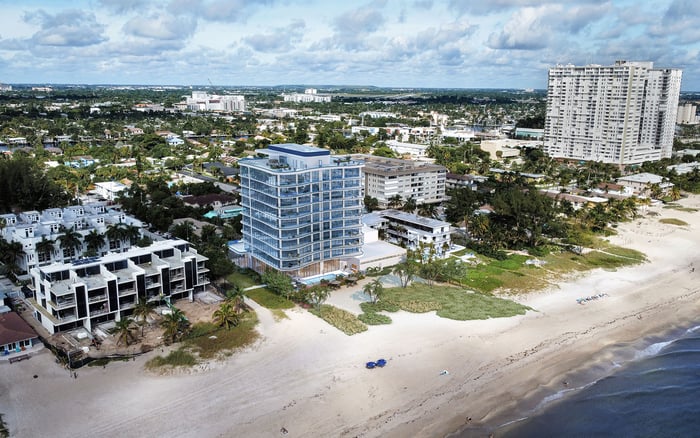
At Ocean580, municipal lien and permit diligence should follow both the development parcel and the eventual unit folio. A closing-date search, permit-status review and comparison with developer records can expose unresolved items before ownership transfers.

For a buyer considering Ocean 580 Pompano Beach, the appeal is unusually concentrated: 17 residences in a planned 10-story condominium on a 0.9-acre oceanfront site at 580 Briny Avenue. Claridge Homes is developing the project, with pricing presented from $4.35 million. The marketed residences span approximately 3,688 to 8,872 square feet, offering four or five bedrooms plus a den, private elevator foyers and wraparound corner terraces.
That scarcity places greater weight on disciplined diligence. Ocean580 is a pre-construction purchase, so early contracts precede the established record of completed resales and prior municipal searches that can help illuminate an older condominium. The buyer is evaluating not simply a residence, but the orderly completion of a new building and the public record attached to its underlying land.
At a new boutique condominium, the public record is part of the asset being acquired.
The same scrutiny is relevant when comparing Pompano Beach offerings such as Armani Casa Residences Pompano Beach and The Ritz-Carlton Residences® Pompano Beach. Each purchase carries distinct documents and records, but the governing principle remains consistent: marketing establishes the vision, while municipal files help establish the property's administrative condition.
A Pompano Beach lien search reaches beyond the conventional notion of a recorded monetary lien. Results can include liens or fines tied to code enforcement, nuisance abatement, unsafe structures, open permits, alarm billing and other municipal assessments. Because open permits are included, the search can also flag unresolved permit records affecting the property at the time the request is processed.
This matters because unresolved code violations can mature into municipal liens, complicating a later transfer or refinancing until the underlying condition and associated charges are addressed. Even when an issue appears procedural, the practical consequences can include additional correspondence, inspections, professional fees and closing friction.
The request should complement-not replace-the title search, condominium-document review and association estoppel. Each exercise answers different questions. A title review addresses recorded interests, while municipal research can surface open governmental matters requiring attention before funds and ownership change hands.
For new construction, confirming that a permit was issued is only the beginning. Counsel and the buyer's technical advisers should determine whether every material permit reached final or closed status and whether required inspections were completed. Open or expired permits and missing final inspections can remain relevant even when the physical work appears substantially complete.
At Ocean580, the focus should be the core new-construction record: structural, electrical, mechanical, plumbing and life-safety permits. Permit research may also expose discrepancies between recorded approvals and actual conditions. In broader coastal property reviews, files can reveal unpermitted electrical or plumbing work and unresolved seawall or dock matters, although any concern must be tied to the specific property record rather than assumed.
The review should compare municipal results with the developer's permit reports, inspection sign-offs and certificate-of-occupancy documentation. If the records do not align, the discrepancy should be explained and documented before closing. A polished presentation center or nearly completed residence is no substitute for closed administrative files.
Parcel sequencing is especially significant in a condominium under development. Before individual condominium folios become available, the search should begin with the underlying development parcel at 580 Briny Avenue. Once the specific unit parcel exists, the review should be repeated against that folio.
Searching both levels addresses a basic structural reality: a building-level matter may affect more than one owner, while a unit-level entry may not appear when only the shared development property is reviewed. Address-based searches can also cover permit, code-compliance and code-enforcement cases connected to the site.
Buyers comparing the northern Broward coast may apply the same parcel discipline to other new offerings, including W Pompano Beach Hotel & Residences. Still, results are property-specific. One project's clean file says nothing about another project's parcel, permits or closeout status.
A municipal lien result is a snapshot, reflecting the property's status when processed. Permits or violations can arise afterward. The most useful search is therefore obtained close enough to closing to inform the final decision and closing documents. If the transaction is postponed, an updated search should be considered rather than treating an older result as evergreen.
Formal requests are made through the city's lien-search process. Questions involving code records can be directed to Pompano Beach Code Compliance, which enforces property-maintenance requirements and portions of the zoning, building and fire codes.
Timing should also be coordinated with the anticipated certificate of occupancy, developer deliverables and contractual closing schedule. Completion dates and pricing can change across public marketing, so current developer disclosures and the executed purchase agreement should govern the buyer's expectations.
When a search returns an unresolved entry, the goal is not merely to identify it. The closing team should determine what created the record, which party is responsible, what evidence will establish resolution and whether the municipality has updated its system. Depending on the contract and advice of counsel, potential responses can include a pre-closing cure, lien release, escrow holdback, credit or delayed closing.
A practical review file should contain the municipal search, relevant permit histories, final inspection evidence, applicable releases and certificate-of-occupancy documentation. Material exceptions should be reconciled in writing. Buyers should resist verbal assurances when a formal closure, release or municipal update is available.
This is the central lesson for MILLION Buyer's Guides: diligence should be proportional to the asset, not diminished by its newness. A 17-residence building offers privacy and rarity, but its boutique scale does not make municipal administration less consequential.
The finest acquisition experience is defined not only by architecture, terraces or direct beach proximity. It also includes confidence that the public record, developer closeout materials and closing protections tell a consistent story. At Ocean580, that means searching the development parcel first, repeating the inquiry for the unit folio, verifying final permit status and refreshing time-sensitive results if closing moves.
For private guidance on Ocean580 and South Florida luxury real estate, connect with MILLION.
If branded residences are on your mind — as a home or as an allocation — we would be glad to share what we are seeing, privately.
Begin a quiet conversationThe search can identify municipal liens, fines, open permits and other assessments affecting the property when the request is processed.
No. It supplements rather than replaces the title search, condominium-document review and association estoppel.
The review should begin with the underlying development parcel at 580 Briny Avenue.
Yes. Once the specific condominium folio is available, the search should be repeated for that unit parcel.
The review should focus on structural, electrical, mechanical, plumbing and life-safety permits associated with new construction.
No. Buyers should verify that each material permit has a final or closed status and the required inspection sign-offs.
It should be obtained near closing so the results reflect the property's status as recently as practical.
An updated municipal search should be considered because new permits or violations may arise after an earlier search.
Depending on the contract, counsel may pursue a cure, lien release, escrow holdback, credit or delayed closing.
Compare the results with permit reports, inspection sign-offs and certificate-of-occupancy documentation.