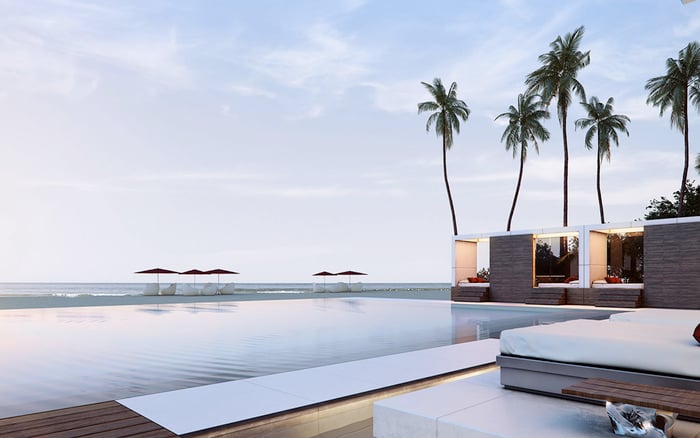
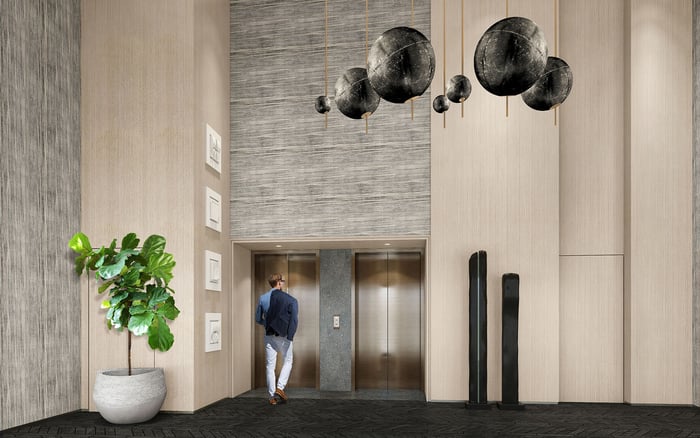
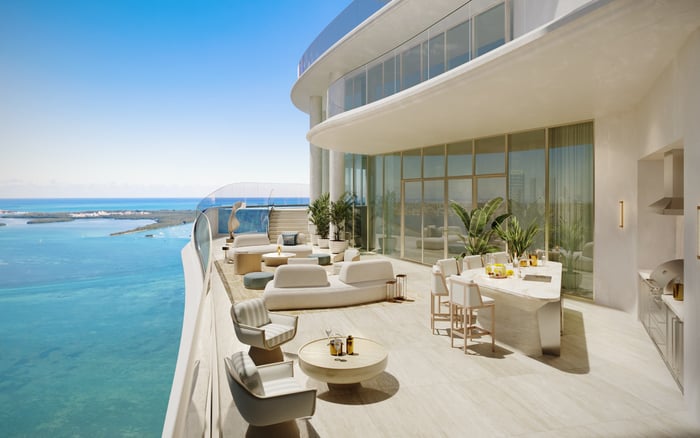
Jade Ocean offers an Atlantic beachfront address, but its public profile does not identify an on-site marina. Yacht owners should therefore underwrite the residence, berth, navigational route, and crew operation as connected but separate decisions.
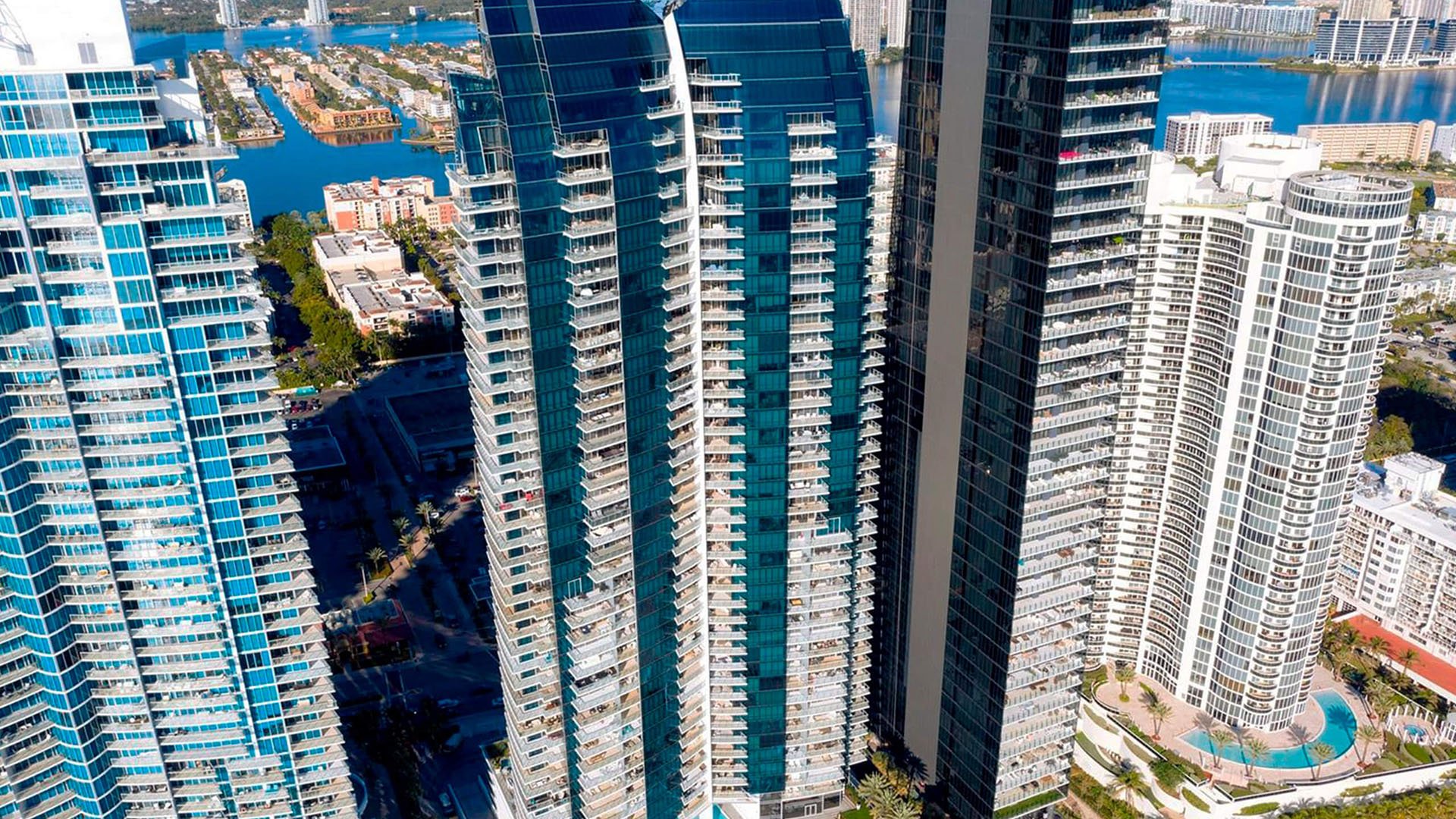
At Jade Ocean Sunny Isles Beach, the essential distinction is between beachfront ownership and marina-connected ownership. The 256-unit condominium at 17121 Collins Avenue has deeded beach access, but no identified on-site marina or boat slips. Jade Ocean Beach Access features pavers, accessible entry, nearby municipal parking, and showers.
That creates a compelling Atlantic lifestyle, but not an automatic right to keep a vessel at the property. Marketing language such as “ocean access,” “waterfront,” or “water view” should never substitute for recorded boating rights. This is the central waterfront question for a yacht owner considering Jade Ocean Sunny Isles Beach.
A beachfront residence and a yacht berth are separate assets with separate risks.
Any claimed slip interest should be verified through the condominium declaration, recorded easements, association disclosures, or a separate marina agreement. Obtain written confirmation from the association as to whether the specific unit includes a slip, marina interest, dockmaster service, or transferable boating right. If not, evaluate Jade Ocean as the residential base and an off-site berth as a separate acquisition or operating commitment.
Bridge clearance is not a neighborhood-level abstraction. It is a vessel-specific limit. The analysis should use the yacht’s exact length overall, beam, loaded draft, and operating air draft, including antennas, electronics, and other elevated equipment. Published clearance should not be treated as usable clearance without accounting for tide, water-level variation, vessel loading, and a prudent safety margin.
The Julia Tuttle Causeway has a fixed clearance of 56 feet. A yacht whose operating air draft exceeds that height generally cannot approach Sunny Isles via the southern Intracoastal Waterway route, making a northern berth or routing through the Haulover area more practical.
Near Haulover, the fixed A1A bridge has a clearance of approximately 32 feet. Any route beneath it must accommodate the vessel with an appropriate margin. The NE 163rd Street bascule bridge provides 30 feet of closed vertical clearance and 90 feet of horizontal clearance. It opens on signal, subject to scheduled daytime restrictions, so access to bayfront berths west of Sunny Isles may also require waiting and careful timing.
These constraints matter even when the residence itself is oceanfront. Buyers touring the local luxury market may compare Jade Signature Sunny Isles Beach or The Ritz-Carlton Residences® Sunny Isles, but no residential address should be assumed to solve a vessel’s route constraints. The berth and complete route still require independent review.
A berth can appear deep enough beside the dock yet remain unusable. Controlling depth is the shallowest point along the full berth-to-ocean route. It may occur in an approach channel, turning area, fairway, or shoaled section rather than at the slip itself.
Review dockside and approach-channel depths at the relevant tidal datum. Then compare both with the yacht’s loaded draft and the owner’s required under-keel margin. Use current charts to trace every fixed bridge, movable bridge, shallow section, and inlet constraint before a boating-dependent offer becomes firm.
This is also why generic size ranges are insufficient. Private residential docks in Miami commonly accommodate boats around 30 to 60 feet, but actual suitability remains subject to dock length, structural capacity, water depth, beam, draft, and route clearance. Larger yachts usually require marina berths. A boat-slip description, standing alone, says little about whether a particular yacht can safely reach or occupy it.
With no on-site marina identified at Jade Ocean, the off-site berth should be underwritten alongside the condominium. Bill Bird Marina at Haulover Park is a practical nearby boating hub, with fuel, roughly 120 to 150 slips, approximately 8 to 8.5 feet of depth, and direct access toward Haulover Inlet. Those general characteristics do not establish availability or compatibility for a particular yacht, so written berth terms and a route review remain essential.
The marina budget extends beyond monthly or seasonal dockage. Include crew parking, provisioning, fueling, maintenance, security credentials, waste handling, storage, shore power, hurricane procedures, and ground transport between the residence and berth. Ask whether crew can enter at all required hours, where vendors may stage, what repairs are permitted, and how access changes during severe-weather preparations.
Even condominium marinas can be limited residential facilities rather than full-service operations. Rules may restrict fueling, hazardous materials, repairs, vessel length, beam, or draft. Dockage may also take the form of deeded or assigned slips, rentals, waitlists, or valet-style shared programs, each with different transfer and priority rules.
For buyers considering Bentley Residences Sunny Isles during the same search, the disciplined approach remains unchanged: distinguish the residence’s disclosed rights from broader lifestyle impressions, then test every boating claim against governing documents and vessel specifications.
If yacht access is material to the purchase, the offer should be contingent on securing a suitable berth and confirming that the vessel can safely complete the entire berth-to-ocean route. The review should cover current bridge clearances, opening schedules, channel depths, shoaling information, marina rules, and the agreement governing the berth.
The buyer’s marine professional should test the planned route against the vessel’s operating dimensions, not nominal model specifications. The legal review should address transferability, association rights, insurance obligations, use restrictions, termination provisions, and any waitlist or priority structure. The captain or crew manager should separately review fueling, provisioning, maintenance, parking, access control, and storm plans.
This is the practical value of treating the transaction as two coordinated decisions. One concerns the condominium’s views, privacy, beach connection, association, and ownership economics. The other concerns berth control, navigation, yacht servicing, and crew execution. Keeping them separate prevents an exceptional residence from being burdened by an unworkable marine assumption.
For a yacht exceeding local fixed-bridge limits, Jade Ocean is best evaluated as an oceanfront residential base rather than a walk-down-to-the-yacht property. That can still be a highly attractive arrangement. The residence delivers direct Atlantic beachfront living, while a carefully chosen marina can provide the depth, service environment, and route logic the vessel requires.
The decisive question is not whether the tower faces the water. It is whether the complete ownership system works: home, berth, route, crew, service, security, and storm planning. In Sunny Isles Beach, disciplined separation of those elements turns boating access from an assumption into a verified operating plan.
For discreet guidance on aligning a South Florida residence with your yachting requirements, connect with MILLION.
If branded residences are on your mind — as a home or as an allocation — we would be glad to share what we are seeing, privately.
Begin a quiet conversationJade Ocean’s public profile does not identify an on-site marina or boat slips. Buyers should obtain written association confirmation for the specific unit.
No. Beach access and boat dockage are separate rights, and any slip interest must be verified through governing documents or a marina agreement.
Use exact length overall, beam, loaded draft, and operating air draft, including antennas, electronics, and elevated equipment.
Its fixed clearance is 56 feet. Vessels exceeding that operating air draft generally cannot use the southern Intracoastal route toward Sunny Isles.
The fixed A1A bridge near Haulover has a cited clearance of approximately 32 feet. A prudent operating margin is still necessary.
It has 30 feet of closed vertical clearance and 90 feet of horizontal clearance. Scheduled daytime restrictions can affect opening times and passage planning.
Controlling depth is the shallowest point on the complete route. A deep slip may remain unusable if the approach contains a shallow or shoaled section.
Budget for berth fees, crew parking, provisioning, fuel, maintenance, security access, storage, waste handling, shore power, and residence-to-marina transport.
Yes, when boating access is material. The contingency should cover a suitable berth and confirmation that the yacht can safely complete the entire route.
It may work well as an oceanfront residential base paired with an off-site marina. Larger vessels require careful review of berth capacity, depth, bridge limits, and crew logistics.