Turn Art Basel Miami Beach into a considered homebuying itinerary, pairing six neighborhoods with practical touring routes, asking-price context, and property-level due diligence.

Art Basel Miami Beach is a useful occasion to consider a South Florida home, provided the property search has its own discipline. The objective is not to squeeze the most appointments between exhibitions. It is to discover which setting would remain compelling after the cultural calendar clears.
The 2026 public fair runs December 4-6 at the Miami Beach Convention Center, 1901 Convention Center Drive. The full event period is December 2-6, including previews before the public days, while Art Week Miami Beach extends from November 30 through December 6. That wider window leaves room to separate art viewing from serious residential comparisons.
Begin near the fair, then organize mainland visits into distinct outings. Miami Beach and Bal Harbour make one pairing; Design District and Brickell another; Coconut Grove and Coral Gables a third. These are suggested comparison routes, not a ranking or a promise of quick transfers.
Miami Beach is the practical first stop because the fair is already there. Before scheduling viewings, decide whether you are testing beachfront condominium living, proximity to your cultural itinerary, or suitability as a part-time residence. Those priorities may lead to different shortlists even within the same municipality.
A project such as The Perigon Miami Beach can serve as a property-specific comparison, rather than a stand-in for the entire market. Confirm what can actually be visited, and distinguish any presentation from the residence under consideration.
Pair the Beach outing with Bal Harbour to test whether a different coastal address better suits your ownership requirements. Include Oceana Bal Harbour where relevant, confirming availability and access before arranging an appointment.
At each stop, examine arrival, privacy, outdoor space, and the relationship between the interior and its outlook. Ask how deliveries, guests, and extended absences would be handled. For a second home, these operating details deserve as much attention as the first impression.
Use a separate outing for Design District and Brickell. The central question is how each location supports an ordinary day: where you would begin the morning, how often you would use a car, and whether the residence works equally well for short visits and longer stays.
In Design District, leave time to experience the surroundings beyond the appointment. Assess the route from the property to the places you expect to use, rather than assuming a neighborhood name guarantees your preferred daily routine. Revisit any serious candidate outside the atmosphere of an art-week engagement.
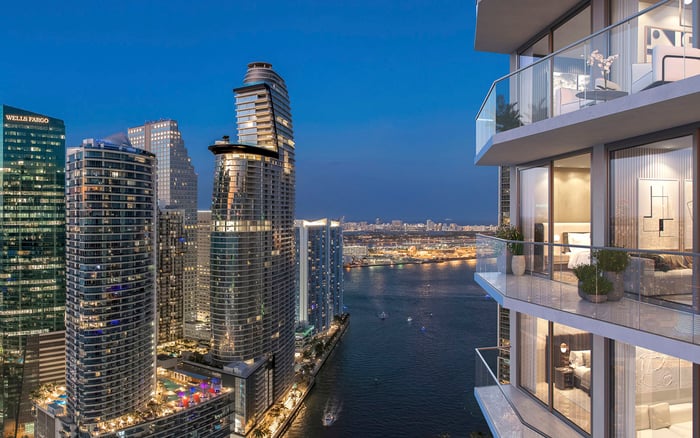
In Brickell, The Residences at 1428 Brickell offers another project to assess against your requirements. Keep the comparison focused on the particular residence: layout, light, privacy, ownership costs, and the experience of entering and leaving the building.
Brickell also allows for a useful transit test. The free, elevated Metromover serves Brickell, downtown Miami, and the Omni area seven days a week across 21 stations. Try a relevant journey rather than treating a map as proof of convenience. Metromover does not serve Miami Beach, so it should not be mistaken for a direct connection to the fair.
Reserve another outing for Coconut Grove and Coral Gables, especially if the search extends beyond a fair-week base. Frame the comparison around how you intend to live: condominium ownership versus a single-family property, frequent arrivals versus longer stays, and managed services versus direct responsibility for maintenance.
In Coconut Grove, consider Four Seasons Residences Coconut Grove within a broader review of residential options. Let the ownership documents and the specific offering establish what is included; a project name alone cannot answer questions about costs, services, or restrictions.
In Coral Gables, The Village at Coral Gables provides a further point of comparison. Apply the same questions across appointments so that presentation does not obscure differences in responsibility, space, and ongoing expense.
For mainland mobility, Metrorail runs from Kendall through South Miami, Coral Gables, and downtown Miami, and serves Miami International Airport. Evaluate the actual connection from a prospective home before making airport access part of its appeal. A regional route and a convenient door-to-door journey are different propositions.
Average asking prices in the neighborhood snapshot are approximately $1,697 per square foot in Bal Harbour, $1,372 in Coconut Grove, and $1,187 in Coral Gables. The corresponding figures are approximately $1,030 for Miami Beach, $953 for Design District, and $834 for Brickell.
These figures have no stated capture date. They provide asking-price context, not verified closed-sale comparisons, current valuations, or 2026 market performance. The snapshot also includes sale and rental inventory, asking-price ranges, and average days on market.
Use the figures to frame questions, not establish an offer. A neighborhood average cannot resolve the value of a particular floor plan, outlook, condition, or ownership structure. Nor should an unusually low advertised minimum be treated as a credible luxury entry point without checking the individual listing.
The more useful comparison is between carefully selected properties and their documented costs. Ask what supports the asking price, then separate the appeal of the address from the merits of the residence itself.
For condominiums, request budgets, reserves, insurance details, pending assessments, inspection records, litigation disclosures, and rental restrictions. A residence intended for occasional use still requires a clear understanding of recurring obligations and permitted occupancy arrangements.
For single-family homes, investigate flood exposure, insurance, roof age, and permitting history. Where relevant, examine seawall and dock condition. Let those findings inform subsequent inspections and professional advice; a successful viewing is not completed diligence.
Build breathing room into the schedule. Metrobus serves Miami Beach and major shopping, entertainment, and cultural destinations across the county, but the right transport choice depends on the actual appointments. Avoid fixed assumptions about transfer times between neighborhood pairings.
The strongest result is a focused shortlist with a clear reason for each selection and an understanding of what remains to be verified before an offer.
For a discreet conversation about shaping your South Florida property shortlist, connect with MILLION.
If branded residences are on your mind — as a home or as an allocation — we would be glad to share what we are seeing, privately.
Begin a quiet conversationThe public fair runs December 4–6, 2026. The full event period is December 2–6, including previews before the public days.
Art Week Miami Beach runs November 30–December 6, offering a wider window for combining cultural visits with property appointments.
Miami Beach is a practical starting point because the fair takes place at the Miami Beach Convention Center, 1901 Convention Center Drive.
Consider Miami Beach with Bal Harbour, Design District with Brickell, and Coconut Grove with Coral Gables. These are suggested comparison routes, not rankings or guaranteed quick transfers.
Bal Harbour has the highest average asking-price figure among the six highlighted markets, at approximately $1,697 per square foot. The snapshot has no stated capture date.
No; they provide asking-price context rather than verified closed-sale comparisons or current property valuations.
No; the free, elevated Metromover serves Brickell, downtown Miami, and the Omni area across 21 stations.
Metrorail serves Miami International Airport and runs through Coral Gables and downtown Miami. Buyers should test the actual connection from a prospective residence.
Request budgets, reserves, insurance details, pending assessments, inspection records, litigation disclosures, and rental restrictions.
Investigate flood exposure, insurance, roof age, and permitting history. Review seawall and dock condition where applicable.