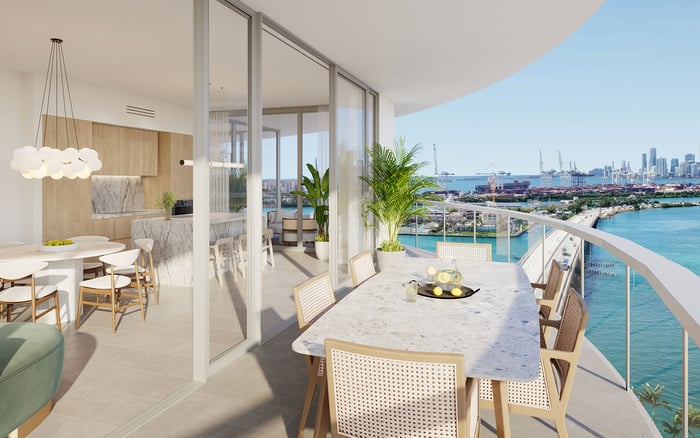
A hurricane-season closing calls for separate scrutiny of title coverage, recorded rights, physical access, and contractual deadlines. For South Florida buyers, careful document review and negotiated storm protections can clarify which risks remain after closing.
.jpg)
For a South Florida luxury buyer, a hurricane-season closing is more than a scheduling exercise. It raises distinct questions: what rights are being acquired, what the title insurer will exclude, whether the property remains accessible, and whether contractual performance is still possible. A satisfactory answer to one does not resolve the others.
The objective is to assign responsibility before weather creates urgency. Buyers should have counsel coordinate review of the executed contract, title commitment, exception documents, and survey where appropriate. Physical condition and closing-service availability warrant a parallel review. Neither a title commitment nor an anticipated closing date substitutes for that work.
Under the residential contract form addressed here, the title commitment must arrive with legible copies of the instruments listed as exceptions. These are essential reading, not administrative attachments. The executed agreement controls the applicable delivery, objection, and cure procedures.
Schedule B exceptions identify matters excluded from title coverage unless the insurer removes or otherwise addresses them. A listed easement does not mean the policy protects the buyer against its consequences. Recorded restrictions, survey matters, and possession rights can remain exceptions in the issued policy.
For a buyer considering The Residences at 1428 Brickell, the central question is the same as for any Brickell purchase: which documents govern the interest being acquired, and which risks will remain outside coverage? This is a review principle, not a statement about that project's title.
Ask counsel to distinguish exceptions acceptable for the intended use from matters requiring clarification, removal, or other insurer-approved treatment. Document the agreed treatment in writing rather than relying on an assurance that an exception is customary.
Utility, drainage, and subdivision easements, deed restrictions, and association covenants can affect how property may be used. Review the instruments themselves to understand their scope, location, beneficiaries, and relevant obligations. A brief exception label rarely answers those questions.
Legal access and physically usable access after a storm are separate issues. A recorded right does not establish that a route will remain passable after flooding or damage. Conversely, an apparently convenient route is no substitute for reviewing the legal rights supporting its use.
When evaluating a Miami Beach residence such as The Perigon Miami Beach, a buyer should keep document review separate from any negotiated post-storm access check. No particular access arrangement or condition is assumed here.
Consider negotiating who will report an access interruption, how usability will be assessed, and what happens if that assessment cannot occur before closing. These are proposed protections, not automatic rights arising from hurricane season.
Where an ALTA survey is appropriate, provide the surveyor with the current title commitment and every Schedule B exception document. This allows recorded easements and other relevant matters to be evaluated and plotted where applicable. Reviewing a survey without its corresponding documents can leave important questions unresolved.
Florida law limits survey-related policy exceptions when a qualifying survey was completed within 90 days before closing and certified to the title insurer by a registered Florida surveyor. Subject to the statutory requirements, survey-related exceptions generally must identify matters actually shown on that survey.
This does not provide blanket removal of unrelated title exceptions or eliminate an encroachment simply because the survey identifies it. Counsel and the insurer should confirm whether the survey qualifies and how each disclosed matter will appear in the policy.
For a Coconut Grove buyer considering Park Grove Coconut Grove, the review should be tailored to the particular interest being purchased. The same discipline applies without assuming that every condominium purchase requires the same survey scope as an estate acquisition.
Standard title exceptions can encompass unrecorded possession rights, unrecorded easements, survey-disclosed encroachments, and liens for labor or materials. Recorded-document review alone therefore does not resolve every coverage question.
Florida law provides for removal of the parties-in-possession exception through a qualifying seller affidavit stating that no other person possesses or claims possession of the property, subject to statutory conditions. Have counsel confirm that the facts support the affidavit and that the insurer accepts the required documentation.
Recent renovations or storm repairs also warrant separate attention to potential construction liens. Ask the title insurer which affidavits or other documentation it requires for the work involved. Coordinate any agreement to repair damage with the documentation needed to address resulting title concerns.
Casualty provisions address property damage; force-majeure provisions address interference with contractual performance. Review them together, but do not treat them as interchangeable. Even an undamaged residence may face a closing impediment if essential services, insurance, or approvals are unavailable.
Under the form language discussed here, hurricanes, floods, and extreme weather may qualify when reasonably diligent effort cannot prevent or overcome their interference with performance. A hurricane does not automatically extend every deadline. The relevant question is whether it actually prevents the performance at issue.
Applicable language may extend affected deadlines for a reasonable period, up to seven days after the event stops preventing performance. Interference continuing more than 30 days beyond the original closing date may permit either party to terminate with the buyer's deposit returned. These provisions are contract-specific, not universal Florida closing rules.
The applicable casualty language also identifies a threshold of 1.5% of the purchase price, within which the seller generally bears restoration responsibility. Confirm the executed form and addenda before applying that threshold or determining remedies beyond it. An AS IS transaction still requires casualty and force-majeure analysis.
A tailored addendum can turn uncertainty into agreed procedures. Consider negotiating prompt notice of damage or service interruptions, a post-storm reinspection opportunity, an access assessment, and a process for documenting restoration. Specify responsibilities, timing, and the consequences of an unresolved condition.
If an escrow is proposed, negotiate its amount, permitted uses, evidence required for release, and dispute procedure rather than assuming the buyer may withhold funds. Counsel should also reconcile any new protections with existing title-objection, casualty, and force-majeure provisions.
Before authorizing closing, request written confirmation of unresolved exceptions and their treatment, required possession and repair documentation, and the status of any storm-related impediment. The aim is informed acceptance of a defined allocation of risk-not a promise to eliminate every uncertainty. This Florida-specific overview is educational, not transaction-specific legal advice.
For a considered approach to South Florida luxury ownership, explore MILLION.
If branded residences are on your mind — as a home or as an allocation — we would be glad to share what we are seeing, privately.
Begin a quiet conversationNo. Schedule B exceptions identify matters excluded from coverage unless the insurer removes or otherwise addresses them.
The documents explain the actual rights, restrictions, and obligations behind each exception. The residential contract form discussed in the article requires legible copies with the commitment.
No. Legal access rights and physically usable access after a storm are separate questions that require separate review.
Provide the current title commitment and every Schedule B exception document so relevant recorded matters can be evaluated and plotted where applicable.
A qualifying survey certified to the title insurer by a registered Florida surveyor can limit survey-related policy exceptions under Florida law. It does not remove unrelated exceptions.
Florida law provides for removal through a qualifying seller affidavit stating that no other person possesses or claims possession, subject to statutory conditions.
Renovations and repairs can raise construction-lien concerns. Buyers should confirm the affidavits and other documentation the title insurer requires.
No. The executed contract and the event's actual interference with performance determine whether a force-majeure extension applies.
No. These provisions depend on the applicable contract language, so counsel should check the executed agreement and addenda before applying them.
The additional protections proposed here should be negotiated rather than assumed. Any agreement should specify responsibilities, deadlines, and release or dispute procedures.