A discreet owner’s guide to balcony preparation, hurricane-protection specifications, and carefully scoped absence authorization at The Ritz-Carlton Residences® South Beach, with clear distinctions between general safety guidance and building-specific requirements.

For an owner at The Ritz-Carlton Residences® South Beach, hurricane readiness is best approached as a private-client responsibility: precise instructions, a named representative, and a clear division between what the building controls and what the owner must arrange. The objective is more than a tidy terrace. It is a workable plan that remains effective when the owner is elsewhere.
Three distinctions matter. General storm-safety guidance is not automatically an association rule. An advertised window specification is not a promise of installed performance. And the building’s emergency procedures should not be treated as authorization for an owner’s chosen representative to enter a residence.
Treat preparation as a documented handoff, not an assumption that someone will take care of it. Before departure, establish who will act, what they may do, and how management will recognize their authority.
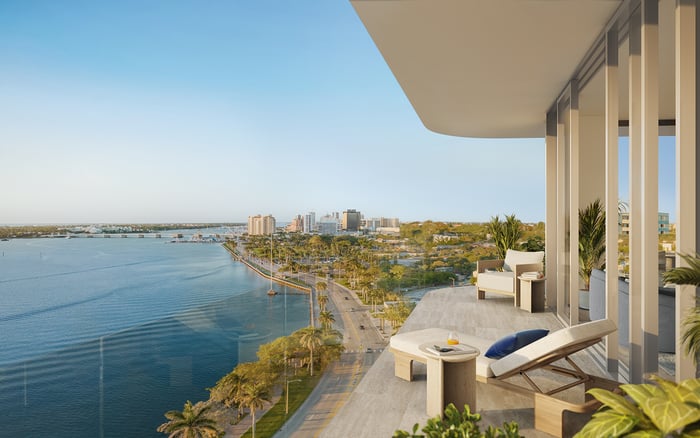
For a Miami-Dade residence, plan to store or secure loose objects in exposed outdoor locations before storm conditions develop. Furniture, plants, bicycles, toys, gardening supplies, and debris can become windborne hazards. Complete preparation before tropical-storm-force winds are anticipated, not after conditions deteriorate.
Prioritize indoor storage. Where that is impracticable, ask management whether securing or bracing outdoor objects is acceptable. Do not improvise attachments or modify the exterior. Confirm which methods are acceptable and where objects may be stored.
Complete balcony clearance, including furniture, plants, and wind chimes, is a hurricane-safety recommendation. It is not established here as a specific South Beach association requirement. Obtain the building’s actual clearance instructions and deadline directly from management.
For each outdoor object, identify its intended storage location and the person responsible for moving it. Resolve oversized or difficult items before departure, rather than leaving those decisions to a representative facing an approaching storm.
The project’s advertised specification includes Miami-Dade NOA-rated window systems for hurricane resistivity. This is an advertised specification, not independent verification of installed performance. It is not a reason to leave loose balcony objects unattended.
Window protection and exterior-object preparation address separate responsibilities. The owner’s questions are practical: What hurricane protection applies to the residence? Who is responsible for its operation? What inspection or maintenance instructions should be followed? Request answers specific to the residence and the association’s current specifications.
Do not assume that an additional shutter, screen, fastening system, or other exterior alteration is an owner’s unilateral choice. Ask management for the applicable hurricane-protection specifications and approval procedures, including any instructions for installation, maintenance, repair, replacement, and operation.
An owner-absence authorization should define a limited assignment, not an open-ended transfer of control. The following is a proposed planning checklist, not a verified South Beach form or association requirement:
Identify the owner, residence, representative, and current contact details.
State the effective dates and the events that trigger storm-preparation work.
Specify permitted entry, balcony-clearance tasks, and approved protection operations.
Identify any emergency-repair spending limit and escalation contact.
Distinguish this authority from leasing, renovation, sale, or general property management.
Ask management which signatures, identification, access credentials, and other formalities it requires. A signed instruction does not replace confirmation of the building’s entry procedure. Nor should a representative’s possession of credentials leave the assignment’s scope ambiguous.
Deliver the completed authorization to both management and the representative. Retain current contact information and condition photographs. Confirm who will deploy any approved hurricane protection; do not assume balcony clearance includes every other preparation task.
Make the management conversation specific. Request the current hurricane instructions, balcony-clearance deadline, emergency-access form, representative-registration procedure, and owner-absence policy. Confirm these details directly rather than inferring them from branding or general condominium practice.
Ask who receives completion confirmation and what happens if the primary representative cannot attend. Identify a proposed backup and clear that person through the same applicable procedures, rather than introducing someone informally at the last moment. Confirm that your planned storage arrangement is acceptable before anyone moves furnishings.
For a Miami Beach buyer also considering Setai Residences Miami Beach, these are useful due-diligence questions, not grounds for assuming equivalent procedures. Establish each property’s actual instructions independently. The comparison should focus on clear responsibilities, not an unsupported expectation of identical service.
A familiar name does not establish a uniform owner-absence arrangement. When comparing South Beach with The Ritz-Carlton Residences® Miami Beach, keep the inquiry specific to the residence and association. Neither shared branding nor a similar ownership pattern establishes identical access permissions or storm-preparation obligations.
Keep the building’s authority distinct from private instructions. Ask management who may operate hurricane protection, under what circumstances, and how owners are notified. Separately confirm the authority and access procedures for a privately selected representative.
Where authorization language or responsibilities are uncertain, seek legal advice tailored to the proposed arrangement. A narrowly defined assignment should make the intended tasks clear without implying broader control of the residence.
Ask management how emergency conditions may affect entry, occupancy, and a representative’s ability to complete preparations. Confirm how restrictions and evacuation instructions will be communicated, rather than assuming that ordinary access arrangements will remain available throughout a storm.
Do not interpret an owner-absence authorization as permission to disregard safety restrictions. Establish how the representative should respond if access is unavailable, whom to contact, and how incomplete tasks should be reported.
The strongest owner plan is deliberately modest: complete physical preparation early, document a representative’s limited authority, confirm management’s procedures, and respect emergency instructions. That is the practical foundation for leaving a residence with confidence rather than unresolved assumptions.
For a considered approach to South Florida residential ownership, explore MILLION.
If branded residences are on your mind — as a home or as an allocation — we would be glad to share what we are seeing, privately.
Begin a quiet conversationComplete clearance is recommended here as a safety precaution, not a verified rule for this association. Confirm the building’s actual requirements and deadline directly with management.
Complete preparation before tropical-storm-force winds are anticipated. Do not wait until conditions deteriorate.
Furniture, plants, bicycles, toys, gardening supplies, debris, and wind chimes warrant attention. Identify storage or acceptable securing arrangements before departure.
Prioritize indoor storage and ask management about acceptable alternatives where it is impracticable. Confirm securing methods before making attachments or alterations.
No. The project’s advertised window specification does not replace loose-object preparation or independently verify installed performance.
A proposed checklist includes the owner, residence, representative, effective dates, emergency triggers, permitted tasks, and any emergency-repair spending limit. Confirm management’s required form and formalities.
It should not be assumed to do so. Define storm-related authority separately from leasing, renovation, sale, and general property management.
Confirm the responsible person and permitted operations with management. Do not assume that a balcony-clearance assignment includes deploying hurricane protection.
Do not assume unilateral authority to alter exterior protection. Ask management for applicable specifications and approval procedures.
Confirm how management will communicate access restrictions and emergency instructions. Give the representative a contact and reporting plan for any preparation tasks that cannot be completed.