A private-client framework for coordinating imported furnishings at Armani/Casa Residences Pompano Beach, from customs eligibility and off-site storage to insurance and final installation.

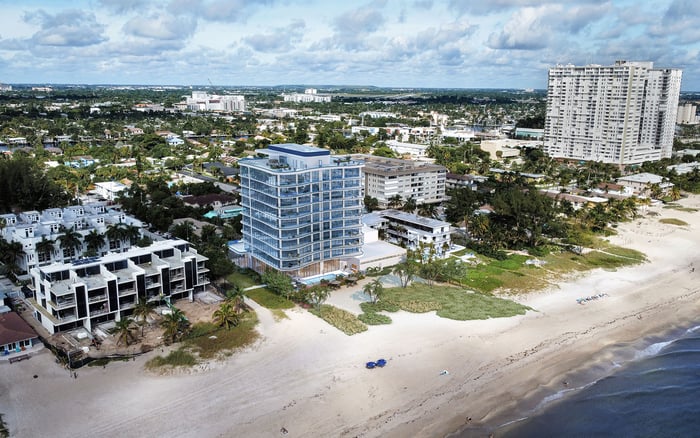
At Armani Casa Residences Pompano Beach, the appeal is intimate in scale: 28 residences, one home per floor, and oversized wraparound terraces at 1550 N. Ocean Blvd., Pompano Beach, Florida 33062. For an owner bringing valuable furnishings into that setting, the move deserves the same care as the interiors.
The essential distinction is between anticipated completion and readiness to receive property. Estimated completion in 2028 is a planning reference, not a guaranteed closing or move-in date. Overseas purchasing, customs clearance, storage, and installation should be coordinated as distinct stages, not treated as a single delivery event.
The private-client objective is straightforward: establish who controls each handoff, what documentation accompanies it, and how the owner's property is insured throughout. A beautiful room should be the conclusion of that work, not the moment unresolved responsibilities become visible.
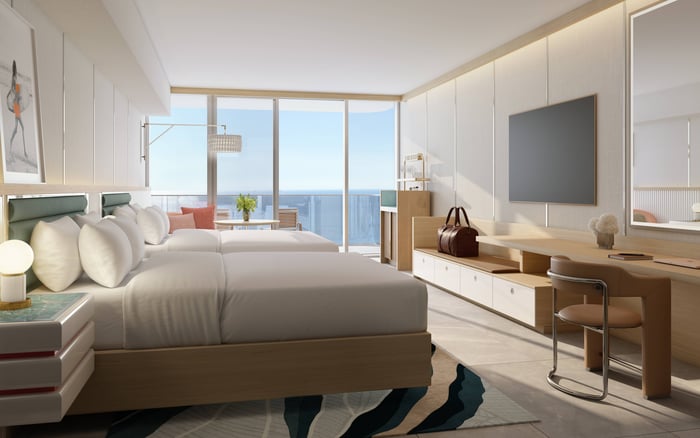
Interiors, finish palettes, and furnishing packages are described as curated by the Armani/Casa Interior Design Studio. Finishes imported directly from Italy make overseas procurement relevant to the design context. They do not, however, establish that every furnishing is included in a purchase or imported on an owner's behalf.
Before commissioning additional pieces, request a written reconciliation of included finishes, optional upgrades, furnishing packages, and separately purchased owner property. Identify who purchases each item, who arranges transport, and when responsibility transfers. Ask the design team to distinguish specification approval from authorization to ship.
The same distinction belongs in any Branded Residences comparison. A buyer considering The Ritz-Carlton Residences® Pompano Beach should request purchase-specific clarification rather than treating a branded setting as evidence of equivalent furnishing or logistics arrangements.
Household effects can include furniture, dishes, linens, libraries, artwork, and similar furnishings for personal use. Qualifying effects may enter duty-free when they were available for the owner's use, or used in a household where the owner resided, for at least one year, subject to applicable customs conditions. The goods must not be intended for sale.
Newly purchased furnishings should not be assumed to qualify for that exemption. A shipment combining an established collection with newly commissioned pieces therefore warrants item-by-item review. Returning residents may also qualify for eligible household furnishings under the personal-use and one-year conditions; returning status alone does not establish eligibility.
For unaccompanied household goods, the relevant form is Form 3299, Declaration For Free Entry of Unaccompanied Articles. A complete inventory can serve as the packing list. Build that inventory early, keeping descriptions consistent across purchase records, packing documents, photographs, and insurance schedules.
Household-goods shipments generally clear customs at their first U.S. port of arrival unless moved in bond to another port under an approved arrangement. Ask the customs adviser to confirm the intended clearance point and documentation before booking transport. Do not schedule installation around an assumed clearance duration.
The following intervals are editorial planning recommendations, not project requirements or customs deadlines. Work backward from the owner's current target occupancy, revising the schedule as readiness becomes clearer.
Twelve to eighteen months before target occupancy:
reconcile the purchase scope, identify overseas acquisitions, and appoint an owner-side coordinator. Ask that person to maintain a responsibility schedule covering designers, sellers, transport providers, storage operators, insurers, and installers.
Six to twelve months before target occupancy:
review customs eligibility, assemble the inventory, obtain storage proposals, and examine insurance terms. Request alternatives if the residence cannot receive the shipment on arrival. Ask vendors what flexibility exists around production completion and release.
Sixty to ninety days before the proposed installation:
reconfirm building access, delivery permissions, the installation sequence, and the procedure for extending storage and coverage if dates move.
At every stage, distinguish a working date from a release authorization. Neither factory completion nor arrival in the United States should automatically trigger delivery to the residence.
Treat storage selection as a separate diligence exercise. Ask the facility to document environmental controls, security, inspection access, condition-reporting procedures, liability limits, and customer-insurance requirements. For delicate finishes or valuable objects, request written confirmation that the proposed handling and storage approach meets each item's needs.
The proposal should also answer operational questions. Will pieces remain crated? Who may open them? How will condition be documented at intake and release? What happens if an inspection reveals damage? Request a clear authorization process for unpacking, movement, and onward delivery.
Ask how an extended stay would affect charges, insurance, and inspection arrangements. Establish who can approve an extension before it becomes urgent.
For buyers also evaluating Waldorf Astoria Residences Pompano Beach, this storage questionnaire can remain consistent across the search. Answers should be specific to the selected facility and purchase, not inferred from a project's identity.
Ask the insurance adviser to map coverage against the actual sequence: packing, transit, customs inspection, storage, final delivery, assembly, and installation. The question is not simply whether the shipment is insured, but which policy responds at each stage, on what valuation basis, and under which conditions.
Request written answers on breakage, concealed damage, pairs and sets, water, flood, windstorm, mold, deductibles, and claims deadlines. For a coordinated suite or paired objects, ask how the proposed coverage would value damage to only part of the ensemble. Do not infer the answer from the total insured value.
Review the storage operator's liability terms alongside the owner's proposed coverage. Ask whether transport providers' and installers' policies address damage to the furnishings themselves, damage to the residence, or different exposures. Have the adviser identify any gap between one party's responsibility ending and another's beginning.
These are diligence questions, not representations of required project insurance or guaranteed policy protection.
Before goods leave storage, obtain written confirmation of building access and readiness. Ask for delivery windows, freight-elevator dimensions and limits, access-route measurements, contractor requirements, and any insurance documentation needed for admission. Do not assume that residential privacy establishes the logistics for oversized pieces.
Designate who authorizes release, who receives the shipment, and who signs the final condition and acceptance documentation. Arrange for photographs before unpacking, during assembly where appropriate, and after placement. Record discrepancies promptly under the applicable claims procedures.
The final instruction should be unambiguous: release follows confirmed readiness, not merely an optimistic calendar. Customs and insurance decisions warrant review with the owner's qualified advisers; this briefing is a planning framework, not legal or coverage advice.
For a discreet perspective on South Florida residences and the decisions surrounding ownership, explore MILLION.
If branded residences are on your mind — as a home or as an allocation — we would be glad to share what we are seeing, privately.
Begin a quiet conversationThe project is located at 1550 N. Ocean Blvd., Pompano Beach, Florida 33062.
The development has 28 residences, with one home per floor.
No. Estimated completion in 2028 is a planning reference, not a guaranteed closing, occupancy, or furnishing-delivery date.
Do not assume every furnishing is included. Request written clarification of included finishes, optional upgrades, furnishing packages, and separately purchased owner property.
Qualifying personal-use household effects may enter duty-free under applicable conditions, including the one-year use or availability requirement. Goods intended for sale do not qualify under that exemption.
New purchases should not be assumed to qualify for the exemption covering previously used household effects. Have a customs adviser review their treatment before shipment.
The relevant form is Form 3299, Declaration For Free Entry of Unaccompanied Articles. A complete inventory can serve as the packing list.
They generally clear at the first U.S. port of arrival unless moved in bond to another port under an approved arrangement.
Request documented environmental controls, security, condition-recording procedures, liability limits, and customer-insurance requirements. Clarify who can authorize unpacking, extended storage, and release.
Ask which policy covers each stage from packing through installation, including valuation, exclusions, deductibles, and claims deadlines. Confirm coverage questions with the insurance adviser rather than assuming protection from a provider's participation.