A seasonal acquisition requires more than borrower approval. This private-client briefing separates personal liquidity from condominium reserves, explains project-review waivers, and identifies the lender confirmations that matter across the 2026-2027 transition.

For a seasonal owner, a South Florida residence is a personal decision supported by a precise financial structure. The essential distinction is straightforward: borrower approval and condominium eligibility are separate decisions. Strong income and substantial liquidity do not, by themselves, establish that a condominium qualifies for the proposed loan.
First, ask whether the lender intends to deliver the mortgage to Fannie Mae. That answer determines whether this framework applies to the proposed financing. These requirements should not be imposed automatically on every private-client lending arrangement.
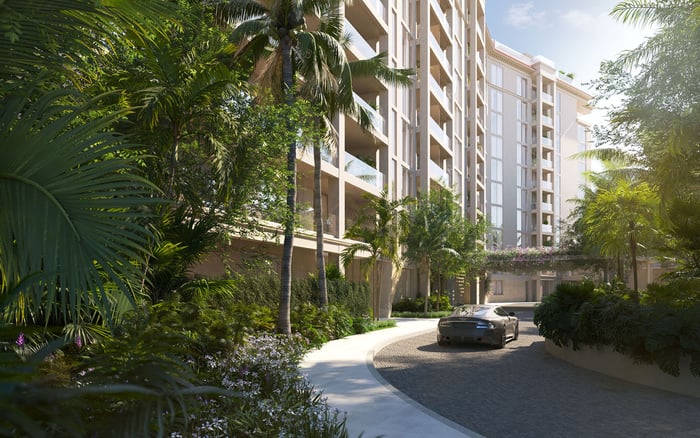
A buyer considering Una Residences Brickell should resolve the financing mandate before treating preliminary approval as transaction certainty. The residences referenced here provide context for a property search, not representations of Fannie Mae eligibility, waiver availability or lender approval.
Fannie Mae generally requires two months of borrower reserves for a second-home transaction. These are eligible assets remaining after the down payment and closing costs-not funds counted twice in the acquisition budget.
The monthly measure includes applicable principal, interest, taxes, insurance and assessments. Using principal and interest alone understates the housing expense for this test.
Documented deposit, investment and retirement accounts may qualify, subject to eligibility, valuation and access requirements. An account balance is not necessarily the amount the lender will recognize. Confirm the accepted reserve value of each proposed account before arranging transfers or liquidations.
Two months is a baseline, not a universal total. Additional requirements apply to second-home and investment-property transactions based on the borrower's financed-property holdings. For an owner with several financed residences, request a written calculation of the required post-closing reserves and the assets accepted to satisfy them.
A qualifying second home must be a one-unit dwelling, occupied by the borrower for part of the year and suitable for year-round occupancy. Second-home treatment is not intended for a property operated primarily as a rental or timeshare, and rental income generally cannot be used to qualify the borrower.
For a Miami Beach search that includes The Perigon Miami Beach, establish intended use before building a financing model around potential rental receipts. Personal seasonal occupancy and an income-led acquisition are not interchangeable underwriting assumptions.
Second-home loans generally must receive an Approve/Eligible recommendation through Desktop Underwriter, subject to specified exceptions. Confirm the underwriting route with the lender rather than relying solely on a preliminary affordability discussion.
A project-review waiver removes a specified review requirement. It does not remove every eligibility condition or the lender's responsibility to establish that the loan is eligible for delivery.
Potential waivers extend to new and established condominium projects containing 10 or fewer units, but each category has distinct conditions:
Units in two-to-four-unit condominium projects generally qualify, while applicable basic requirements remain.
The five-to-10-unit waiver category requires that the project not belong to a larger development or master association.
Attached units in five-to-10-unit projects within a larger development or master association must use Full Review.
Detached condominium units generally qualify for a waiver, subject to remaining basic eligibility requirements.
The practical question is not simply whether a building feels small or private. Ask the lender to establish the relevant project structure, attached or detached status, and master-association relationship. A boutique presentation is no substitute for the legal and underwriting classification.
Borrower reserves protect the personal financing position after closing. Association reserves fund shared capital expenditures and deferred maintenance. These are separate pools of money, evaluated for different purposes.
Under the 2026 Full Review framework, replacement-reserve allocations generally must equal at least 10% of annual budgeted assessment income. This is a budget-allocation test-not a requirement that the association hold 10% of property values in cash. The lender must also determine that the projected budget is adequate for the project.
An acceptable reserve study may substitute for the standard percentage test if it demonstrates adequate reserves and project funding meets or exceeds its recommendations. A baseline-funding study, which allows reserves to approach but not fall below zero, cannot be used to waive the applicable reserve requirement. Where a study presents multiple funding scenarios, the budget generally must use the highest recommended reserve allocation needed to cover identified costs.
When evaluating Four Seasons Residences Coconut Grove, apply the same documentary discipline: ask the lender to reconcile the applicable budget and reserve study rather than assuming a residential brand establishes eligibility.
August 3, 2026, marks the end of Limited Review for condominium projects under the transition addressed here. Limited Review and a project-review waiver are distinct pathways; the end of one does not eliminate the conditions governing the other.
For applicable Full Review loans with application dates on or after January 4, 2027, the minimum reserve allocation rises from 10% to 15% of annual budgeted assessment income. The 15% figure is not the general 2026 minimum.
For a late-2026 acquisition, confirm the applicable review method and reserve standard rather than assuming the closing date controls. Fannie Mae is also ending its blanket PERS requirement for new or newly converted Florida condominium projects with attached units. That change is not a blanket waiver of project review.
The agency framework is the starting point for the lender conversation, not a substitute for transaction-specific requirements. Ask whether lender overlays alter the proposed financing and request written answers covering:
The actual borrower-reserve requirement and financed-property calculation.
The assets and values accepted as post-closing reserves.
Acceptance of any proposed project-review waiver.
The lender's reserve-study policy and applicable transition dates.
Do not treat potentially stricter standards as universal requirements. The objective is to establish what this lender requires for this borrower, property and application-and which project questions remain unresolved.
Before committing, seek the declaration, budget, balance sheet, reserve study, meeting minutes, structural reports, insurance certificates, assessment notices, litigation disclosures and condominium questionnaire. Together, these documents support a more informed discussion of eligibility and ownership obligations.
For a West Palm Beach shortlist that includes Alba West Palm Beach, request this file early and have the lender identify the applicable review route. Keep the buyer's liquidity schedule separate from the association's capital-funding analysis; neither establishes that the other has passed.
The most useful financing confirmation distinguishes borrower approval, project eligibility and outstanding conditions. For a seasonal owner, that clarity belongs alongside the residence's design and setting in the acquisition decision.
For a discreet conversation about your South Florida second-home search, connect with MILLION.
If branded residences are on your mind — as a home or as an allocation — we would be glad to share what we are seeing, privately.
Begin a quiet conversationFannie Mae generally requires two months of reserves, separate from down-payment and closing-cost funds. Financed-property holdings can create additional requirements.
The applicable housing expense includes principal, interest, taxes, insurance and assessments, not principal and interest alone.
Documented investment, retirement and deposit accounts may qualify, subject to applicable eligibility, valuation and access requirements.
Rental income generally cannot be used to qualify the borrower. Second-home treatment is not intended for a property operated primarily as a rental or timeshare.
No. The project must independently meet applicable standards or qualify for a permitted project-review waiver, with remaining eligibility conditions still satisfied.
No. Category-specific conditions apply, including a restriction against larger-development or master-association membership for the five-to-10-unit waiver category.
No. It removes the specified review requirement, while remaining eligibility conditions and the lender's delivery responsibilities continue.
The 2026 framework generally requires at least 10% of annual budgeted assessment income for replacement reserves. The lender must also determine that the projected budget is adequate.
An acceptable study may substitute if it demonstrates adequate reserves and funding meets or exceeds its recommendations. A baseline-funding study cannot be used to waive the applicable reserve requirement.
The increase applies to applicable Full Review loans with application dates on or after January 4, 2027. Buyers should confirm the governing standard rather than assume the closing date controls.