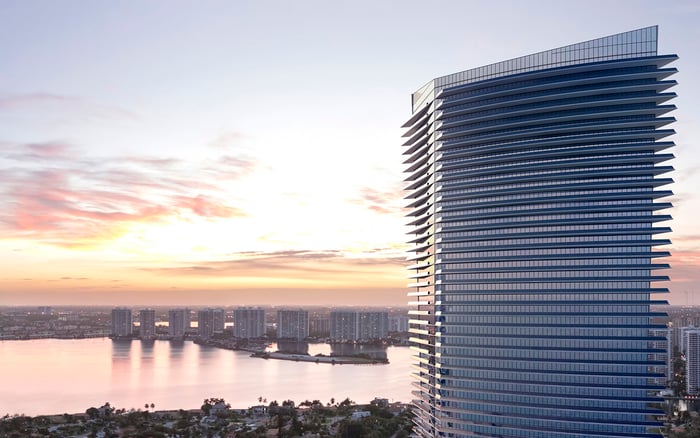
Making a South Florida condominium your primary residence calls for a closer reading of building condition, reserve funding and unfinished repairs. This private-client briefing separates the documents that matter and explains how to reconcile them before committing to full-time occupancy.
.jpg)
A South Florida residence can feel entirely different when it becomes the center of daily life rather than an occasional retreat. The view remains the same; tolerance for construction interruptions, uncertain assessments and unfinished common-element work may not. For a buyer planning full-time occupancy, the building deserves as much attention as the residence itself.
The essential discipline is to evaluate three matters separately: structural condition, funding and repair completion. A completed inspection does not establish adequate reserves. A reserve study does not establish completed repairs. An adopted budget does not, by itself, show that every identified obligation has been funded.
Whether considering Una Residences Brickell or another Brickell address, apply the same document-based framework. The project references here provide browsing context, not findings about any building’s condition, inspection status or finances.
Florida’s milestone-inspection requirement generally covers residential condominium and cooperative buildings with three or more habitable stories. An individual unit’s use as a second home or primary residence does not change that general building-level requirement.
The first inspection is generally due by December 31 of the year the building reaches 30 years from its certificate of occupancy, with subsequent inspections every 10 years. Local authorities may require the first inspection at 25 years. Establish the building’s applicable timetable rather than inferring it from appearance or a listing description.
A milestone inspection addresses structural condition, life safety, load-bearing walls and primary structural members and systems. It is not a conventional inspection of the individual residence. Phase 1 is a visual examination for substantial structural deterioration. If that deterioration is identified, Phase 2 requires further investigation and corrective recommendations.
Request the sealed inspection report, the separate statutory summary of material findings, any Phase 2 findings, photographs, repair recommendations and building-official correspondence. A statement that the building “passed” is no substitute for understanding what was examined, what was found and what remains outstanding.
A Structural Integrity Reserve Study, or SIRS, is a budget-planning tool based on visual inspection of specified components. Its purpose is to identify funding needs for major repairs and replacements. Completing the study does not demonstrate that the recommended work has been performed.
Compare its funding recommendations with the adopted budget and actual reserve balances. Ask which contributions are being collected, how identified repair obligations will be funded and whether the financial documents reflect the same scope of work as the engineering materials.
For a Miami Beach search that includes Setai Residences Miami Beach, this distinction belongs alongside the usual questions about layout and daily convenience. Understand the association’s funding position independently of the residence’s presentation.
Reserve-funding rules allow conditional exceptions, including specified temporary reductions or pauses. Establish the legal basis for any departure from the funding schedule. Under the 2025 statutory framework, an association required to complete a milestone inspection on or before December 31, 2026 may complete its SIRS simultaneously with that inspection. This is not a universal extension; have Florida counsel confirm the applicable requirements and current law.
A turnover inspection report addresses building condition at the transition from developer control to unit-owner control. It serves a different purpose from an aging-building milestone inspection. The two should not be treated as interchangeable assurances.
Read the turnover findings for unresolved common-element defects and recommended repairs. Request developer responses, relevant warranties and information about construction claims. The question is not simply whether turnover occurred, but whether identified deficiencies were resolved-and what documentation supports that conclusion.
In a Coconut Grove comparison that includes Park Grove Coconut Grove, keep this inquiry property-specific. Do not infer from a development’s name or presentation that it has unresolved defects, or that all deficiencies have been closed. Let the applicable documents establish the position.
Florida’s resale-disclosure provisions entitle prospective purchasers to specified condominium documents, including the annual financial statement, budget and applicable inspection or reserve-study materials. Obtain the relevant package early enough to evaluate it meaningfully with counsel and, where appropriate, an engineering adviser.
Certain condominium sale contracts entered into after December 31, 2024 must conspicuously disclose that a required milestone inspection, qualifying turnover inspection report or SIRS has not been completed. An incomplete required document remains an unresolved diligence item. It is not evidence that the building has no structural or reserve-funding problems.
Reconcile identified repair costs with available funding. Are they covered by reserves, current assessments, proposed special assessments or borrowing? A monthly assessment that appears comfortable says little about a repair obligation that has not yet been funded. Ask for a clear explanation of how each material expense connects to the budget and the association’s actual financial position.
For unresolved structural work, request the scope, cost estimate, funding source, contractor, permits, schedule and completion documentation. Together, these establish a sequence from recommendation to execution. An engineer’s recommendation is not evidence that the recommended work has been completed.
For each material item, distinguish work that is recommended, scheduled, underway or documented as complete. Where the paperwork does not reconcile, ask the association and relevant professionals to explain the gap. Do not treat a general assurance as closure.
The same practical review belongs in a Sunny Isles Beach search, including consideration of Jade Signature Sunny Isles Beach. Ask whether planned work could involve construction noise, balcony closures, water shutoffs, parking restrictions or temporary relocation. These are diligence questions, not assertions about conditions at that property.
Full-time occupancy makes timing especially important. Request the anticipated disruption schedule and compare it with the intended move-in date. A repair program may be financially manageable yet incompatible with the buyer’s immediate living arrangements.
Before committing, bring the condition findings, funding plan and execution record into one decision. Identify what remains unknown, what requires professional interpretation and what could affect occupancy or ownership costs.
Have Florida counsel address responsibility for assessments and unfinished repairs, including relevant approval, issuance, payment and closing dates. Do not assume that the timing of a repair automatically determines who bears its cost.
Converting a residence to primary use also raises separate legal and tax questions. This briefing does not establish homestead eligibility, tax benefits or other consequences of that change. The immediate objective is narrower: a residence whose building obligations are understood before it becomes the center of daily life.
For a discreet conversation about your South Florida residential search, connect with MILLION.
If branded residences are on your mind — as a home or as an allocation — we would be glad to share what we are seeing, privately.
Begin a quiet conversationThe general requirement applies at the building level to residential condominium and cooperative buildings with three or more habitable stories. A unit’s second-home or primary-residence use does not change that general requirement.
It is generally due by December 31 of the year the building reaches 30 years from its certificate of occupancy, with inspections every 10 years afterward. Local authorities may require the first inspection at 25 years.
No. It evaluates building structural condition and specified structural systems rather than serving as a conventional inspection of the buyer’s residence.
Phase 2 is required when substantial structural deterioration is identified during Phase 1. It involves further investigation and corrective recommendations.
No. A SIRS identifies funding needs for major repairs and replacements; physical completion must be established separately.
Compare the study’s funding recommendations with the adopted budget and actual reserve balances. Determine whether repair costs are covered by reserves, assessments or borrowing.
No. A turnover inspection addresses condition at the transition from developer control to unit-owner control, while a milestone inspection addresses the building’s structural condition under a separate requirement.
Treat it as an unresolved diligence item, not evidence that no problems exist. Certain sale contracts entered into after December 31, 2024 require conspicuous disclosure of specified incomplete required documents.
Request the scope, cost estimate, funding source, contractor, permits, schedule and completion documentation. Ask separately about potential disruption to full-time occupancy.
No. Homestead and tax consequences require separate advice, and Florida counsel should address responsibility for assessments and unfinished repairs in relation to the relevant dates and contract terms.