South Beach can support a refined, car-light routine, but its value is intensely block-specific. Buyers should test real walking routes, distinguish club proximity from usable access, verify private dining terms, and assess noise, parking, guest arrival, and mainland travel before selecting a residence.
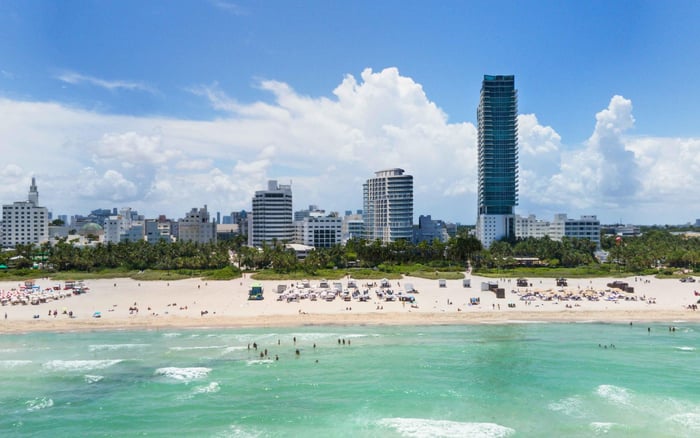
South Beach enters 2026 with a compelling headline measure: a walkability score of 91. Its compact grid places groceries, beaches, restaurants, shops, hotels, and nightlife within practical reach for many residents. The principal visitor core extends approximately from South Pointe Park at 1st Street to 23rd Street, while a concentration of attractions within roughly 1.7 square miles makes a largely pedestrian routine plausible.
Yet a neighborhood score is not a promise about any condominium lobby. Walkability shifts block by block, shaped by crossings, sidewalk activity, traffic, weather exposure, late-night crowds, and the location of a building entrance. Broad buyer's guides are useful for orientation, but serious due diligence begins with the precise door-to-door journey.
For each candidate, map five recurring trips: groceries, the beach, a preferred restaurant, a fitness or wellness destination, and an evening venue. Walk every route during the day and again after dinner. Time the trip, note shade and crossings, and assess whether the return feels comfortable when the streets are busiest.
South Beach is better understood as a series of connected micro-markets than as a uniform lifestyle proposition. South of Fifth may appeal to buyers seeking access to the park and the southern end of the Beachwalk, while Ocean Drive and Lincoln Road place residents closer to intense visitor activity. Density creates convenience, but it also produces a louder, more animated setting than lower-density parts of Miami Beach.
Residences such as Apogee South Beach and Continuum on South Beach should therefore be considered through the buyer's own daily pattern, not simply through a district label. Compare the lobby-to-sidewalk transition, preferred walking direction, valet operations, guest pickup points, and sound levels at the residence itself.
When reviewing Five Park Miami Beach, apply the same discipline: identify which destinations are genuinely convenient on foot and which still prompt a car. A short map distance can feel materially different in midday heat, rain, weekend congestion, or formal evening attire.
Miami Beach's Beachwalk runs seven miles from South Pointe Park to North Beach Oceanside Park. The wide, on-grade, ADA-accessible oceanfront promenade provides a continuous route for recreation and pedestrian movement along the island. For an owner who walks, runs, or cycles regularly, access to it may carry more everyday value than proximity to a single fashionable address.
Beach access should still be tested rather than assumed. Measure the route from the building entrance to the promenade, note major crossings, and determine whether guests can find their way without elaborate instructions. Waterfront proximity and effortless access are related, but they are not identical.
The planned South Beach Pedestrian Priority Zone is intended to improve pedestrian safety, visibility, comfort, and walkability. Separate connectivity planning also contemplates improved sidewalks, connected bicycle facilities, landscaping, wayfinding, streetscape work, and transit amenities. Buyers should regard these as planning signals, not completed benefits, and verify current conditions at the time of purchase.
Bars, restaurants, hotels, and clubs are concentrated throughout the district, but walking distance to a venue does not establish admission, membership, priority reservations, or guest privileges. A buyer seeking a social-club routine should confirm current rules directly with each establishment before assigning value to proximity.
Ask whether membership is required, whether it is individual or household-based, how guests are handled, and whether reservations receive priority. Confirm renewal terms, blackout periods, dress requirements, event access, and the treatment of visiting family. If club use is central to the purchase, obtain the current terms in writing. Never assume that a building relationship creates privileges unless they are expressly documented.
For residences in the broader central South Beach orbit, including Setai Residences Miami Beach, the relevant test is not the number of nearby venues. It is how many suit the owner's preferred schedule, service expectations, and guest profile.
Private dining access requires a separate inquiry. Buyers should confirm whether a restaurant offers a private room, a semi-private area, or only large-table seating. They should also ask about minimum spending, deposits, cancellation terms, menu formats, beverage requirements, audiovisual capability, accessibility, and maximum seated capacity.
Reservation access matters as much as room design. Ask how far in advance prime dates become available, whether members or hotel guests receive priority, and whether holidays or major event periods carry distinct terms. For recurring entertaining, test the complete guest journey from residence to venue, including valet queues, rideshare pickup, sidewalk congestion, and the late-night return.
A polished evening can be undermined by operational friction. Ocean Drive can bring crowds and aggressive sidewalk solicitation, while busy blocks may be less comfortable for guests unfamiliar with the area. For beach entertaining, hosts should also remain attentive to posted ocean conditions, including rip-current risk.
Within South Beach, mixed residential and commercial uses allow many residents to walk to daily services as well as leisure destinations. The Miami Beach trolley and the low-cost South Beach Local bus can complement walking for neighborhood trips. This makes car-light ownership credible, particularly for buyers whose work and social lives remain largely on the island.
Mainland connectivity is less seamless. Bus routes use the MacArthur and Julia Tuttle causeways, so buyers with regular commitments in Downtown Miami, Brickell, or farther north should test those journeys at realistic hours. Second-home owners should similarly evaluate airport transfers, luggage handling, household staffing, deliveries, and secure parking rather than focusing solely on vacation-day movement.
The strongest purchase resolves both versions of South Beach: the elegant pedestrian district and the active destination. Walkability, club access, and private dining should be documented as separate benefits, then considered together with noise, valet capacity, guest logistics, and causeway dependence.
Is South Beach genuinely walkable in 2026? Yes. It carries a walkability score of 91, although the experience varies materially by block and building entrance.
What area defines the main South Beach visitor core? It extends approximately from South Pointe Park at 1st Street to 23rd Street.
Can a buyer live in South Beach without driving daily? A car-light routine is practical for many island errands, dining, beach visits, and nightlife.
Does proximity to a private club guarantee access? No. Membership, reservations, guest privileges, and event access must be confirmed directly.
What should buyers verify for private dining? Confirm room type, capacity, minimum spending, deposits, menus, cancellation rules, and priority access.
How should a buyer test a building's walkability? Walk essential routes from the actual entrance during daytime and late-night conditions.
Why is the Beachwalk important to residents? It provides a continuous seven-mile, on-grade, ADA-accessible route along Miami Beach.
Are pedestrian improvements guaranteed to be complete? No. Planned safety and connectivity improvements should be distinguished from current conditions.
What trade-off accompanies South Beach density? Convenience comes with greater activity, crowds, and potential noise than lower-density areas.
What should mainland commuters examine? Test causeway travel at realistic hours and assess whether bus-based connections suit the schedule.
If you'd like a private walkthrough and a curated shortlist, connect with MILLION.
If branded residences are on your mind — as a home or as an allocation — we would be glad to share what we are seeing, privately.
Begin a quiet conversation