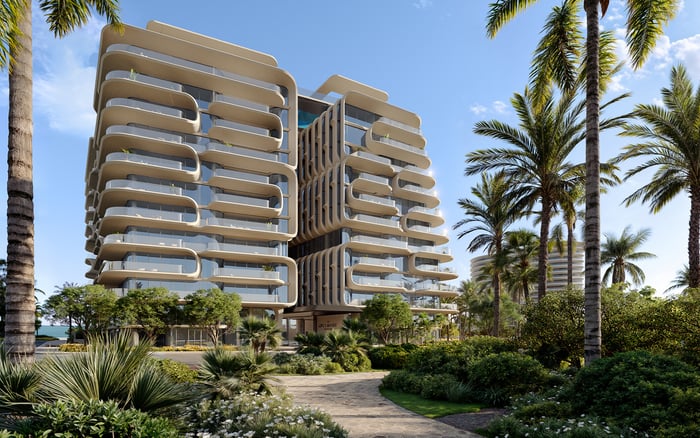
For Turnberry Ocean Club buyers, move-in readiness depends on more than beautiful finishes. Distinguishing association approvals from city permits, confirming current work restrictions, and matching the renovation schedule to an arrival date can make the difference between a turnkey purchase and a post-closing project.

For a luxury buyer, turnkey should mean more than a beautifully presented interior. It should describe a residence that supports the intended way of living without an intervening construction project. At Turnberry Ocean Club Sunny Isles, the practical question is whether the apartment works for you as delivered-or only after a sequence of alterations.
The residential tower stands at 18501 Collins Avenue, Sunny Isles Beach, FL 33160, and was completed in 2020. Its sales gallery is at a separate address, 215 185th Street, a distinction worth keeping clear when arranging visits. The completion year provides context; it does not establish freedom from repairs, assessments, or association restrictions.
For buyers with a fixed arrival date, the most consequential distinction is between preferences and prerequisites. A finish you might eventually change is different from work that must be completed before you occupy the home. Draw that line before evaluating the promise of immediate enjoyment.
During a showing, create two categories: what must change before arrival and what can remain through the first season. This turns a subjective impression into a practical purchase criterion. If the essentials include construction, evaluate the residence as a purchase with a project attached, however polished its presentation.
Do not treat “cosmetic work” as an approval category. Ask management how each proposed task is classified and whether it requires written consent, contractor documentation, or a municipal permit. The scope-not the buyer’s description of its simplicity-should guide the inquiry.
The same discipline applies when considering Jade Signature Sunny Isles Beach alongside Turnberry. Compare the residences and the changes you would require, rather than assuming similarly appealing interiors offer comparable paths to occupancy. A home that suits you today may offer greater practical value than one that becomes ideal only after uncertain work.
Do not assume that Turnberry Ocean Club has a seasonal renovation blackout, a blanket work prohibition, or unrestricted year-round access. Ask management for current written restrictions and how they apply to your intended scope. Base the purchase decision on the applicable rules, not expectations carried over from another condominium.
Request any current renovation calendar and ask whether restrictions distinguish between types of work. Clarify permitted work periods, contractor access, delivery arrangements, and move-in procedures. These are diligence questions, not statements of building policy. They help establish whether a proposed schedule is feasible before it becomes a commitment.
If management identifies a moratorium, establish its precise dates, covered activities, and any written exception process. Ask whether approval allows work to begin immediately or authorizes it only during a later available period. Permission and access are separate scheduling questions.
For a buyer planning no alterations, renovation restrictions may have little bearing on the initial move. For someone requiring customization, those same restrictions can become central to the purchase.
Sunny Isles Beach reviews renovation plans, issues permits, and performs inspections. That municipal process is distinct from condominium-association approval. Neither authorization should be treated as a substitute for the other, nor should buyers assume that all proposed work follows the same route.
Assess the intended scope against three questions: does it require management approval, board approval, or city permitting? More than one may apply. Confirm the sequence with the relevant parties before relying on a contractor’s proposed start date. City condominium work requires licensed contractors, and applications, plan reviews, inspections, and final closeout run through the city’s digital system.
Effective May 1, 2025, the city requires pre-development review before permit applications for new construction, additions, balcony enclosures, and similar projects. This does not establish a pre-development review requirement for every interior renovation. Confirm whether it applies to the specific proposal.
The distinction also matters when comparing a residence at Armani Casa Sunny Isles Beach. Municipal requirements and an individual association’s requirements need separate consideration; neither should be inferred from another building’s practices.
Before committing to post-closing work, request the declaration, house rules, alteration application, contractor requirements, insurance standards, and move-in/out procedures. Obtain current versions and review them against a written description of the proposed alterations. General permission to renovate is less useful than a clear answer about the work you intend.
Ask who reviews the application, what constitutes a complete submission, and what written deadline the governing documents establish. Clarify whether the stated turnaround covers an initial response, a request for revisions, or a final decision. These milestones are not interchangeable when setting an occupancy date.
Do not presume automatic approval after a fixed number of days. Florida Statute §718.113 does not establish a statutory architectural-application decision deadline. Have counsel examine the applicable condominium documents and approval provisions rather than importing homeowners’ association rules into a condominium purchase.
A timing estimate helps with planning, but it does not replace written authorization. Keep the approval decision, permit status, and authorization to start work distinct in your schedule.
Second-home buyers should begin with the date they want to use the residence, then work backward through closeout, inspections, construction, contractor availability, permitting, and association review. Confirm which steps can overlap and which depend on earlier approvals. Do not base your expected arrival solely on the estimated construction duration.
For remote owners, designate who will track submissions, respond to requests, coordinate access, and confirm completion. Ask the contractor to distinguish active work time from the full elapsed schedule. Even a limited scope can require administrative steps before work begins and inspections after it ends.
Maintain a fallback plan if essential work cannot be completed on time. That might mean postponing optional alterations or choosing a residence that meets immediate needs without construction. The objective is not to eliminate personalization, but to avoid making the first season dependent on unresolved approvals.
Evaluate a proposed turnkey purchase on three dimensions: the home’s present suitability, the cost of required changes, and the uncertainty surrounding completion. This is a decision framework, not a claim that any particular finish commands a measurable premium. A residence requiring fewer immediate changes may simply fit your priorities better.
Before proceeding, seek written clarity on restrictions, approval responsibilities, and the path from application to occupancy. At Turnberry Ocean Club, the strongest turnkey decision aligns the apartment you are buying with the life you intend to begin there.
For a discreet perspective on selecting a South Florida residence that fits your timeline, explore MILLION.
If branded residences are on your mind — as a home or as an allocation — we would be glad to share what we are seeing, privately.
Begin a quiet conversationThe residential tower is at 18501 Collins Avenue, Sunny Isles Beach, FL 33160. The sales gallery is separately listed at 215 185th Street.
The tower was completed in 2020. Its completion year does not establish freedom from repairs, assessments, or association restrictions.
No. Ask management for current written restrictions and whether they affect the intended work and occupancy date.
It should mean the residence meets the buyer’s immediate needs without essential post-closing construction. Optional future changes should be distinguished from work required before arrival.
No. Condominium approval and municipal permitting are separate processes, and the proposed scope may require both.
The city’s May 1, 2025 requirement covers new construction, additions, balcony enclosures, and similar projects. It does not establish that every interior renovation needs pre-development review.
Request the declaration, house rules, alteration application, contractor requirements, insurance standards, and move-in/out procedures. Review them against the specific proposed scope.
Florida Statute §718.113 does not establish a statutory architectural-application decision deadline. Buyers should review the governing documents with counsel and not assume automatic approval.
The city requires licensed contractors for work in condominium buildings. Buyers should also confirm the association’s contractor documentation and insurance requirements.
Work backward from the intended arrival date through closeout, inspections, construction, contractor scheduling, permitting, and association review. Keep a fallback plan if essential work cannot be completed in time.