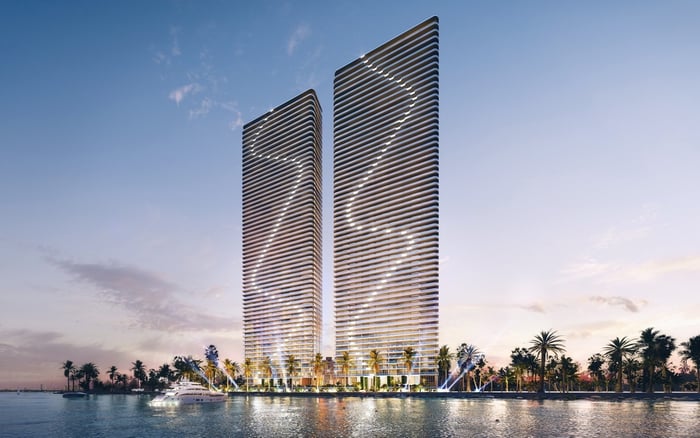
For a Faena buyer, parking deserves the same documentary precision as the residence itself. Understand how deeded interests, limited common elements, and license terms differ, and which documents should establish what transfers at closing.

In a luxury condominium purchase, arrival should feel effortless. The legal right behind that convenience warrants closer scrutiny. For a buyer considering Faena Residences Miami Downtown Miami, the essential question is not simply whether parking accompanies the residence. It is what interest the buyer receives, how that interest is established, and what happens when the residence changes hands.
Deeded parking, a limited common element, and a revocable license are not interchangeable descriptions. Nor should any classification be assumed for a particular Faena purchase without examining its governing documents. The objective is a closing file that clearly establishes the right-not a sales description that leaves its durability open to interpretation.
A parking number identifies a location. It does not, by itself, establish the legal nature of the buyer’s interest.
The condominium declaration is the starting point for determining whether parking forms part of a unit, constitutes a limited common element, or operates under another arrangement. Review it alongside the condominium plat or survey, the unit deed, and the title commitment. Together, these documents should provide a consistent account of what the buyer acquires.
Ask counsel to identify the provisions governing parking classification and assignment authority. Then connect those provisions to the particular residence and any promised space. A general right to assign parking does not confirm the assignment applicable to the unit under review.
For a buyer also considering Aston Martin Residences Downtown Miami, apply the same document-first approach. This is a framework for comparing rights, not a statement that either development uses a particular parking structure. Architectural distinction and contractual precision both deserve attention in an acquisition; one cannot establish the other.
When parking is described as separately deeded, request the deed and its legal description. Reconcile that description with the condominium documents and the title commitment. The task is to establish the ownership interest actually conveyed, not merely to find a reference to parking in the transaction paperwork.
Ask counsel whether the description identifies a separate ownership interest or parking associated with the residential unit. A deed’s mention of a space should not end the inquiry into how the declaration classifies it.
The practical closing question is straightforward: what instrument conveys the parking interest, and how does the title commitment address it? If the answer rests entirely on a brochure, reservation notation, or verbal assurance, request the underlying legal documentation before treating the issue as resolved.
Do not assume that a deeded description permits unrestricted separate resale or financing. Those questions require their own review of the interest, governing documents, and applicable law. Precision is more useful than a broad promise of ownership.
In Florida, limited common elements are common elements reserved for the exclusive use of specified units, as established in the declaration. For parking, an LCE designation provides exclusive use of a common element rather than separate fee-simple ownership of the physical stall.
That distinction does not diminish the significance of a properly established LCE right. Exclusive use of declaration-designated parking forms part of the unit’s property rights and cannot simply be appropriated by another owner. The central question is whether the documents establish that exclusive right for the residence being purchased.
Review the declaration, survey, and first developer deed when tracing an LCE assignment. Properly established appurtenant parking rights pass with the condominium unit. An assigned LCE can also follow its dwelling unit through later conveyances even when subsequent deeds omit an express reference to it. An omission calls for investigation-not an automatic conclusion that the right disappeared.
Conversely, an LCE should not be treated as independently saleable or mortgageable fee-simple real estate. Any proposed separate transfer or treatment must be evaluated under the governing documents and applicable law.
The word assigned describes an action; it does not settle the legal classification. Condominium arrangements can provide for developer-assigned LCE parking, including additional spaces appurtenant to units. Association-assigned parking can also be an LCE. These possible structures do not establish the arrangement at Faena, but they illustrate why shorthand can mislead.
If parking is described as a revocable license, request the actual instrument and have counsel identify its operative terms. Ask who grants the permission, who may end it, what conditions permit termination, whether notice is required, and what happens when the residence is sold. Confirm whether the permission concerns a particular stall or another form of parking access.
Do not infer answers from the word license alone. Equally, do not reduce an assignment to revocable permission without examining how it was created. The distinction should emerge from the documents, not the vocabulary used during a showing.
A disciplined comparison extends beyond the number of spaces mentioned in a sales conversation. For each residence, record the parking classification, the evidence connecting it to the unit, the transfer provisions, and any documented authority to change or terminate the arrangement. Keep unanswered questions visible rather than treating them as settled.
If the search extends into Brickell and includes Baccarat Residences Brickell, apply the same comparison without assuming matching parking rights across properties. Shared luxury positioning does not establish a shared legal structure.
For resale planning, distinguish the right that follows the residence from anything requiring a separate step. Ask counsel to trace the relevant instruments and explain what the next purchaser would receive. Do not attach an automatic price premium or financing advantage to the word deeded. A legal classification alone establishes neither outcome.
Before closing, request a concise written explanation from counsel identifying the parking interest, the documents establishing it, the unit or space identifiers involved, and the applicable transfer or termination provisions. Where documents appear inconsistent, ask for reconciliation rather than choosing the most favorable description.
For a Faena buyer, this review is not a judgment that one parking arrangement is universally preferable. It is a way to align the purchase with expectations: exclusive use, continuity on resale, and a clear understanding of any retained discretion. The goal is not simply a convenient place to leave a vehicle, but confidence in the right acquired with the home.
For a considered approach to South Florida’s exceptional residences, explore MILLION.
If branded residences are on your mind — as a home or as an allocation — we would be glad to share what we are seeing, privately.
Begin a quiet conversationNo. The parking classification for the particular purchase should be established through the governing documents and conveyance instruments.
Start with the condominium declaration, then reconcile it with the plat or survey, unit deed, and title commitment.
It is a common element reserved for specified units’ exclusive use under the declaration. The right is exclusive use rather than separate fee-simple ownership of the stall.
No. Developer or association assignments can establish LCE parking rights, so the underlying documents must determine the classification.
Review the deed, legal description, title commitment, and condominium documents together to establish the ownership interest actually conveyed.
Properly established appurtenant parking rights pass with the condominium unit. Counsel should verify how those rights were created and connected to the residence.
Not necessarily. An assigned LCE can follow its dwelling unit through subsequent conveyances even when later deeds omit the reference, making review of earlier documents important.
Do not assume it can. An LCE is not independently saleable fee-simple real estate, and any proposed transfer depends on the governing documents and applicable law.
Ask counsel to identify the grantor, termination authority, notice provisions, and treatment upon sale. Confirm whether the instrument concerns a specific stall or another form of parking access.
No such outcome should be assumed from the classification alone. Valuation and financing require separate evaluation of the actual interest and transaction.