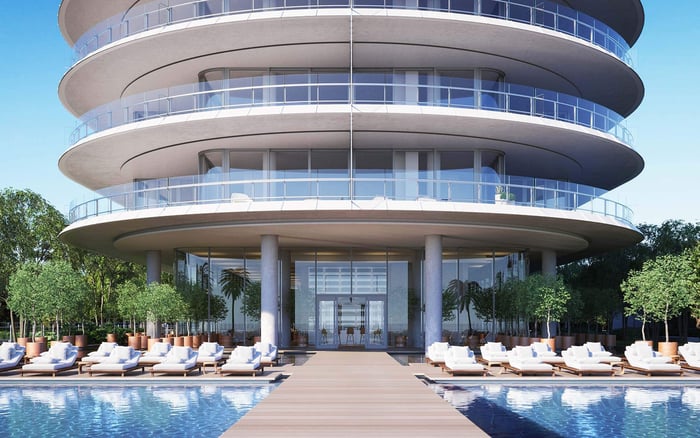
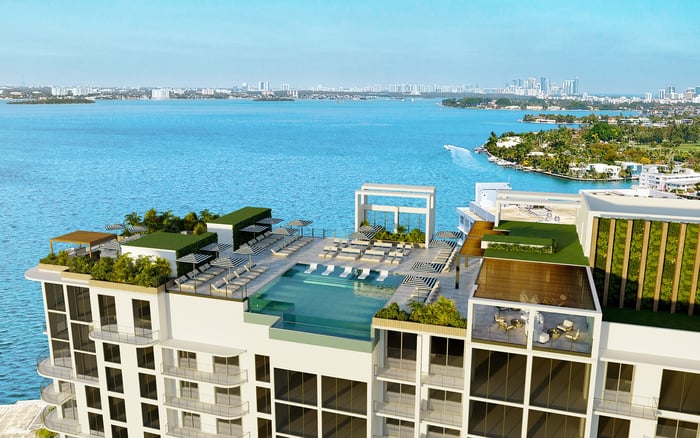
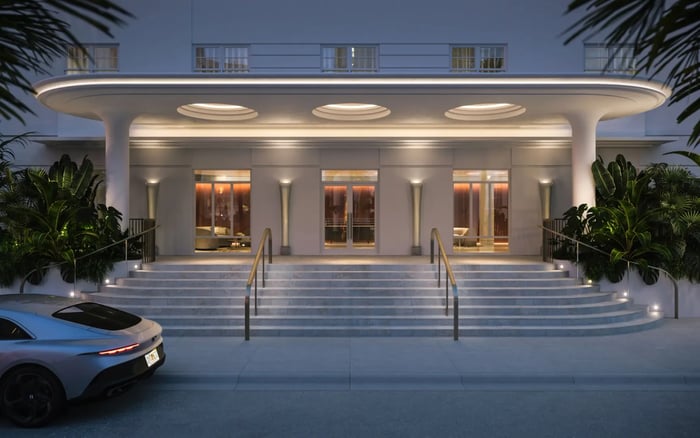
At 57 Ocean, customization depends on more than design intent. Buyers should test their proposed scope against current association documents, permitting requirements, contractor credentials, elevator logistics and terrace controls before closing.
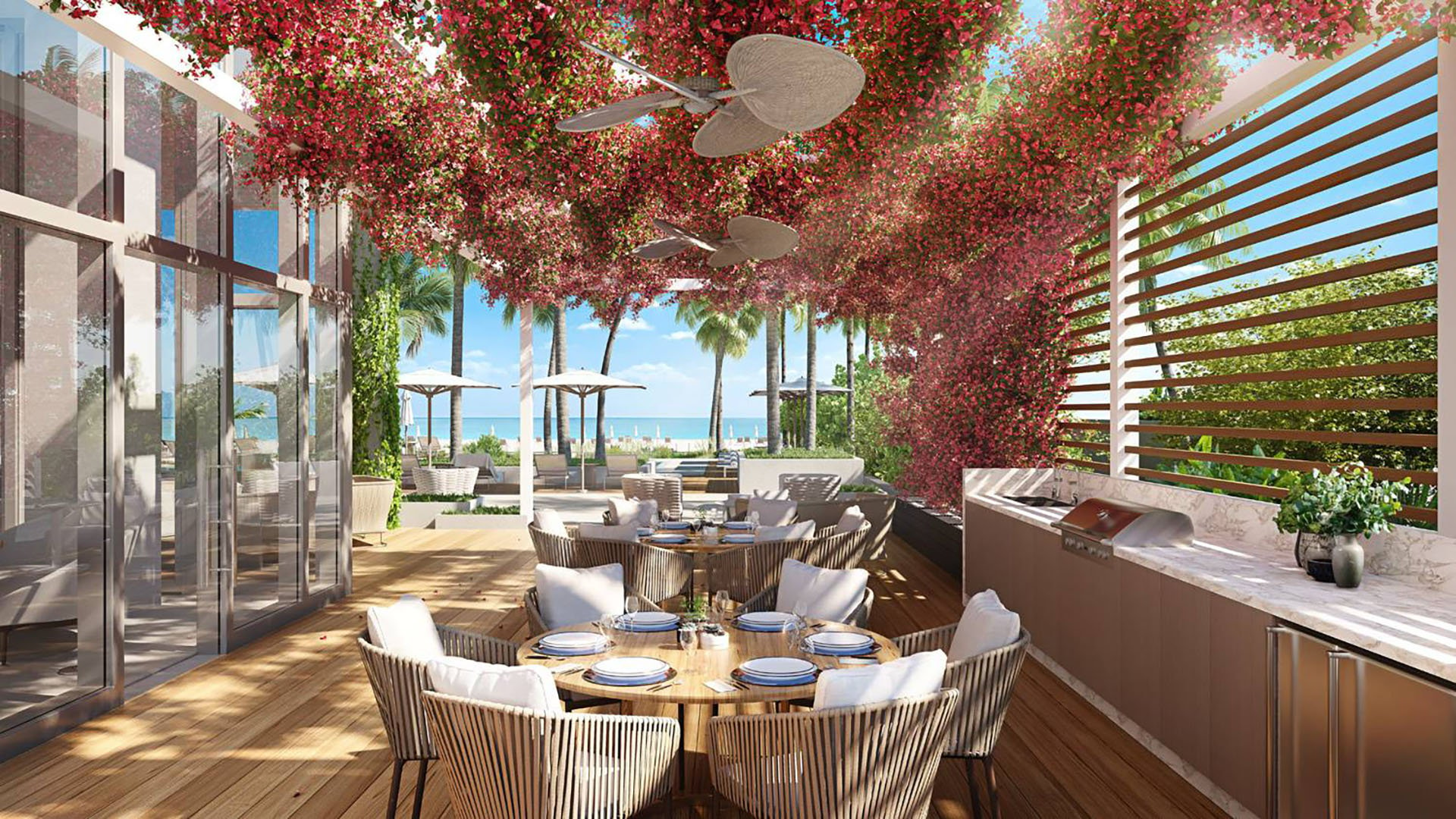
The appeal of 57 Ocean Miami Beach is clear. Completed in 2021 at 5775 Collins Avenue, the 18-story Mid-Beach condominium combines boutique scale with direct oceanfront living. The building comprises approximately 71 residences, sometimes described as 69 residences plus two penthouses. Standard homes generally offer two to four bedrooms and approximately 1,245 to 3,623 square feet.
Multiplan Real Estate Asset Management developed the building, Arquitectonica designed the architecture, and Anastassiadis Arquitetos conceived the interiors. Original specifications included Italian cabinetry, stone finishes and high-end appliances. Amenities include two oceanfront infinity pools, a wellness pavilion, spa and fitness spaces, and beachside services.
For a buyer, however, an elegant existing specification does not guarantee unrestricted customization. The practical question is not simply what an architect can draw, but what the condominium documents, association approval process, municipal permits and contractor-access procedures will allow.
In a luxury condominium, design freedom is inseparable from building logistics.
The central distinction is among the unit interior, limited common elements and common elements. Decorative finishes within a residence are generally more straightforward to address than balconies, windows, structural components, shared risers or the façade. Ownership and maintenance responsibilities must be confirmed in the declaration, not inferred from their visual proximity to the home.
This distinction matters because marketing plans and depictions remain subject to association rules and regulations. They should never be treated as advance permission for future alterations. A definitive, current contractor-access schedule or project-specific renovation manual for 57 Ocean is not publicly available. Before closing, the buyer should obtain the association’s current alteration agreement, rules, contractor packet and fee schedule directly from management.
If the declaration does not establish another procedure, Florida law generally calls for approval by 75 percent of total voting interests for a material alteration or substantial addition to common elements. That threshold does not mean every interior project requires a community vote. It does underscore why work involving the structure, façade or shared systems warrants early legal and technical review.
A finish refresh is not equivalent to a spatial reconfiguration. Replacing cabinetry, counters, fixtures or decorative surfaces may remain relatively contained. Moving a kitchen, relocating a bathroom or opening a wall can affect plumbing stacks, slab penetrations, structural conditions and shared mechanical systems. Removing or relocating a wall commonly requires a signed-and-sealed structural engineering package and permit review.
Flooring also warrants close attention. A new hard surface may require approved acoustic underlayment and documentation demonstrating compliance with the association’s sound-transmission criteria. Buyers should confirm testing standards and submittal requirements before ordering stone or wood.
The same diligence applies when comparing customization potential across Miami Beach properties such as The Ritz-Carlton Residences® Miami Beach or The Perigon Miami Beach. Each condominium has its own declaration, alteration procedures and operational constraints. A contractor’s experience in one luxury tower cannot substitute for written approval in another.
The approximately 11- to 12-foot-deep terraces at 57 Ocean are a defining feature of the residences, but their scale should not be mistaken for unlimited owner control. Terrace flooring, built-ins, grills, railings, windows and exterior doors can fall under limited-common-element or façade restrictions.
A buyer contemplating stone pavers, integrated planters, outdoor cabinetry or changes near exterior openings should classify that scope as higher risk until management provides written guidance. Questions should address permissible materials, attachment methods, waterproofing, drainage, wind considerations and responsibility for future maintenance. Even a visually modest intervention can become consequential if it affects the building envelope or uniform exterior appearance.
This principle applies throughout the coastal market, including highly designed buildings such as Eighty Seven Park Surfside. Oceanfront architecture is managed as a complete system, so exterior-facing work typically receives greater scrutiny than interior decoration.
The customary sequence begins with a defined scope and professional plans. The owner then submits those materials with contractor licensing, insurance and any other required documentation. Written association approval should precede permitting; permits should precede demolition and scheduled building access.
High-end Miami condominiums commonly require a Florida-licensed contractor, general-liability coverage, workers’ compensation and an endorsement naming the association as an additional insured. Buyers should verify the exact limits, certificate wording and renewal obligations at 57 Ocean rather than rely on customary practice.
Access controls can compress the workday. Weekday construction windows, restrictions on noisy work, freight-elevator reservations, delivery appointments, contractor badges and protected routes through common areas all affect productivity. Evening, weekend and holiday work is commonly restricted in luxury buildings, but the current 57 Ocean calendar must be confirmed. Buyers should also ask whether management caps the number of residences under renovation at one time. Even an approved project may have to wait for an elevator slot or building-wide capacity.
Association review and permitting may postpone demolition by several weeks. The preconstruction interval for a Miami renovation may run roughly four to eight weeks or longer in some cases, but that is not a promised timeline at 57 Ocean. Complexity, revisions, engineering and permit comments can extend it.
A realistic budget should account for more than construction. Ask about plan-review charges, construction deposits, refundable damage bonds, elevator fees, security staffing, protective materials and delivery coordination. Carrying costs and temporary accommodation may also matter if the residence cannot be occupied during the work.
The purchase contract’s due-diligence period should be long enough for an architect, engineer or licensed contractor to compare the intended scope with the association documents. A conceptual estimate prepared without those rules can understate both cost and duration.
Request the declaration, bylaws, current rules, alteration agreement, contractor packet, insurance requirements, work-hour calendar, elevator policy, deposit schedule and damage-bond terms. Then submit the contemplated work as specifically as possible. Broad questions invite broad answers; marked plans and a written scope make constraints easier to identify.
Prioritize written clarification for wall removal, plumbing relocation, slab penetrations, terrace work, windows, exterior doors and shared systems. Confirm whether approvals transfer after closing, whether design-review fees are refundable, and whether permits or association approvals expire. The objective is not to eliminate every variable, but to price operational friction before it becomes a post-closing surprise.
For discreet guidance on evaluating 57 Ocean and other South Florida residences, connect with MILLION.
If branded residences are on your mind — as a home or as an allocation — we would be glad to share what we are seeing, privately.
Begin a quiet conversation57 Ocean is an oceanfront condominium at 5775 Collins Avenue in the Mid-Beach area of Miami Beach.
The 18-story condominium was completed in 2021.
Published descriptions indicate approximately 71 homes, sometimes described as 69 residences plus two penthouses.
Not necessarily. Written association approval, permits, contractor documentation and scheduled building access may be required before work begins.
Luxury Miami associations commonly require Florida licensing, general-liability insurance, workers' compensation and additional-insured status. Buyers must confirm 57 Ocean's current requirements.
Terrace finishes, built-ins, railings, windows and exterior doors may be controlled as limited common elements or parts of the façade.
Generally, yes. Plumbing relocation can affect slabs, vertical stacks and shared systems, prompting engineering review and additional permits.
Some Miami condominium projects require roughly four to eight weeks or more before construction starts, but 57 Ocean's actual timing must be verified.
Request the declaration, bylaws, rules, alteration agreement, contractor packet, insurance standards, work calendar, elevator policy, fees and deposit terms.
Yes. Reservations, delivery windows, contractor badges and limits on simultaneous projects can reduce productive hours or postpone access.