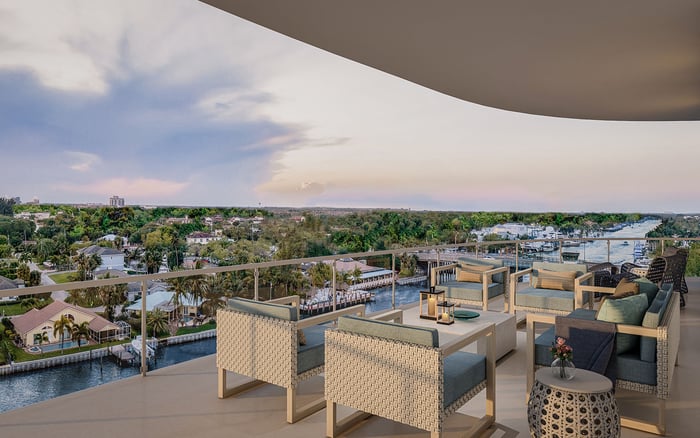
A practical framework for Palm Beach Gardens buyers and seasonal owners to connect address-level flood mapping with garage inspections, departure arrangements, and a verified temporary-housing plan.

For a seasonal owner in Palm Beach Gardens, lock-and-leave confidence requires more than a well-managed arrival. The more revealing question is what happens when the residence is empty, the household is elsewhere, and someone must make timely decisions about vehicles, equipment, access, and accommodation. A useful audit connects those decisions before departure becomes urgent.
Begin with the exact property address. Check an older purchase file or neighborhood description against current flood mapping rather than treating it as a settled answer.
Record the mapped designation, the date checked, and the address used. Keep that record alongside property documents, but do not mistake it for a garage inspection or a prediction of street conditions. Mapping is the starting point; the operating plan must reflect the particular residence.
For buyers considering The Ritz-Carlton Residences® Palm Beach Gardens, the same discipline belongs in due diligence: request property-specific documentation and written operating procedures. Branding is no substitute for either.
Check flood mapping and evacuation boundaries independently and maintain separate entries in the household’s emergency file. Neither replaces current emergency instructions.
The audit should identify who monitors official instructions when the owner is away, who can contact anyone occupying the residence, and who has authority to arrange departure. Designate a backup contact rather than leaving every decision to one person who may be unavailable.
Do not turn a map category into a promise of uninterrupted access. A stronger working document records what is known, what still requires property-level review, and which actions depend on current conditions. That distinction is especially important when comparing residences across the broader Palm Beach area.
The garage deserves its own inspection brief. Ask a qualified professional to review available elevation documentation and explain how the garage floor, entrances, and installed equipment relate to the property’s mapped flood information. Do not infer equipment exposure from the address lookup alone.
Prepare a photographed inventory of equipment actually present. Depending on the property, that may include charging equipment, door operators, electrical components, pumps, or storage containing valuable belongings. Record each item’s location, service contact, access permissions, and any documented protective provisions. The inventory should reflect the residence, not presume that every property contains these systems.
For each item, ask three practical questions: What documentation describes its exposure? Who is responsible for it? What action is authorized before an emergency? Refer any proposed relocation, electrical work, or flood-barrier installation to qualified professionals and the relevant property authority. A barrier should never be presumed suitable merely because it appears to fit an opening.
If the search extends to Alba West Palm Beach, carry the same equipment-and-responsibility checklist into the comparison. The goal is comparable answers, not an unsupported ranking of buildings by resilience.
A vehicle plan is incomplete until someone can execute it. Establish who may retrieve each vehicle, where keys and permissions are held, and whether access depends on staff, gates, powered doors, or another system that needs clarification. Request written explanations of relevant emergency procedures rather than assuming normal operations will continue.
Trace the intended departure from the parking space to the designated evacuation route. Identify questions about internal access and alternative exits for the property manager to resolve. This is preparation, not proof that any route will remain usable during a particular event.
Use designated evacuation routes rather than potentially unsafe shortcuts. A familiar local road should not become the default simply because it seems quicker. The departure file should prioritize current instructions and explicitly rule out improvising a route through unsafe conditions.
Assign responsibilities in advance, but make clear that asset protection must not delay an instructed evacuation. Personal safety takes precedence over any vehicle or equipment checklist.
Plan temporary housing separately; do not treat it as an assumption attached to the evacuation route. Identify a primary option and a backup, then verify each directly when making arrangements. Treat neither as available until its operator confirms the relevant stay.
For each option, confirm the expected arrival window, occupancy needs, accessibility requirements, pet arrangements, vehicle parking, payment terms, cancellation conditions, and the procedure for a delayed arrival. These are planning questions, not promises about any hotel or rental. Assess the destination against current evacuation guidance rather than choosing solely for familiarity or finish level.
When weighing a residence such as Forté on Flagler West Palm Beach against a Gardens address, use the same temporary-housing worksheet. A purchase comparison should distinguish the appeal of the residence from the household’s independently verified relocation arrangements.
Keep reservation details and essential contacts accessible to the people who may travel. Identify who will reconfirm the backup if the primary option becomes unavailable.
If a shelter is part of the household’s contingency plan, verify its current activation, location, and arrival instructions before traveling. Do not treat an older listing as confirmation that a facility is open or has available space.
Ask how any accessibility or pet needs should be accommodated, and record the current instructions in the household file. Verify local emergency-information contact details as part of the audit rather than relying on an unchecked number in an older document.
The completed audit should be concise enough for an authorized representative to use: current mapping records, an equipment inventory, access procedures, assigned contacts, departure responsibilities, and confirmed lodging details. Mark unresolved items clearly rather than obscuring them with general assurances.
Before leaving, review the document with whoever may act on the owner’s behalf. The strongest lock-and-leave arrangement is not a claim that disruption cannot occur. It is a clear assignment of decision-making responsibilities, supported by property-specific information and a plan that can adapt to official instructions.
For a considered approach to your next South Florida residence, explore MILLION.
If branded residences are on your mind — as a home or as an allocation — we would be glad to share what we are seeing, privately.
Begin a quiet conversationStart with an address-level flood-map check and record the designation, property address, and date checked. Then connect that information to property-specific documents and operating procedures.
Check the file against current flood mapping rather than assuming it remains sufficient. Record the date of the new check and flag unresolved questions.
Yes; keep separate records for each and follow current emergency instructions. Do not use either record as a promise of uninterrupted access.
Do not infer equipment exposure from the address lookup alone. Request property-specific elevation documentation and qualified review of the garage, entrances, and installed equipment.
Photograph equipment actually present and record its location, service contact, access permissions, and documented protective provisions.
Do not assume a barrier is suitable from mapping alone. Have qualified professionals and the relevant property authority review any proposed installation.
Plan around designated evacuation routes and current emergency instructions, not potentially unsafe shortcuts. Advance planning does not establish that a route will remain accessible.
Verify availability, arrival arrangements, occupancy, accessibility, pets, parking, payment, and cancellation terms directly. Maintain a primary option and a separately checked backup.
Verify current activation, location, and arrival instructions rather than relying on an older listing. Ask how any accessibility or pet needs should be accommodated.
Include the authorized representative, a backup contact, relevant service contacts, and lodging contacts. Verify local emergency-information contact details before adding them.