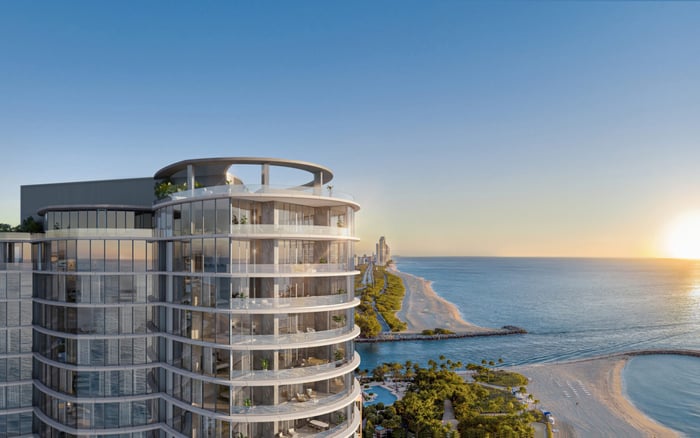
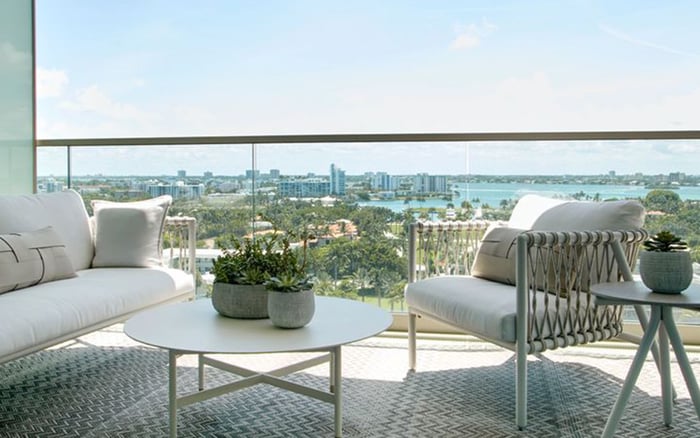
A discreet second home needs more than attentive service. This Bal Harbour audit outlines what buyers and owners should verify about emergency access, water-leak response, mold credentials, restoration oversight, insurance, and communication while away.

The real test of a lock-and-leave residence is what happens when its owner is elsewhere. In Bal Harbour, a considered purchase should look beyond the arrival experience to a less visible question: who takes control when water appears inside an unattended home?
For a buyer considering Oceana Bal Harbour, the exercise is not to assume that an address establishes emergency readiness. It is to request a documented sequence for discovery, access, mitigation, owner notification, and restoration. These are audit recommendations, not statements about any named property's procedures.
A lock-and-leave arrangement should be demonstrable, not merely reassuring. This review translates that principle into specific requests an owner, adviser, or prospective buyer can put to management.
Start with a hypothetical after-hours leak. Ask management to walk through who receives the first call, who attends the residence, who can arrange source control, and who authorizes a restoration contractor. Request a primary contact and a backup, with a clear escalation route if neither acknowledges the incident.
Do not settle for a general assurance of round-the-clock service. Ask for the building's stated response expectations, distinguishing acknowledgment, on-site assessment, and contractor arrival. Treat these as separate commitments to verify, not interchangeable promises.
Access deserves its own written arrangement. Confirm how keys or credentials are held, what authorization management requires, and how entry is recorded. Identify a local representative who can make decisions when the owner is unreachable, with spending authority and limits established in advance.
Seasonal absence should not be equated with legal abandonment. Statutory provisions concerning abandoned units are no substitute for an agreed access plan for a regularly maintained second home. Have counsel confirm current access rules where necessary.
Florida law generally places common-element maintenance with the association, subject to exceptions where the declaration assigns limited-common-element maintenance to an owner. That starting point does not resolve every leak or every resulting expense.
A roof, shared pipe, balcony component, appliance, and unit-only system should not be treated as one category. Ask for a responsibility map grounded in the declaration: which components the association maintains, which the owner maintains, and where interpretation requires legal advice.
When evaluating Rivage Bal Harbour, apply the same distinction between governing obligations and operational arrangements. Request the applicable documents and establish which procedures are adopted, proposed, or still require confirmation. An anticipated service model should not be treated as a settled protocol.
Keep source repair, damage restoration, and insurance allocation separate. Responsibility for maintaining a shared component does not automatically make the association responsible for every damaged finish, improvement, possession, or deductible. The practical audit question is who can initiate urgent work while responsibility is being clarified.
An emergency telephone call is useful, but it should not be the entire record. Agree on a notification chain covering the owner, a backup contact, and any authorized property representative. Specify preferred channels and what happens when the first message receives no acknowledgment.
Request that the initial written update include:
When and where moisture was discovered, with photographs when available.
The suspected source, clearly distinguished from a confirmed cause.
Actions taken, personnel attending, and access already exercised.
Decisions requiring approval and the timing of the next update.
These are recommended communication standards, not universal statutory requirements. The objective is continuity: anyone receiving the second update should be able to understand the first response without reconstructing a series of calls.
Owners discovering moisture or suspected mold should also notify the association promptly in writing, identifying the location, visible conditions, and when they first noticed them. Email with a read receipt or certified mail can preserve a record beyond a telephone report alone. Formal owner-inquiry procedures are separate from emergency response and should never be mistaken for a leak-response timetable.
Ask what triggers professional assessment, who commissions it, and who determines the remediation scope. Florida regulates mold assessment and remediation under its professional licensing framework. Confirm the appropriate credentials for the proposed work; a general restoration designation does not answer the licensing question.
Do not assume one universal statewide exposure limit or mandatory remediation protocol governs every residential event. Request a written, event-specific scope from the appropriate professionals, including how the moisture source will be addressed and what evidence will support completion.
For a Surfside comparison such as Fendi Château Residences Surfside, ask the same questions rather than inferring procedures from the property's positioning. Establish how assessment, remediation, and finish restoration are coordinated, and who communicates any changes to the owner.
Before cleanup or repairs alter the scene, preserve photographs, video, and contemporaneous notes where safely possible. Documentation should support the necessary response, not delay it. An attractive repaired surface should not be the sole evidence requested before closing an incident.
A contractor's advertised coverage of Bal Harbour does not establish that a particular condominium has approved or retained that firm. Ask management to distinguish a standing contractual relationship from a preferred contact or a company called only when needed.
Request appropriate licensing, insurance documentation, after-hours contact details, and a backup arrangement if the first vendor is unavailable. Establish who engages the contractor, who approves scope changes, and who receives invoices. These are audit requests, not assertions that every association must maintain identical vendor arrangements.
For residences with custom finishes, ask who coordinates mitigation with subsequent reconstruction and how proposed substitutions or alterations reach the owner for approval. Request moisture logs, work photographs, and a written completion package appropriate to the event. Verify both contractor availability and authority to proceed before departure.
Association insurance policies are generally inspectable official records for unit owners, subject to statutory requirements. Request the relevant policies and review coverage questions with qualified advisers. Prospective buyers should arrange appropriate document access rather than assume owner inspection rights already apply to them.
After a loss, promptly contact the owner's HO-6 insurer about contents and owner-responsibility items. Do not assume an association claim encompasses the entire residence. Keep initial notices, correspondence, photographs, invoices, and repair documentation together.
Before the next departure, resolve unanswered access questions and confirm the notification chain. If a reported mold condition remains unresolved, escalate in writing, preserve the record, and consider advice from a Florida condominium attorney. The desired outcome is not a promise that nothing will happen. It is a clear plan for who acts, who decides, and how completion is documented.
For a considered approach to your next Bal Harbour residence, explore MILLION.
If branded residences are on your mind — as a home or as an allocation — we would be glad to share what we are seeing, privately.
Begin a quiet conversationEstablish who receives an emergency call, who can enter the residence, and who can authorize urgent work. Confirm backup contacts and escalation arrangements in writing.
No. Responsibility depends on the affected component and governing documents, with common-element maintenance generally assigned to the association subject to applicable exceptions.
No. Maintenance responsibility does not automatically determine payment for damaged finishes, improvements, personal possessions, or deductibles.
Seasonal vacancy should not be equated with legal abandonment. Establish a written access arrangement and obtain advice on current legal requirements where necessary.
Notify the association promptly in writing with the location, visible conditions, and when they were first noticed. Preserve a notification record alongside any emergency telephone call.
Confirm the appropriate Florida professional licensing for the assessment or remediation work proposed. A general restoration description alone does not resolve that question.
Do not assume a single statewide exposure limit or mandatory remediation protocol applies to every event. Request an event-specific written scope and completion criteria from the appropriate professionals.
No. Advertised service coverage does not establish a contract or approval by a particular association; verify the relationship, credentials, and availability directly.
Yes, promptly contact the owner's insurer about contents and owner-responsibility items. An association claim should not be assumed to cover the entire loss.
Escalate the condition in writing and retain photographs, correspondence, invoices, and repair documentation. Consider advice from a Florida condominium attorney.