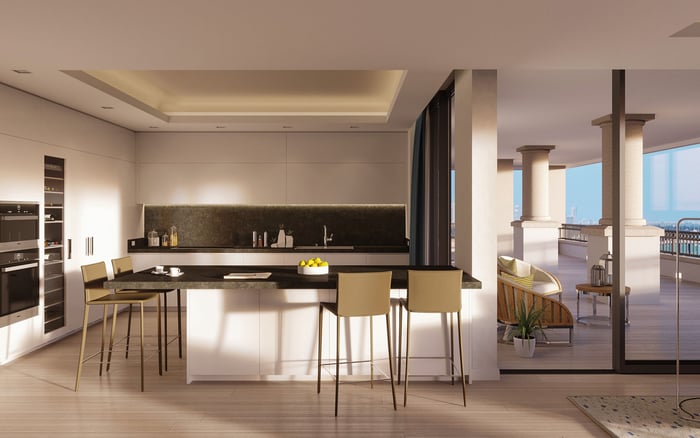
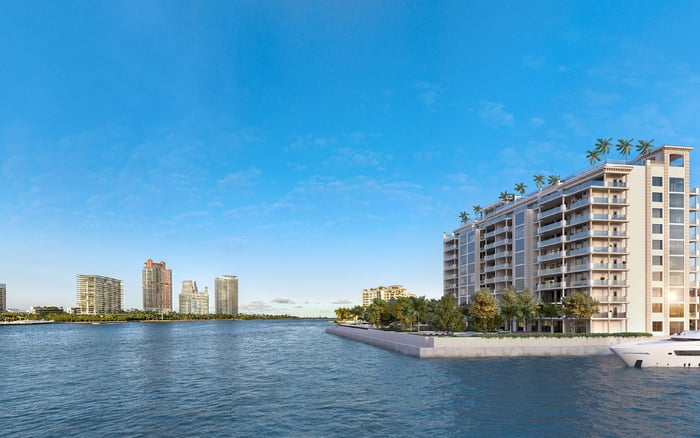
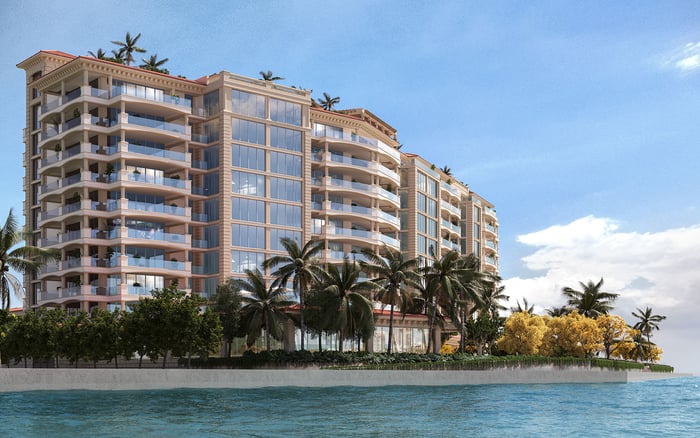
A disciplined Fisher Island acquisition begins with comparable closed sales, genuinely scarce layouts and verified privacy, then tests the purchase against documented carrying costs and a patient exit.
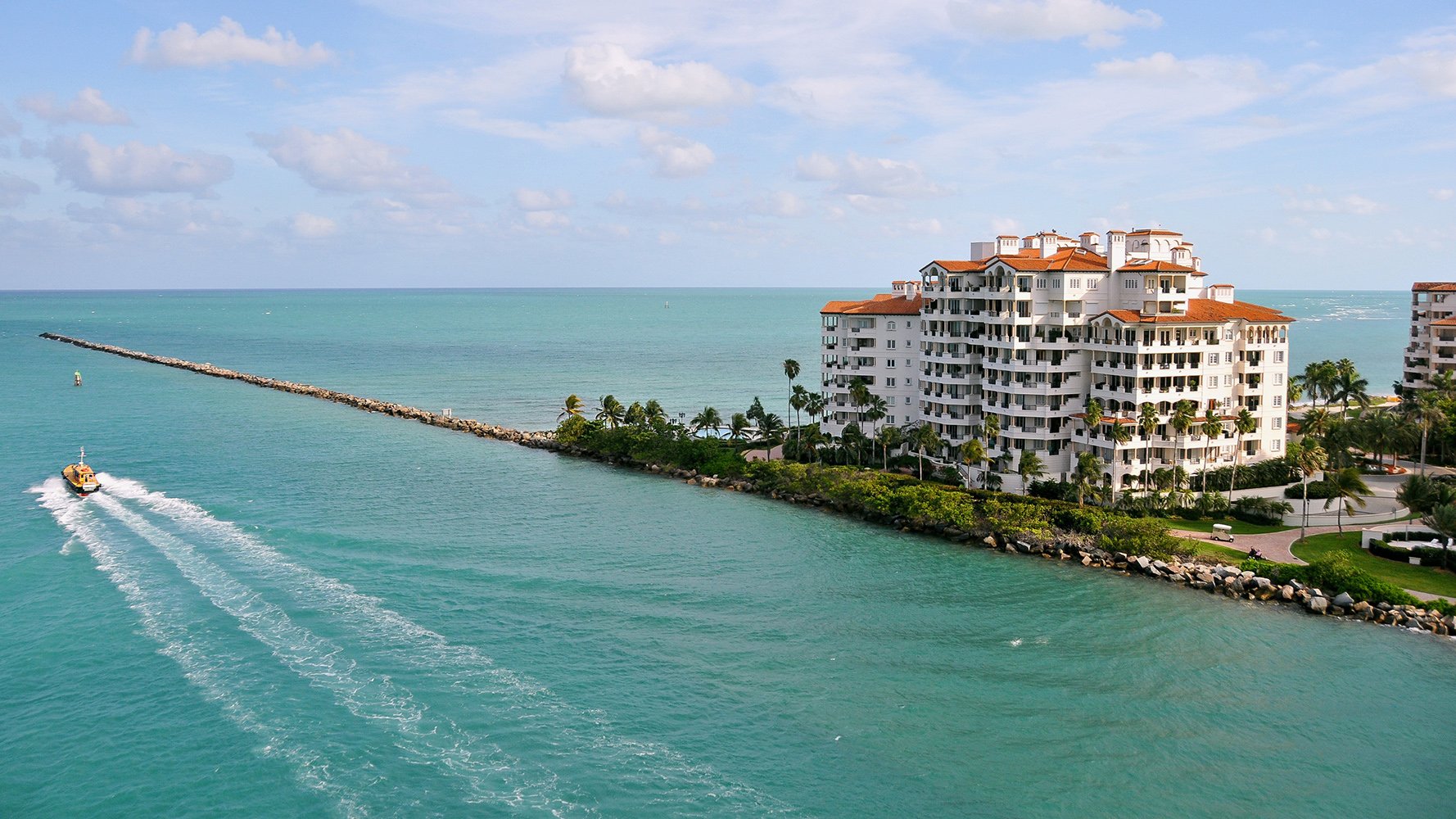
For a family office, a Fisher Island purchase should satisfy two distinct mandates: deliver an exceptional private residence and preserve a defensible resale proposition. The first is personal. The second demands discipline around comparable layouts, acquisition basis and ownership costs. Island exclusivity cannot replace evidence that a particular apartment will remain desirable when its owner eventually sells.
An acquisition brief might target roughly 4,000-5,000 usable interior square feet, four or more bedrooms, protected water views, effective bedroom separation and private or semi-private arrival. These are proposed selection criteria, not established features of any residence. The task is to identify apartments that meet them, then determine what their differences are worth.
In October 2026, 39 condominiums were for sale across 15 tracked buildings, against 20 sales over the preceding 12 months. That relationship implies 23.4 months of inventory. It measures island-wide supply relative to sales pace; it does not predict how long a particular residence will take to sell.
Median asking price in October 2026 was $7.8 million, with median asking price per square foot at $2,824. Both reflect seller expectations, not completed transactions. Q1 2026 pricing was approximately $2,391 per square foot, versus $2,004 in Q1 2025, with roughly 19 months of inventory. These different dates and measures should remain separate rather than merge into a single valuation benchmark.
For an investment committee, the implication is straightforward: use broad inventory to frame liquidity risk, then closely matched closed sales to establish an offer range. Reconcile conflicting inventory and transaction counts before approval. None of these dated figures should be treated as live availability.
Oceanside contains 134 residences across six Atlantic-facing buildings, developed in phases between 1989 and 2002. Its approximately 2,420-7,696-square-foot range creates a broad potential comparison set. That does not make every residence a substitute for a four-bedroom apartment with a particular exposure, circulation pattern or condition.
By contrast, Palazzo della Luna contains a reported 50 residences. Completed in 2019, the 10-story condominium occupies an approximately eight-acre waterfront parcel at 6800 Fisher Island Drive. Residence sizes range from approximately 3,724-10,194 square feet, although individual listing measurements differ.
The smaller residence count narrows the initial comparison set; it does not establish an automatic scarcity premium. Count the apartments that genuinely compete with the target: similar usable area, bedroom arrangement, floor, outlook and renovation quality. A rare configuration can matter more than a rare building name.
A broader island search can also include Palazzo del Sol, subject to the same unit-specific evidence. Its place on a shortlist should prompt comparison, not an assumption of equivalent layouts, privacy or pricing.
Palazzo della Luna illustrates the breadth of valuation dispersion. Unit 6823, with four bedrooms, 4.5 bathrooms and 4,904 square feet, reportedly sold for $15 million on February 16, 2026. That equates to approximately $3,059 per square foot, roughly 6% below its $15.95 million asking price after 51 days on market.
Unit 6811, with four bedrooms, 4.5 bathrooms and 4,231 square feet, reportedly sold for $17 million on September 25, 2026, or approximately $4,018 per square foot. Its sale represented approximately 79% of the $21.5 million listed price. The difference between these transactions is significant, but the evidence does not establish which physical attributes caused it.
Asking prices require a separate column. Three-bedroom Unit 6842 was listed at $12.7 million for 3,620 square feet, approximately $3,508 per square foot. Those measurements also show why buyers should reconcile square-footage conventions rather than assume building-wide ranges and individual listings are interchangeable.
Elsewhere, a roughly 6,300-square-foot Bayview residence reportedly sold for $11.35 million, approximately $1,802 per square foot. It offers a lower acquisition benchmark, not a direct comparable without adjustments for condition, exposure, floor and layout. Price dispersion demands discrimination; it does not prove that newer construction always deserves a premium.
Privacy should be demonstrated in the apartment's daily operating pattern. Trace the owner's arrival, guests' arrival, staff access and delivery route. Confirm elevator arrangements, parking rights and the points where visitors encounter residential circulation. These features have not been established for any specific unit.
Then walk the floor plan as a household would use it. Can guests occupy bedrooms without crossing the family's private rooms? Can staff work without interrupting entertaining? Does the advertised area translate into usable rooms, or does circulation absorb a disproportionate share? Verify protected views rather than treating a waterfront address as sufficient assurance.
When considering The Residences at Six Fisher Island, apply the same inspection brief rather than assuming privacy from the island setting. The purchase decision should reward demonstrated functionality, not merely an appealing description.
Operating costs belong in the acquisition decision, not in a post-closing administrative file. Obtain property-specific documentation for association dues, club charges, taxes, insurance, marina fees where applicable and assessments. No standardized cost schedule supports an island-wide estimate.
Compare annual carrying cost per usable interior square foot. Separately, calculate all-in acquisition basis per usable interior square foot, including closing costs and immediate renovation. Keep the measures distinct: an attractive purchase price can coexist with an expensive ownership structure.
Review association reserves, planned capital projects, insurance deductibles, assessments and structural work. Counsel should examine ownership, rental, renovation and transfer restrictions. The analysis should distinguish recurring expenses from one-time obligations and identify who bears each liability at closing. A building's age alone cannot establish its future capital burden.
Before committing, test unchanged real-dollar pricing with a 12-24-month marketing period, a 10-15% pricing decline and a premium case supported only by closely comparable closed sales. These are proposed stress scenarios, not forecasts. Include carrying costs during marketing and estimated disposition expenses when evaluating net proceeds.
Approval should rest on three findings: the layout has identifiable scarcity, privacy works in daily use, and documented ownership costs fit the family's budget. Any premium should withstand comparison with actual transactions, while the family remains comfortable holding through a slower exit. That is the distinction between purchasing a remarkable home and relying on its reputation to protect capital.
For a discreet conversation about your Fisher Island acquisition brief, connect with MILLION.
If branded residences are on your mind — as a home or as an allocation — we would be glad to share what we are seeing, privately.
Begin a quiet conversationIt recorded 39 condos for sale across 15 tracked buildings against 20 sales in the preceding 12 months, implying 23.4 months of inventory. That is a dated island-wide liquidity indicator, not a unit-specific selling timeline.
No. It is the median asking price per square foot in the supplied October 2026 snapshot and describes listing expectations rather than completed transactions.
A proposed brief targets roughly 4,000–5,000 usable interior square feet, four or more bedrooms, protected water views and effective bedroom separation. Private or semi-private arrival should be verified rather than assumed.
No. Its reported 50 residences compare with Oceanside's 134, but meaningful scarcity depends on the number of apartments with comparable layouts, exposures, condition and usable area.
It reportedly sold for $15 million on February 16, 2026, approximately $3,059 per square foot. The four-bedroom residence traded roughly 6% below its $15.95 million asking price.
Its reported $17 million sale on September 25, 2026 represented approximately 79% of its $21.5 million listed price. It demonstrates substantial negotiation in one transaction, not a universal discount expectation.
Inspect owner, guest, staff and delivery routes, elevator arrival, parking rights and visitor exposure. The supplied evidence does not confirm these features for any specific apartment.
Obtain property-specific dues, club charges, taxes, insurance, applicable marina fees and assessments. Compare annual carrying cost and all-in acquisition basis separately, using verified usable interior area.
Review reserves, capital projects, insurance deductibles, assessments and structural work. Also examine ownership, rental, renovation and transfer restrictions with counsel.
Test unchanged real-dollar pricing with a 12–24-month marketing period, a 10–15% pricing decline and a premium case justified by closely comparable closed sales. These are stress scenarios, not forecasts.