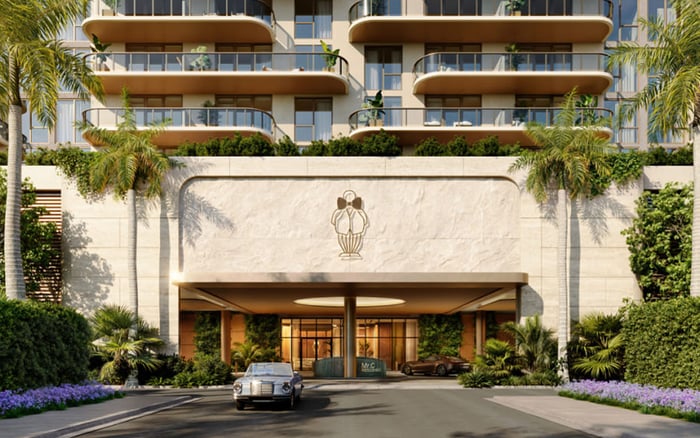
A discreet purchase framework for Edgewater families: verify building security, define the private detail’s role, protect household information, and resolve full-time coverage before committing.

For a family office considering an Edgewater residence, full-time security should be a purchase criterion, not a staffing decision deferred until after closing. The objective is a home that supports discreet protection without turning the lobby into a second checkpoint or making household routines common knowledge.
Building access control and personal protection should complement one another, not serve as substitutes. A proposed operating plan should leave common-area admission and building rules with the authorized building team, while assigning household-specific coordination to the private detail. Any arrangement remains subject to management approval and the property’s actual rules.
The purchase question is precise: can this residence accommodate the family’s protection needs without parallel authority, unnecessary disclosure, or friction in daily life?
Begin with the advertised baseline, then request written clarification of staffing, responsibilities, and procedures. Ask whether controlled property access, concierge services, security staffing, and keyless entry are provided, and on what schedule. Service descriptions alone do not establish how credentials are issued, which areas are restricted, or how exceptions are handled.
For a buyer considering EDITION Edgewater, any advertised concierge, valet, or security services should be starting points for diligence, not confirmation of a dedicated household protection function.
Ask management to distinguish hospitality from security responsibilities. Who approves visitors, verifies contractors, enforces delivery rules, and handles incidents? Which functions operate continuously, and which require a supervisor’s decision? Request the applicable procedures; a service label is not an operating specification.
Evaluate privacy along the entire route from vehicle to residence. Review garage entry, valet handoff, reception, elevator access, the residential threshold, and service circulation wherever applicable. The question is not simply whether an elevator is private, but how people are authorized to reach it.
If a candidate residence offers a private elevator or a particular parking arrangement, examine how it would affect daily arrivals. An amenity description alone does not resolve the practical handoff between a driver, a private officer, and building personnel.
For a buyer considering Aria Reserve Miami, the same route-based review should form part of the purchase brief, without assuming any particular security configuration. Request an authorized walkthrough that considers resident, guest, delivery, and household-worker journeys separately.
Where construction prevents a physical review, examine the proposed circulation with the sales and management teams and record what still requires confirmation.
Prepare a responsibility matrix before commissioning a private detail. For every recurring task, identify a lead, a supporting contact, and an escalation path. Treat this as a proposed coordination tool, not an assertion about any building’s policies.
Visitor verification, contractor checks, and move-in or delivery enforcement may already fall within concierge-security functions. Establish the building’s scope before paying a private provider to duplicate those tasks. The family’s team should not create an unofficial admission process or promise exceptions to association rules.
Instead, propose a household role centered on family coordination, approved escorts, and liaison with authorized building staff. Define where an officer may wait, how shift handoffs occur, and which common-area activities require permission. Ownership of a residence should never be taken as permission for a visible security presence in the lobby.
For incidents, request a shared escalation protocol that respects building procedures and emergency responders. Avoid competing instructions when clear authority matters most.
A discreet plan should specify what information each team needs, rather than distribute the household’s full schedule by default. Consider sharing only the visitor identity, authorization window, and contact needed for a particular arrival, subject to the building’s legitimate access requirements.
Keep proposed private-detail records separate from routine building records. Family itineraries, sensitive household matters, and internal protection assessments should not automatically become concierge notes. Ask who can view visitor records, how long they are retained, and how corrections or deletion requests are handled under applicable policies.
If Villa Miami is on the shortlist, make information governance part of the management discussion rather than inferring privacy from the residential offering. The same diligence belongs in every candidate’s file.
The goal is controlled disclosure, not anonymity from authorized personnel. Required identification and building safety procedures should remain intact.
Mobile and temporary digital credentials are capabilities to investigate, not features to assume across Edgewater. Ask whether the system supports access to residences, lobbies, amenities, or parking, and whether temporary permissions are available for guests and household workers.
Ask who can authorize access and how credentials are withdrawn when an assignment ends. Review procedures for lost devices, expired permissions, and access outside an approved window. Confirm whether different roles can receive appropriately limited permissions.
Do not establish a parallel credential system for common areas. A private detail should work within approved access arrangements, with a clear process for staffing changes. Convenience is valuable only when accountability remains clear to both teams.
Advertised 24-hour building security does not establish a private detail’s staffing needs. Before selecting a provider, define what full-time means for the household: continuous on-site presence, accompaniment during travel, or another expressly agreed scope.
Request a written coverage proposal addressing shifts, breaks, absences, relief arrangements, supervision, and handoffs. Obtain pricing for that scope rather than extrapolating from the building’s staffing. Headcount and cost require a provider-specific assessment; neither can be established from amenity descriptions.
Ask management and the appropriate advisers to confirm association permissions, insurance requirements, credential eligibility, parking, and any permitted waiting or work location. If the plan depends on a concession, secure written clarity before relying on it in the purchase decision.
For a planned residence, distinguish advertised services from confirmed operating arrangements. Ask which decisions are documented, who will resolve open questions, and when the family can review the intended procedures. For an operating building, request current rules and an authorized observation of relevant workflows.
Before committing, assemble a concise decision file: the building’s confirmed scope, the proposed private-detail mandate, the information-sharing protocol, the coverage proposal, and unresolved permissions. Discuss with counsel how essential conditions should be addressed in the transaction.
The strongest purchase plan is not the one with the most overlapping personnel. It is the one in which the family, management, and private provider understand their respective roles-and everyday arrivals remain calm, authorized, and discreet.
For a considered Edgewater residence search shaped around privacy and daily life, connect with MILLION.
If branded residences are on your mind — as a home or as an allocation — we would be glad to share what we are seeing, privately.
Begin a quiet conversationIt does not establish household-specific protection or staffing. Confirm the building’s responsibilities before defining the private provider’s scope.
Ask about controlled access, concierge and security staffing, keyless entry, and service hours. Confirm credential procedures and responsibilities rather than relying on amenity descriptions.
Request written clarification of any advertised concierge, valet, or security services. Establish the building’s responsibilities before defining a household protection role.
No. Buyers should also examine authorization procedures, garage arrivals, guest screening, and service circulation.
Start with visitor approval, contractor verification, deliveries, move-ins, and incident handling. Assign a lead and escalation contact for each task without creating parallel authority.
A proposed privacy plan should limit routine sharing to information needed for authorized access. Keep sensitive private-detail records separate, while respecting legitimate building requirements.
They should not be assumed available. Ask whether the installed system supports temporary permissions and how access is authorized, limited, and withdrawn.
Headcount requires a provider-specific assessment of the agreed scope. Request a proposal covering shifts, relief, absences, supervision, and handoffs.
Do not presume that ownership permits this arrangement. Confirm allowed locations, credentials, parking, and relevant association permissions with management.
Clarify the building’s scope, private-detail responsibilities, information sharing, staffing proposal, and required permissions. Discuss essential unresolved conditions with counsel.