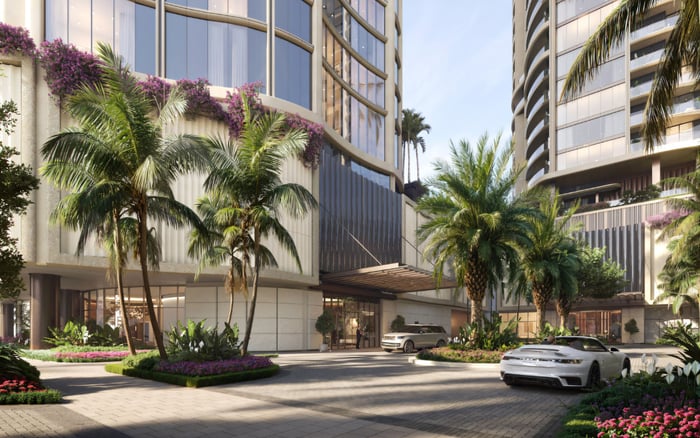
A family-office framework for separating advertised hospitality services from documented access rights, maintenance schedules, seasonal booking rules, and residence-care obligations at The Ritz-Carlton Residences® West Palm Beach.

For a family office, a seasonal residence succeeds when it is ready precisely when the household needs it. Design and hospitality matter, but so do quieter questions: whether maintenance interrupts a visit, whether guests can be accommodated, and who may enter the home while its owners are away.
At The Ritz-Carlton Residences® West Palm Beach, the diligence file should distinguish advertised services from documented operating rights. The project is identified at 1745 N. Flagler Drive, West Palm Beach, FL 33407, with 138 two- to four-bedroom residences of approximately 1,532 to 3,331 square feet.
The central calendar question remains open: this review identifies no disclosed recurring annual maintenance blackout, residence-specific peak-season reservation calendar, or owner booking windows. That does not mean restrictions or closures cannot occur. It is a reason to obtain written terms before fixing family travel plans.
The advertised operating structure includes an on-site manager, chief engineer, and engineering staff. Common-area housekeeping and maintenance are listed as inclusive services. These provisions describe operational support, not a promise of uninterrupted access to every building system or amenity.
This review identifies no detailed annual preventive-maintenance calendar, planned shutdown schedule, or unit-entry protocol. A family office should request each separately, distinguishing work inside the residence from work affecting shared facilities and building access.
Ask for planned elevator, HVAC, pool, and life-safety work schedules, along with anticipated duration and resident-notification procedures. Clarify which activities might require entry into a privately owned residence and what notice applies. Where dates remain provisional, request the process for communicating changes rather than treating a preliminary schedule as fixed.
The practical question is not simply whether a building has an annual blackout. It is whether a particular stay could coincide with reduced access, intrusive work, or a service interruption-and how that conflict would be handled.
Concierge services include arranging restaurant, hotel, spa, salon, golf, entertainment, limousine, airline, private-air, and yacht-charter reservations. The advertised offering also includes 24/7 concierge, valet parking, and loss-prevention coverage. These are meaningful components of the intended hospitality experience.
Reservation assistance, however, does not establish guaranteed availability during holidays, winter weekends, or major Palm Beach events. This review establishes no owner priority, advance booking rights, or guaranteed inventory for hotel rooms, guest suites, dining, spa, golf, transportation, or private events.
For each anticipated request, ask whether the concierge is arranging access to independently available inventory or administering a documented owner entitlement. Then confirm booking windows, guest eligibility, cancellation terms, deposits, and any holiday restrictions. Record a successful reservation as a confirmed arrangement; do not infer it from the existence of a concierge desk.
This distinction protects the household calendar without diminishing the value of assistance: coordination and guaranteed access are different deliverables.
Vacant-home care is listed as an à-la-carte service. Other advertised residence-level offerings include housekeeping, grocery shopping, personal chefs, personal training, plant care, event planning, arrival preparation, laundry, dry cleaning, and in-residence dining or catering.
For seasonal ownership, translate that menu into a written scope of work. Request inspection frequency, a record of completed visits, emergency-access authority, and escalation contacts. Define who may approve repairs, what spending requires owner authorization, and how completion is documented. None of these procedures should be assumed from the phrase vacant-home care alone.
À-La-carte maintenance offerings include HVAC-filter changes, minor electrical and plumbing work, touch-up painting, appliance cleaning, and interior cleaning. Availability alone does not establish timing, pricing, or response commitments.
A household also considering Alba West Palm Beach can apply the same diligence questions without presuming identical service arrangements. The useful comparison is the written responsibility matrix: who notices an issue, who authorizes action, and who confirms resolution before arrival.
A family office should maintain three coordinated calendars rather than one undifferentiated reservation diary. The first records household occupancy and guest plans. The second tracks building maintenance, access limitations, and residence-entry appointments. The third records requested services and confirmed external reservations.
For every entry, distinguish a preference from a request and a request from a confirmation. Include the responsible contact, cancellation deadline, and any unresolved dependency. These are recommended administrative controls, not established project procedures.
If rental participation is contemplated, add a separate layer showing when the owner can reserve personal use and when inventory becomes committed to others. This review identifies no disclosed rental-program owner-use restrictions, revenue splits, minimum rental periods, furnishing requirements, or reservation-priority rules. Do not underwrite availability or income around assumed terms.
The same framework can guide a comparison with Forté on Flagler West Palm Beach. Apply consistent questions to each property, but draw conclusions only from its own documents and written confirmations.
Advertised services are divided into inclusive and à-la-carte offerings, but this review identifies no associated published fee schedule. Nor does it identify disclosed projected monthly assessments, reserve-funding assumptions, insurance allocations, or special-assessment exposure.
Keep those categories separate in the ownership budget. Common-area maintenance should not be treated as a blanket allowance for work inside a residence, and an advertised service should not be presumed included simply because it is available.
Request the operating budget, assessment information, reserve assumptions, insurance allocations, and service-fee schedule. For residence care, ask about minimum charges, materials, outside-vendor costs, and authorization thresholds. Where a charge or policy remains unresolved, identify it as an open underwriting item rather than assigning an unsupported estimate.
Before relying on seasonal access or rental income, obtain the recorded declaration, condominium documents, rules and regulations, any reservation-policy exhibit, and any applicable rental-program agreement. Read them alongside the budget and service schedules, with counsel addressing enforceability and document priority.
The final household brief should identify confirmed occupancy plans, known maintenance conflicts, service responsibilities, cancellation exposure, and unresolved restrictions. Advertised hospitality describes an intended experience; binding documents and service agreements establish the terms on which the household can rely.
For a discreet perspective on South Florida residential ownership, explore MILLION.
If branded residences are on your mind — as a home or as an allocation — we would be glad to share what we are seeing, privately.
Begin a quiet conversationThe project is identified at 1745 N. Flagler Drive, West Palm Beach, FL 33407.
The project is described as having 138 two- to four-bedroom residences, ranging from approximately 1,532 to 3,331 square feet.
This review identifies no disclosed recurring annual maintenance blackout. That does not establish that closures or service interruptions cannot occur.
This review identifies no disclosed residence-specific peak-season calendar, owner booking windows, or holiday blackout dates. Obtain written policies before relying on particular dates.
This review establishes no guaranteed availability or owner priority. Reservation assistance should be distinguished from confirmed access.
Common-area housekeeping and maintenance are listed as inclusive services. Residence-level work should be evaluated separately against its applicable scope and fees.
Vacant-home care is listed as an à-la-carte service. Inspection frequency, access authority, pricing, and escalation procedures should be confirmed in writing.
À-la-carte offerings include HVAC-filter changes, minor electrical and plumbing work, touch-up painting, appliance cleaning, and interior cleaning. This review identifies no associated published fee schedule.
Neither should be assumed without applicable rental-program terms establishing owner-use restrictions, revenue splits, minimum rental periods, and reservation priority.
Request the recorded declaration, condominium documents, rules, any reservation-policy exhibit, operating budget, service-fee schedule, and any applicable rental-program agreement. Also obtain written maintenance schedules and residence-entry procedures.